Ministry of the Interior and Safety to Establish Five-Year Comprehensive Development Plan Within the Year
Nine additional remote islands serving as the national borders of our country will be designated. The government plans to establish a comprehensive development plan for a total of 43 islands and provide systematic support.
The Ministry of the Interior and Safety announced that the "Enforcement Decree of the Special Act on Supporting Remote Islands such as Ulleungdo and Heuksando" was approved at the Cabinet meeting on the 7th and will be enforced starting from the 17th. This enforcement decree is a follow-up measure to the special act enacted in January last year.
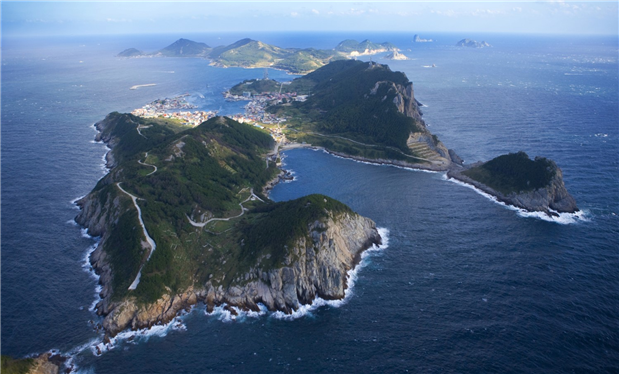 Jeju Sangchujado, designated as a remote island on the outskirts of the national territory. Provided by the Ministry of the Interior and Safety
Remote islands on the national borders hold a militarily and security-wise important position and serve as the national borders of our country by strengthening sovereignty over maritime territory. Legally, remote islands on the national borders refer to inhabited islands located more than 50 km from the mainland and inhabited islands that serve as base points for establishing straight baselines under the "Territorial Sea and Contiguous Zone Act." So far, a total of 34 islands have been designated. Through the establishment of this enforcement decree, criteria have been set to additionally designate 9 islands as remote islands on the national borders, and going forward, a total of 43 islands will be managed as remote islands on the national borders.
The additionally designated islands are those with a distance of 10 km or less to the straight baseline and have low accessibility. Six islands?Anmado (Yeonggwang, Jeollanam-do), Daeseokmando (Yeonggwang, Jeollanam-do), Dongdo (Yeosu, Jeollanam-do), Seodo (Yeosu, Jeollanam-do), Sangchujado (Jeju), and Hachujado (Jeju)?located more than 50 km from the mainland by sea route were designated. Three islands without regular passenger ships?Hwangdo (Boryeong, Chungcheongnam-do), Jukdo (Yeonggwang, Jeollanam-do), and Hawangdeungdo (Buan, Jeollabuk-do), which is judged to have low sailing frequency and will be announced on January 17?are also designated and managed as remote islands on the national borders.
This enforcement decree also includes a comprehensive support policy for remote islands on the national borders. When establishing the comprehensive development plan for remote islands on the national borders, it reflects necessary matters such as gathering opinions from mayors and county governors, items to be included in the plan, criteria for minor changes in project plans, and deadlines for establishing annual implementation plans. In particular, the national subsidy rate has been increased up to 80%, and the targets for support of resident safety facilities, infrastructure, and projects to expand the resident population are specifically stipulated.
The government plans to establish the comprehensive development plan for remote islands on the national borders within this year. It will include initiatives for 2026?2030 and cover necessary matters for improving residents' lives, such as expanding roads and docking facilities, increasing income, and revitalizing tourism. The Ministry of the Interior and Safety will finalize the comprehensive development plan by the end of the year after consultations with related ministries and review by the Island Development Deliberation Committee starting from the first half of this year.
Kim Min-jae, Deputy Minister of the Ministry of the Interior and Safety, stated, "Remote islands on the national borders have great value from the perspective of protecting the national territory and securing maritime sovereignty," adding, "We will systematically support these islands by including practical content in the plan to improve the quality of life of residents who protect the remote islands on the national borders."
© The Asia Business Daily(www.asiae.co.kr). All rights reserved.

















