Ministry of Land, Infrastructure and Transport Announces 'Relaxation of Adjacency Development Application Guidelines'
Mayor Kim: "It Will Be a Turning Point for Regional Economic Development"
The area for industrial complex development within the natural conservation zone of the Seoul metropolitan area, which was previously limited to 60,000㎡, will be gradually expanded to 300,000㎡. Accordingly, it is expected that systematic industrial complex development will accelerate in places like Icheon-si, Gyeonggi-do, where individual factories had proliferated due to area restrictions.
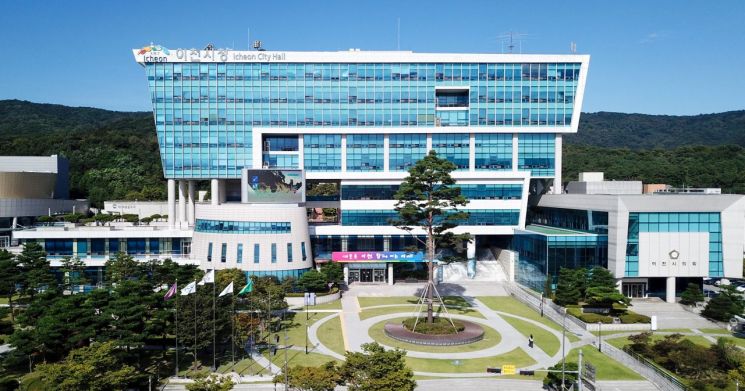
According to Icheon-si on the 6th, the Ministry of Land, Infrastructure and Transport announced the revision of the 'Guidelines for Adjacent Development within the Natural Conservation Zone' on the same day, focusing on this content.
According to the revision, when establishing a maintenance plan for existing factory-dense areas within the natural conservation zone, the industrial complex development area will be gradually expanded from the existing 60,000㎡ to 300,000㎡.
The Capital Region Readjustment Planning Act limits the creation of industrial sites (industrial complexes) within the natural conservation zone to a maximum of 60,000㎡.
In particular, adjacent development to evade area restrictions has also been strictly regulated. The existing guidelines considered projects sharing main access roads, parking lots, main entry routes, and convenience facilities as the same project, applying the same area restrictions even if the project entities and development times differed. For example, even if three companies A, B, and C build factories separately, if they share the main access road, the total factory site area of these companies cannot exceed 60,000㎡.
Because of this, local governments around the metropolitan area have demanded deregulation, arguing that strict adjacent development restrictions have caused the opposite effect of uncontrolled development due to the proliferation of small-scale individual factories. In particular, Kim Kyung-hee, mayor of Icheon, and Song Seok-jun, a three-term lawmaker from Icheon representing the People Power Party, have continuously pushed for relaxation of adjacent development guidelines through the 'Hangang Love Forum' and government petitions.
Looking at the main revisions of the guidelines, in addition to the existing 'Development Promotion District,' ▲District Unit Planning Area ▲Infrastructure Burden Area ▲Factory Location Induction District have been added to the areas excluded from adjacent development application. Factory site development projects implemented in growth management planning areas with established infrastructure plans such as roads, parks, and water supply and sewage systems will also be exempt from adjacent development standards.
Especially, when a maintenance plan for existing factory-dense areas is established and the project is implemented after review by the Capital Region Readjustment Committee, industrial complex development of up to 300,000㎡ in stages has become possible. This is to systematically organize the existing scattered factories and induce industrial complex formation.
Icheon-si expects that, following the guideline revision, planned industrial complex development will attract corporate investment, create various jobs, and revitalize the local economy.
Representative Song said, "This achievement is not just a simple deregulation but a foundation for national and regional growth together," adding, "We will continue to do our best for policies that harmonize advanced industry promotion and environmental protection."
Mayor Kim also stated, "This guideline revision will be a turning point for regional economic development," and added, "We will create an environment where local residents and businesses coexist and achieve sustainable development, growing Icheon-si into a true 'Small Korea.'"
© The Asia Business Daily(www.asiae.co.kr). All rights reserved.
![User Who Sold Erroneously Deposited Bitcoins to Repay Debt and Fund Entertainment... What Did the Supreme Court Decide in 2021? [Legal Issue Check]](https://cwcontent.asiae.co.kr/asiaresize/183/2026020910431234020_1770601391.png)
















