Declared Full-Scale Entry into Domestic Market This Year
Will It Become a 'Value-for-Money Phone' Following the Abolition of the Mobile Subsidy Law?
Chinese IT company Xiaomi is intensifying its entry into the Korean market by establishing a local subsidiary. Attention is focused on whether it can expand consumer choices in the smartphone market, which is virtually divided between Samsung Electronics' Galaxy and Apple iPhone.
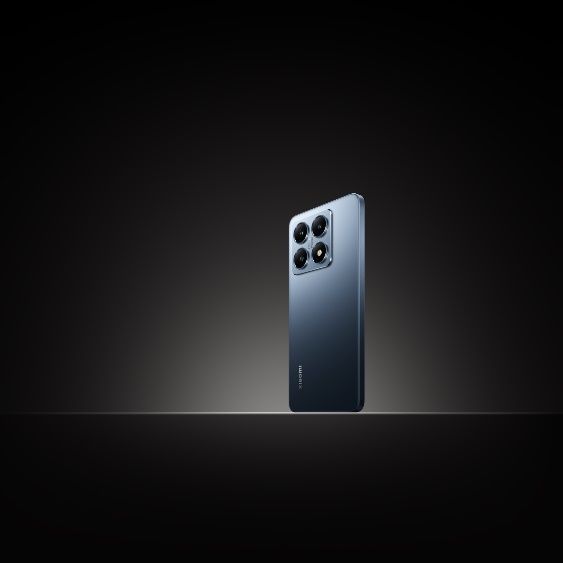
According to the IT industry on the 6th, Xiaomi recently completed the establishment of its Korean subsidiary. On the 15th, it will hold a press conference to unveil new models including smartphones, robot vacuum cleaners, TVs, smartwatches, and Buds. It plans to open offline stores in the first half of this year to begin full-scale sales.
The products targeting Korean consumers are the latest models, the 'Xiaomi 14T' and the new 'Redmi Note 14' series. Although the sales prices in Korea have not yet been finalized, referring to countries where they have already been released, the premium lineup 14T is expected to be priced around 500,000 to 600,000 KRW, and the Redmi Note 14 around 200,000 to 300,000 KRW.
A Xiaomi Korea official stated, "Through the establishment of the Korean subsidiary, we will communicate more closely with consumers," adding, "We will deliver differentiated value with locally customized products and services."
Even before establishing the Korean subsidiary, Xiaomi had been selling unlocked smartphones and tablets through the Naver brand store. Since sales were only online, consumer interest had not been significant, but the industry predicts that with offline stores opening and more opportunities to experience the products, purchases will increase.
An industry insider said, "As smartphones have become more standardized, Chinese products are not significantly behind in performance," adding, "They have outstanding price competitiveness compared to Samsung Electronics and Apple products, which dominate the domestic market, so there is expected demand for second phones or phones for children."
Last October, Xiaomi released the 'Xiaomi Redmi 14C' smartphone and 'Xiaomi Redmi Pad SE' in Korea, priced at 149,600 KRW and 149,800 KRW respectively for the lowest capacity versions, forming prices in the 100,000 KRW range.
With the abolition of the 'Dantong Law (Device Distribution Structure Improvement Act)', which limited subsidy amounts, there are predictions that Xiaomi will increase its market share by providing large-scale subsidies.
However, there are also forecasts that the impact on the market may not be significant. In the past, Chinese products like Huawei entered the domestic market but were withdrawn after being ignored by consumers, and concerns over security and stability suggest that demand will not explode.
It is also a factor to consider that the price difference compared to Samsung Electronics' mid-range products is not large. The recently released Samsung mid-range smartphone Galaxy 'Galaxy A16 LTE' is priced at about 319,000 KRW, which is not much different from the Xiaomi Redmi Note 14, expected to be sold in the 200,000 to 300,000 KRW range.
There is also a perspective that building trust in security, such as preventing personal information leaks, should come first. A security company official said, "There have been cases where manufacturers intentionally installed backdoors in Chinese-made Internet of Things (IoT) devices," adding, "For the domestic business to succeed, a thorough data protection system for user personal information must be established."
© The Asia Business Daily(www.asiae.co.kr). All rights reserved.

















