74.0% of People in Their 30s Willing to Invest Time and Money for Slow Aging
CJ, Ottogi, and Others Expand Slow Aging Diet Centered on Instant Rice
The "slow aging" trend has struck the domestic food industry. As long-term health management is increasingly valued as an important aspect of life, and the slow aging trend spreads mainly among Generation Z born after the mid-1990s, food companies are accelerating efforts to target this related market.
According to the food industry on the 7th, CJ CheilJedang's "Hetbahn Konjac Rice" has become a hot topic as a slow aging rice, surpassing 10 million cumulative sales. In response, they are further segmenting the wellness instant rice category with konjac rice, Sotbap, low-protein rice, and continuously expanding their portfolio. Ottogi also accelerated the expansion of related product lines by launching "Suhyangmi Brown Rice," which increased the brown rice ratio, in October last year, followed by a rice ball series using oats as the main ingredient instead of rice in November.

This is due to the growing interest in slow aging. Slow aging literally means aging slowly and refers to a health management method that slows the aging process through a healthy diet, regular exercise, and sufficient sleep. Rather than perceiving aging as a negative concept, it is accepted as a positive stage of life, highlighting the importance of "healthy aging."
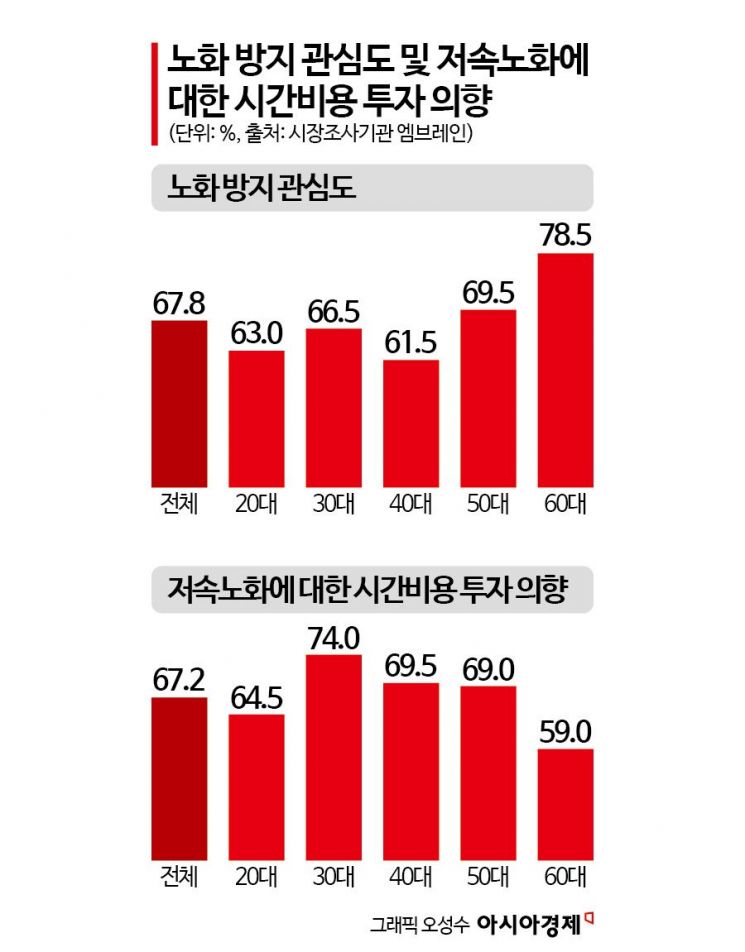
According to a well-aging perception survey conducted by market research firm Embrain on 1,000 adults aged 19 to 69 nationwide, 67.8% of respondents expressed interest in preventing aging. Well-aging means pursuing a healthy and vibrant aging process. It focuses not just on getting older but actively maintaining health and improving quality of life, aiming to maintain a good balance of physical, mental, and social health.
A recent characteristic of the slow aging trend is that, unlike previous aging-related trends centered on middle-aged and older adults, it is spreading mainly among younger generations. This is interpreted as a result of increased interest after the COVID-19 pandemic and the expanded distribution of wellness products, making long-term health management an important lifestyle for younger generations. In fact, 67.2% of respondents said they are willing to invest time and money in slow aging, with the agreement rate among people in their 30s at 74.0%, higher than those in their 40s to 60s.

The food service industry is also showing movements reflecting the slow aging diet trend. Ourhome operates "Callis Lab," where professional nutritionists provide one-on-one consultations based on individuals' health status and offer customized diets in corporate cafeterias. Pulmuone also recorded a cumulative 294,000 visitors by the end of last year at its vegan-certified restaurant "Plantude," which offers plant-based oriented menus using plant-based alternative foods.
The continued interest in slow aging foods among not only middle-aged and older adults but also younger generations is closely related to the sharp increase in diabetes and hypertension patients among young people recently. According to statistics from the Health Insurance Review & Assessment Service, the number of diabetes patients in their 20s and 30s increased by 25.2%, from about 139,000 in 2018 to about 174,000 in 2022, and hypertension patients rose by 21.4%, from 213,136 to 268,832 during the same period.
Meanwhile, the slow aging diet involves limiting intake of simple sugars and refined grains, and composing meals mainly with low glycemic index ingredients such as multigrain rice, vegetables, and protein. The key is to suppress "blood sugar spikes," a rapid rise in blood sugar after meals, to prevent chronic diseases like diabetes and, in the long term, slow down aging.
© The Asia Business Daily(www.asiae.co.kr). All rights reserved.



















