Annual Meeting of the American Economic Association
Outlook on Policy Impact of Trump's Second Term
Concerns Over Supply-Driven Inflation Recurrence Due to Tariffs and Immigration Policies
Protectionism Expected to Reduce Global Growth Rate by Up to 9%
"Trump Pressures for Weak Dollar... Pushes for Mar-a-Lago Agreement"
"The biggest risk to the US economy this year is the uncertainty surrounding Trump’s policies such as tariff hikes, immigrant deportations, and fiscal deficits." (David Card, Nobel Laureate in Economics and Professor at UC Berkeley)
"Global trade disruptions could reduce the world’s real Gross Domestic Product (GDP) by up to 9%." (Philip R. Lane, Chief Economist of the European Central Bank (ECB))
The ‘2025 Annual Meeting of the American Economic Association (AEA)’ held from March 3 to 5 in San Francisco resembled a ‘Trump criticism forum.’ Global scholars warned in unison that the uncertainty itself posed a risk to both the US and global economies as they forecasted how the policies of Donald Trump’s second term administration, launching on the 20th, would shake the global economic and trade landscape. Concerns poured in that Trump’s second term tariff and immigration policies would push inflation back up and that accelerated protectionism would severely impact global economic growth rates.
"This Year’s Biggest Risk to the US Economy is Trump’s Uncertainty"…Concerns over Supply-Driven Inflation
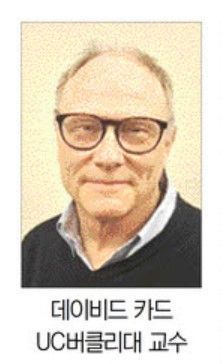
Professor Card, a Nobel Laureate in Economics, told Asia Economy, "The three biggest risks to the US economy this year are Trump’s forced deportation of immigrants, uncertainty over tariff hikes, and fiscal deficits."
This is a warning that Trump’s tariff policies could raise import prices and immigration policies could increase labor costs, thereby driving inflation up. However, he predicted that it would "take some time" before the inflationary effects of immigrant deportations become visible.
Professor Card also expressed concerns about the overflowing US fiscal deficit. He said, "The US government is currently running a huge fiscal deficit, and that deficit will grow larger. The key issue is whether Trump’s second term, which is pushing for tax cuts, will tolerate the expansion of the fiscal deficit or reduce other expenditures such as social welfare programs."

Kimberly Clausing, a professor at the University of California and former Deputy Assistant Secretary of the Treasury under the Biden administration, also pointed out in the ‘Trump Administration Economic Policy’ session that "Trump is promoting policies that cause inflation, such as tariff hikes, immigration restrictions, expansionary fiscal policy, and challenges to the independence of the US Federal Reserve (Fed)."
She forecasted, "Trump’s policies will restrict supply across the economy and consequently raise prices. It is highly likely to cause disruptions similar to those seen during the COVID-19 pandemic." In particular, she noted that large-scale deportations of undocumented immigrants would not only increase inflation but also severely damage consumption and economic growth rates. Professor Clausing said, "Immigrants are not only providers of labor but also consumers. The scale of deportations is important; if there is a scenario where 8 million immigrants are deported in a single day, it would cause a sharp decline in US employment and GDP, resulting in very serious economic consequences."
Claudia Goldin, a Harvard University professor and 2023 Nobel Laureate in Economics, also told Asia Economy, "Most people believe that imposing tariffs will create more losers than winners," and she saw Trump’s second term trade policies as likely to cause side effects such as rising inflation.
Global GDP Could Decline by Up to 9% Due to Trade Barriers…"Trump Expected to Pressure for a Weak Dollar"
Voices expressing concern about the impact of Trump’s protectionism on global economic growth rates also poured in. It is expected that the collapse of the multilateral trade system will accelerate geopolitical divisions and expand economic uncertainty.
Economist Lane analyzed the economic fallout from extreme protectionism by scenario in the ‘Global Macroeconomics and Policy Outlook’ session. If trade and economic cooperation between geopolitical blocs show a moderate decoupling pattern, global real GDP is estimated to decline by 2%. In a full decoupling scenario where trade flows effectively stop, the decline could reach 9%. It is expected that the spread of protectionism would deal a severe blow to global economic growth.
Shafat Yar Khan, Professor of Economics at Syracuse University, forecasted, "The US-China trade war acts as a negative supply shock for the US, increasing production costs. China will experience a demand shock, leading to wage declines and reduced consumption, making it difficult to generate domestic consumer demand." He added, "Because trade accounts for a large share of China’s economy, China will bear greater costs from the trade war than the US."
Morris Ospeld, Professor at UC Berkeley, predicted that Trump would eventually use the ‘weak dollar’ card to resolve the trade deficit.
He argued, "Even if Trump’s second term raises tariffs, the effects on reducing the trade deficit or revitalizing manufacturing will be minimal. Tariff imposition causes dollar appreciation, which worsens the trade deficit." He further predicted, "Ultimately, Trump’s focus will shift to a weak dollar, and the US may pressure trading partners to take measures to devalue their currencies."
This explains the possibility of a so-called ‘Mar-a-Lago Accord’ to devalue the dollar if the expected tariff hikes in Trump’s second term fail to reduce the trade deficit. In 1985, the US signed the ‘Plaza Accord’ with Japan, Germany, France, and the UK to artificially lower the value of the US dollar against major currencies. There is speculation that a second Plaza Accord could be reached at Trump’s Florida Mar-a-Lago resort, his residence.
Jason Furman, Harvard University professor and former Chair of the White House Council of Economic Advisers under the Obama administration, told domestic reporters, "I hope Trump’s trade policy focuses only on China and does not pick fights with other countries around the world," expressing concern that it could cause a major shock to the US and global economies. He also emphasized, "(Large-scale tariff policies) are unjustified."
However, Professor Furman noted that since Trump views the stock market as one of the main measures of economic policy success, "It remains to be seen whether Trump will continue to pursue these policies (such as tariffs) or abandon them if the stock market reacts negatively."
© The Asia Business Daily(www.asiae.co.kr). All rights reserved.

















