"Everyone Powerless and Equal... No Real Rich"
Repeated Recessions Crack the Myth of '100 Million Total Middle Class'
A prominent Japanese economist has drawn attention by identifying 'equality' as the cause of Japan's economic crisis. The analysis suggests that Japan's weakness lies in its failure to produce outstanding celebrities or billionaires in industries and entertainment.

Economist Narita Yusuke claimed on his X (formerly Twitter) account on the 5th (local time) that "Japan is a country without powerful leaders." Narita is a prodigy who graduated top of his class from the prestigious University of Tokyo, earned a PhD from the Massachusetts Institute of Technology (MIT), and served as a visiting assistant professor at Stanford University. In 2023, he sparked controversy by proposing 'dignified death' as a solution to Japan's aging population problem.
On this day, he pointed out, "(Japan) has no 'boss' who dominates politics. Even the prime minister eats onigiri while mocking the common people."
Last November, Japanese Prime Minister Ishiba Shigeru was spotted eating onigiri, a Japanese-style rice ball, which became a hot topic in Japan. Some criticized the simple meal as too modest for the prime minister, the pinnacle of Japanese politics. Narita, however, appeared to criticize the prime minister's 'excessive frugality' as the real problem.
 Japanese Prime Minister Shigeru Ishiba eating a meal with Japanese-style rice balls. YouTube capture
He continued, "Even those at the top of the entertainment world can fall from grace due to a single weekly magazine article," and "There are hardly any truly wealthy people. The number of billionaires per capita is the lowest among the G7 (Group of Seven)." He then asserted, "Japan is a country where everyone is powerless and everyone is equal."
The post resonated strongly among some local netizens. Comments such as "It's sad. We have no choice but to live seeking happiness," and "Sometimes I feel this country has become too powerless," were common.
Some expressed agreement that Japan's 'Lost 30 Years' were due to this lack of dynamism. One netizen argued, "At one time, Japan was obsessed with the '100 million strong middle class.' However, this policy created a national character that adjusts itself to others and is overly concerned with surroundings, ultimately becoming the most successful socialist country. Unlike other G7 countries, wages have not increased for 30 years."
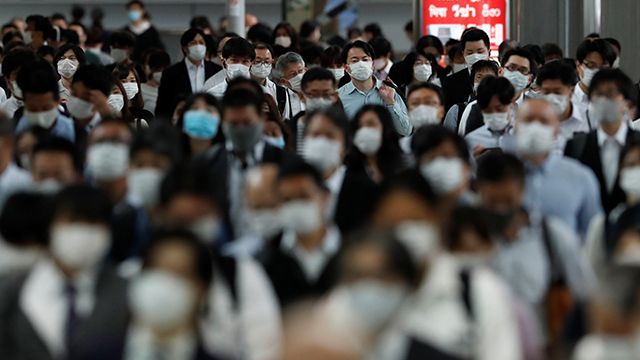
The '100 million strong middle class,' or '1 Oku S?ch?ry?,' was a popular term in Japanese society during the 1970s and 1980s. It meant that 90% of Japan's population considered themselves middle class and lived comfortably. Before the bubble economy peaked, Japan experienced rapid growth, becoming a massive country that threatened the United States' position in GDP. Most Japanese owned large homes, color TVs, and passenger cars, enjoying a high quality of life.
The '1 Oku S?ch?ry?' was revived in 2015 during a cabinet reshuffle under Prime Minister Abe Shinz? as the so-called '1 Oku S?katsuyaku' (100 million total active society). This was a core slogan of former Prime Minister Abe, envisioning that Japan would maintain a population of 100 million in the next 50 years, with all 100 million people enjoying high productivity and quality of life. Thus, nationwide equality and affluence were a source of 'national pride' in Japan.
However, as the economy stagnated for a long time, skepticism about the '1 Oku S?ch?ry?' increased. About 40 years ago, Japan's per capita GDP was comparable to that of the United States, but now it lags significantly behind advanced Western European countries such as Germany and the United Kingdom.
Nominal wages and household disposable income (the amount available for discretionary spending after taxes) converted to US dollars have also clearly declined, now comparable to countries like Italy and South Korea according to OECD standards.
© The Asia Business Daily(www.asiae.co.kr). All rights reserved.
![Clutching a Stolen Dior Bag, Saying "I Hate Being Poor but Real"... The Grotesque Con of a "Human Knockoff" [Slate]](https://cwcontent.asiae.co.kr/asiaresize/183/2026021902243444107_1771435474.jpg)


















