Commercial Areas, Floor Area Ratio Reduced from 20% to 10%
Environmental Impact Assessment Regulations Also Exempted or Relaxed
Citizen Ideas to Be Heard on the 14th
The mandatory commercial space area required in development projects within Seoul will be significantly reduced. This measure is part of Seoul City's plan to reduce vacant commercial spaces and respond to the increasing housing demand. The easing of environmental impact assessments, which had been an obstacle to project implementation, is also expected to activate development projects.
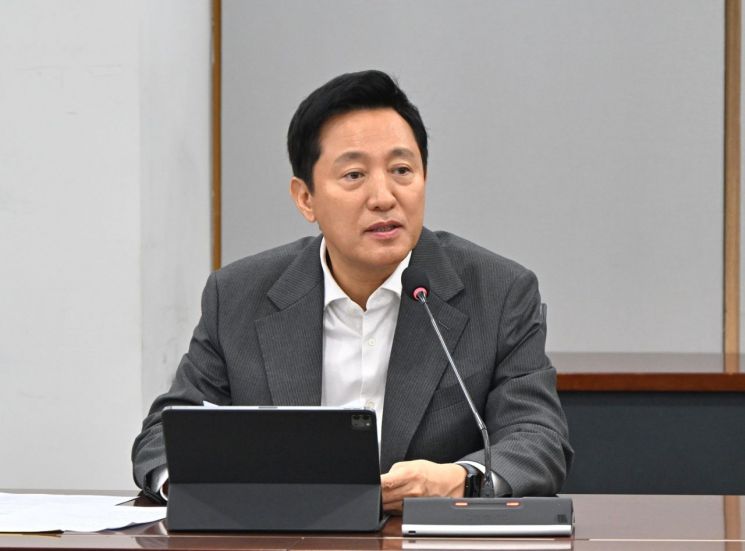
On the 5th, the city announced regulatory abolition plans No. 1 and 2 with these contents. The city stated, "At the first meeting of the 'Construction Industry Regulatory Abolition TF' held on the 26th of last month, we deeply discussed regulations that had been irrationally applied in order to provide quick and practical support to construction companies facing unprecedented difficulties," and "We have identified two tasks that can be immediately improved and will prioritize their implementation." Seoul Mayor Oh Se-hoon had previously announced at the emergency economic meeting for the construction sector held on the 16th of last month that a TF would be formed and operated to resolve difficulties in the construction industry.
Increase in Commercial Vacancies, Supply of Commercial Spaces Matching Demand
First, the ratio of non-residential facilities in commercial and semi-residential areas will be abolished or eased. For commercial areas, the city plans to revise the urban planning ordinance in the first half of this year to reduce the ratio from 20% to 10% of the total floor area, and the 10% floor area ratio regulation for semi-residential areas, which is not affected by the ordinance, will be immediately abolished by revising the district unit planning standards within this month. When introducing rental housing or public dormitories in general and neighborhood commercial areas, 100% residential-only multi-family housing will be allowed instead of mixed-use residential-commercial buildings.
Currently, the ratio of non-residential facilities (excluding multi-family and semi-residential housing) in mixed-use residential buildings in commercial areas is set at 20% or more of the total floor area according to the urban planning ordinance. In semi-residential areas, at least 10% of the floor area ratio must be met according to district unit planning guidelines. However, as consumer patterns have changed recently due to large complex shopping malls and online shopping malls, demand for commercial spaces is decreasing while housing demand continues to rise.
The city expects that easing the non-residential facility ratio regulation will enable the supply of commercial spaces that match demand. The reduced commercial area can be replaced with expanded residential and office facility areas, which will activate development projects and allow for the establishment of free and creative architectural plans tailored to the characteristics and demands of each region.
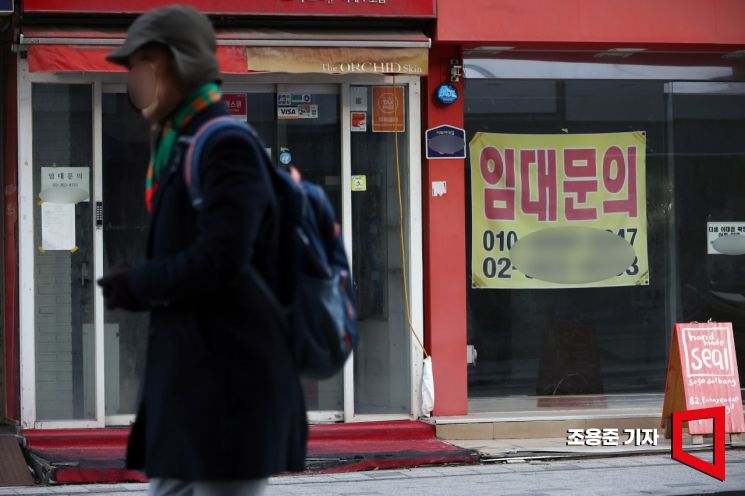 Amid domestic and international adversities such as economic recession and sluggish domestic demand, the number of small business closures is rapidly increasing. On the 26th, vacant stores lined up in a commercial area densely populated with shops in Sinchon, Seoul. Accordingly, the amount of small business closure mutual aid payments exceeded 1.3 trillion won this year, marking an all-time high. Photo by Jo Yongjun
Environmental Impact Assessment Consultation Period Reduced from 48 Days to 20 Days
The scope of exemption from the main environmental impact assessment will also be expanded. While environmental impact assessments help prevent citizen inconvenience caused by noise, vibration, and dust, they have also been a cause of delays in project implementation. The city will reuse the dormant 'consultation procedure exemption system' to omit the main review for projects that comply with review standards. Through this, the consultation period for environmental impact assessments will be drastically reduced from the existing 48 days (20 days for the draft + 28 days for the main review) to 20 days (draft only).
The ordinance will be revised in the first half of this year to expand the exemption application target from buildings with a total floor area of 200,000㎡ or less or redevelopment projects with an area of 180,000㎡ or less to all projects. This will approximately double the number of projects eligible for exemption.
Additionally, the review standards will be completely revised to unify evaluation items that had overlapped with other reviews. Evaluation items similar to landscape review and excavation review will be reviewed by a single committee.
The city stated that it will continue to hold the TF to reflect various opinions from the construction industry with the goal of 'minimum regulation' and will promptly find and implement improvement measures for unnecessary regulations.

On the 14th, a citizen participation debate titled 'Regulatory Relief to Revive Livelihoods Grand Debate' will also be held. Citizens can propose ideas and the mayor and city officials will respond. Proposals from the debate will be quickly reflected in policies through rapid follow-up measures such as consultations with related agencies. Anyone residing or active in Seoul can participate in the debate.
Mayor Oh said, "Regulatory abolition is not a one-time event but a core theme of Seoul city administration this year. Over the next 100 days, citizens and Seoul city members will actively discover unnecessary regulations and gather ideas together," adding, "Starting with construction sector regulatory abolition No. 1 and 2, we will continue regulatory reforms that can change the lives of Seoul citizens and revitalize Seoul's economy in areas such as economy, livelihood, welfare, and daily life."
© The Asia Business Daily(www.asiae.co.kr). All rights reserved.
![Clutching a Stolen Dior Bag, Saying "I Hate Being Poor but Real"... The Grotesque Con of a "Human Knockoff" [Slate]](https://cwcontent.asiae.co.kr/asiaresize/183/2026021902243444107_1771435474.jpg)


















