Strengthening Welfare for Vulnerable Groups with Increased Median Income and Livelihood Benefits
New Operation of 'Care for Everyone' and 24/7 'Always Daycare' Services
Building Social Safety Nets for Disabled and Elderly... Efforts to Prevent Solitary Deaths
Goyang Special City, Gyeonggi Province (Mayor Lee Dong-hwan) announced that it will continuously improve and expand welfare policies to enhance the quality of life for its citizens and provide stronger support for socially vulnerable groups. According to Goyang Special City on the 3rd, the social welfare budget for 2025 has increased by 4.83% compared to the previous year, reaching 1.46 trillion KRW. The focus is on expanding support targets for socially vulnerable groups such as basic livelihood security and basic pensions, and systematizing policies to reduce welfare blind spots.
Mayor Lee Dong-hwan of Goyang Special City stated, “This year, we will take a step further toward realizing customized and rational welfare by strengthening support for vulnerable groups, enhancing community care, and establishing a prevention and management system for solitary deaths.”
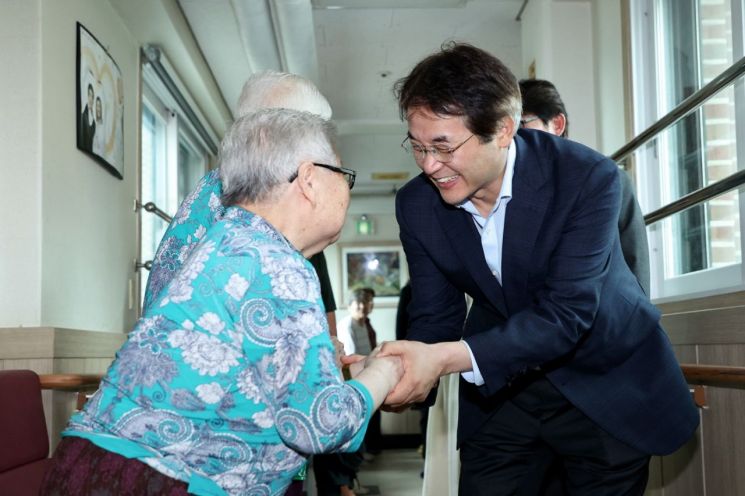 Lee Dong-hwan, Mayor of Goyang Special City, visited a social welfare facility. Photo by Goyang Special City
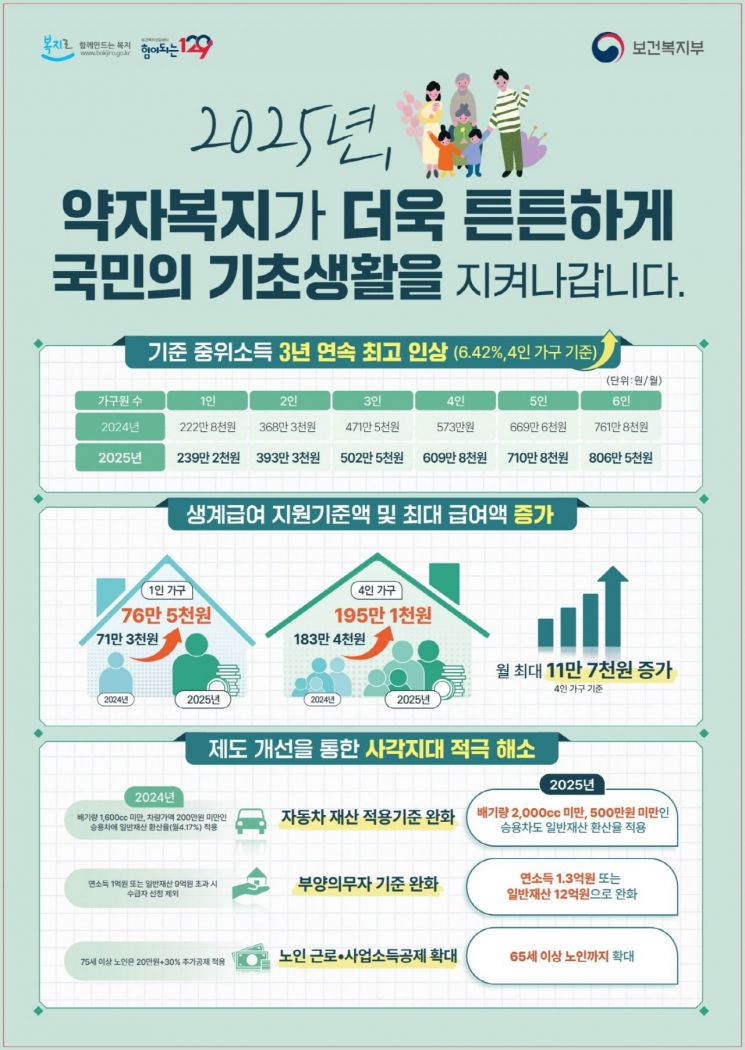
The median income for 2025 showed the highest increase rate since the transition to a customized benefit system in 2015. For a four-person household, it was set at 6,097,773 KRW, up 6.42% from last year’s 5,729,913 KRW. For single-person households, which account for about 74% of all beneficiary households including livelihood, medical, housing, and education benefits, it was set at 2,392,013 KRW, up 7.34% from last year’s 2,228,445 KRW.
Additionally, to expand beneficiary eligibility, active improvements to the livelihood benefit system are being pursued. The automobile asset standard, which applies a general property conversion rate of 4.17%, has been relaxed to vehicles under 2000cc and valued below 5 million KRW. The support obligation criteria have been eased to an annual income exceeding 130 million KRW and assets exceeding 1.2 billion KRW. A 30% deduction on earned business income is applied to general beneficiaries, and an additional deduction of “200,000 KRW + 30%” is applied for seniors aged 65 and over.
Childcare expenses for low-income single-parent families, which were previously supported at 210,000 KRW per child per month, will be increased to 230,000 KRW per month. For youth single-parent families where the household head is under 24 years old, childcare expenses will increase from 350,000 KRW to 370,000 KRW per month. Furthermore, the annual 93,000 KRW school supplies allowance, previously provided only to middle and high school students, will be expanded to include elementary school students.
Moreover, the voucher support amount for menstrual products for low-income female adolescents (beneficiaries, near-poor, single-parent families) will be increased by 8% from 13,000 KRW to 14,000 KRW per month (up to 168,000 KRW annually) compared to last year.
Meanwhile, the eligibility for the Didim Seed Bank account, which helps vulnerable children prepare initial funds when entering society, will be expanded from children receiving basic livelihood benefits and those under protective care to include near-poor and single-parent family children, providing more active support. With this expansion, approximately 3,000 additional children are expected to receive economic support.
Starting this year, the “Anyone Care” project will begin to fill existing care gaps in various fields such as daily care, companion care, and housing safety. Within an annual limit of 1.5 million KRW per person, those with income levels at or below 120% of the median income will receive full coverage of usage fees, those between 120% and 150% will receive 50% coverage, and those above 150% can use the service with self-payment.
The government support for childcare service fees aimed at alleviating parenting burdens and strengthening care services will be expanded from households with income up to 150% of the median income to those up to 200%.
Additionally, a new “Anytime Daycare Center” will be designated and operated from March to provide safe childcare 24/7, 365 days a year in cases of temporary and urgent needs. This service targets children aged 6 months to 7 years (preschoolers) residing in Gyeonggi Province. It will also support childcare during early morning hours, weekends, and holidays, contributing to the elimination of childcare blind spots.
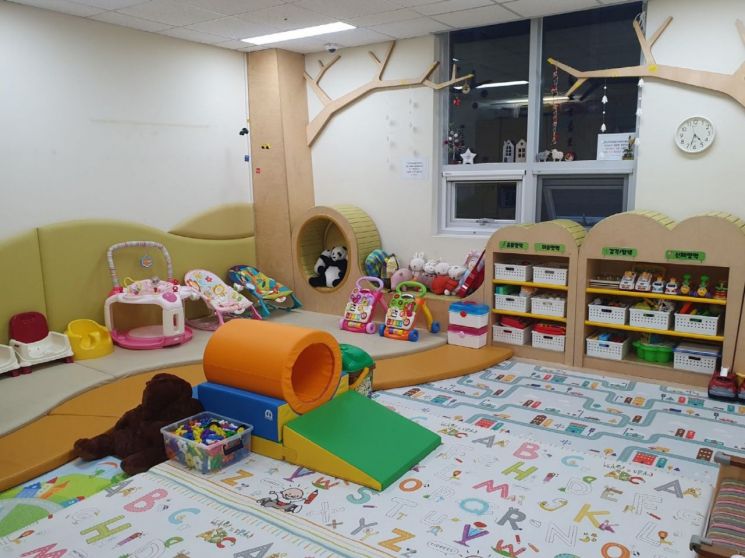 Goyang City Childcare Support Center providing hourly childcare services. Provided by Goyang Special City
The number of hourly childcare service providers will be increased to 9 independent classes and 38 integrated classes by 2025 to improve accessibility to hourly childcare and reduce childcare burdens.
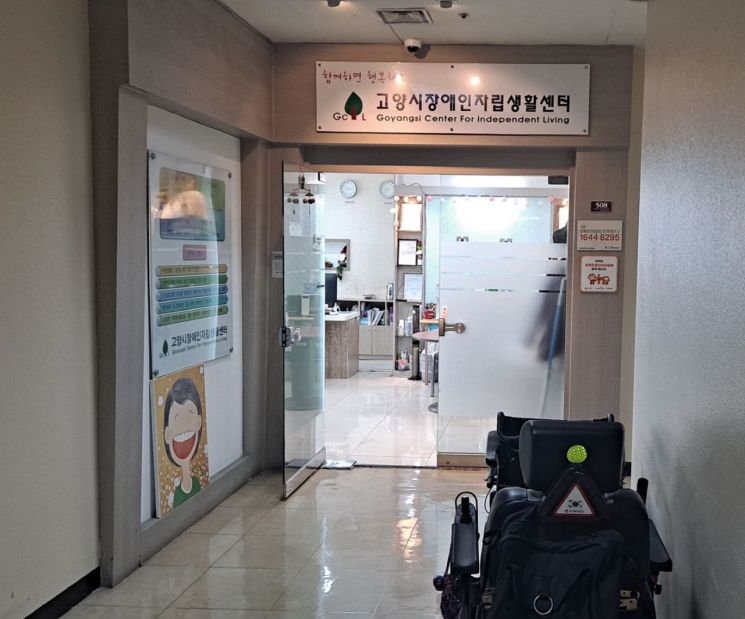
Meanwhile, to support behavioral development for unregistered children with disabilities during their growth period, the age limit for developmental rehabilitation service support will be expanded from 6 years to under 9 years. Starting in July, the Disabled Independent Living Support Center will be incorporated into disability welfare facilities. This will subject it to the Disability Welfare Act, strengthening legal protection and rights guarantees, and enabling systematic management and supervision of the center’s operations, which is expected to improve service quality and transparency.
The basic pension for those aged 65 and over will increase by 2.6% compared to last year, providing up to 343,510 KRW (an increase of 8,700 KRW) for single-person households and up to 549,600 KRW (an increase of 13,920 KRW) for couple households.
Additionally, a designation renewal system will be introduced for long-term care institutions that have reached six years as of the designated date. The re-examination items for renewal include administrative sanction history, compliance with facility and personnel standards, service provision history, and evaluation results from the National Health Insurance Corporation.
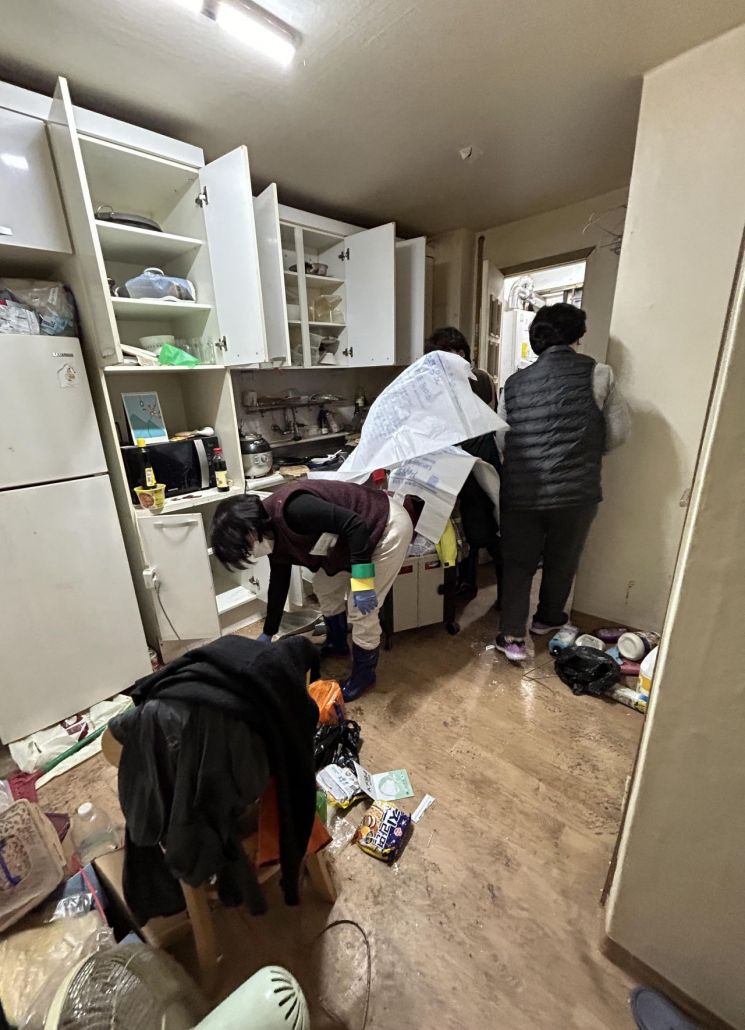 Housing Environment Improvement Project to Reduce the Risk of Solitary Death. Provided by Goyang Special City
Meanwhile, following the expansion of the Ministry of Health and Welfare’s pilot project for the prevention and management of solitary deaths, the solitary death prevention project, which began in the second half of last year, will be fully expanded this year. A system will be established through public-private cooperation covering everything from identifying individuals at risk of solitary death to prevention and management. For those at risk, welfare checks, environmental improvement projects, and social network formation programs will be operated. The project will also promote support for special cleaning costs related to solitary death victims, thereby building a more robust welfare safety net.
A Goyang Special City official said, “We will actively promote the changes in systems and policies this year through our website, SNS, and other channels to ensure that citizens do not experience inconvenience or inability to use services.”
© The Asia Business Daily(www.asiae.co.kr). All rights reserved.



















