As the inauguration of President-elect Donald Trump approaches, the 119th United States Congress, in which the Republican Party holds the majority in both chambers, will convene on the 3rd (local time). For the Republicans, the initial momentum of the administration depends on how much control President-elect Trump can exert over Congress in a 'narrow margin' where even a few defections could be risky. The first test will likely be whether Mike Johnson, the current Speaker of the House who has received Trump’s support, is elected on the very day Congress convenes.
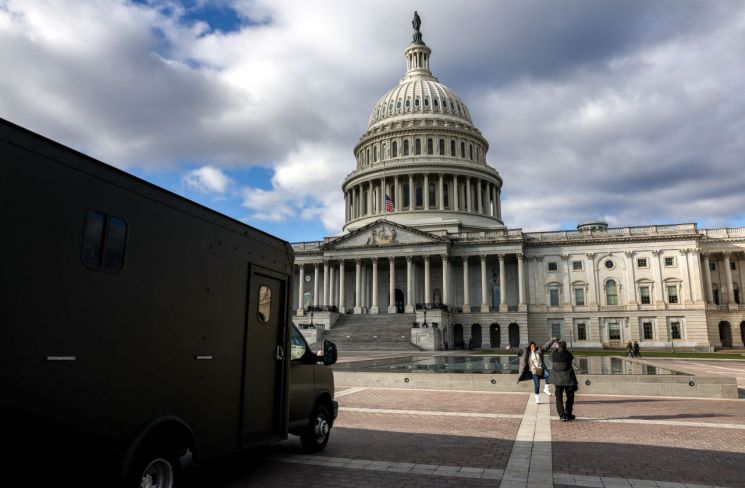
Republicans Barely Hold Majority... Will Trump Prevent Defections?
According to political media such as Politico, the 119th Congress is controlled by the Republican Party, President-elect Trump's party, in both chambers following the federal Senate and House elections held alongside the presidential election on November 5 last year. The Republicans hold 52 of the 100 Senate seats and 219 of the 435 House seats, just surpassing the majority threshold (51 seats in the Senate, 218 seats in the House).
The House Republican leadership has publicly announced plans to prioritize 12 bills in the 119th Congress, including legislation to ease restrictions on hydraulic fracturing ('fracking') for shale gas extraction, and bills to deport immigrants without proof of legal status if they commit crimes such as sexual offenses or police assault. Many of these are based on President-elect Trump's campaign promises.
For Trump and the Republicans, it is essential to build momentum early in the administration. However, the current structure of both chambers means that if there are two or more defections, the Republican majority could be lost. Particularly in the House, where financial legislation reflecting policy priorities can be introduced, the seat difference between Republicans and Democrats is only four seats, a decrease from the previous Congress.
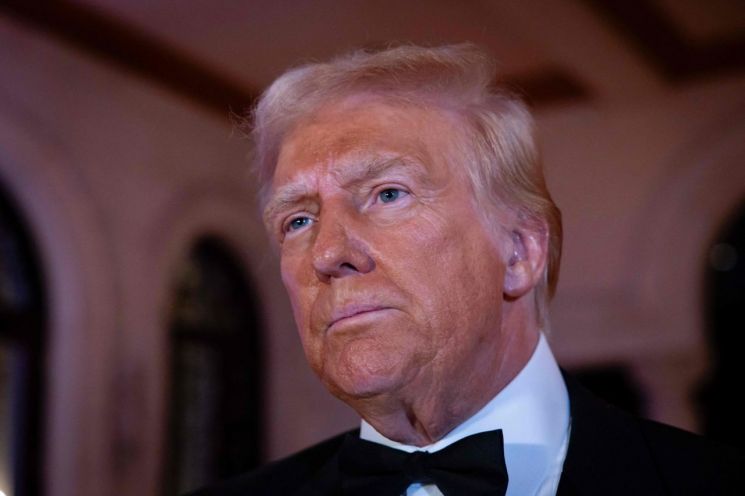
Over the past four years, under the Joe Biden administration, Trump has wielded absolute influence within the Republican Party, supported by the so-called 'MAGA (Make America Great Again)' loyalists. Based on this, he was able to block comprehensive border security bills pushed by President Biden.
However, attention is being paid locally to the fact that last month, 38 Republican lawmakers defected on the so-called 'Skinny CR (Continuing Resolution)'?a temporary budget bill that included provisions related to the government debt ceiling, which Trump demanded be included. This signals that Trump's control over Congress may not be as absolute as expected.
Moreover, the Senate, with six-year terms, is relatively less influenced by the president compared to the two-year House. In the Republican leadership election held shortly after last November's presidential election, Rick Scott (Florida), a pro-Trump lawmaker actively supported by 'first buddy' Elon Musk, CEO of Tesla, was defeated by John Thune (South Dakota).
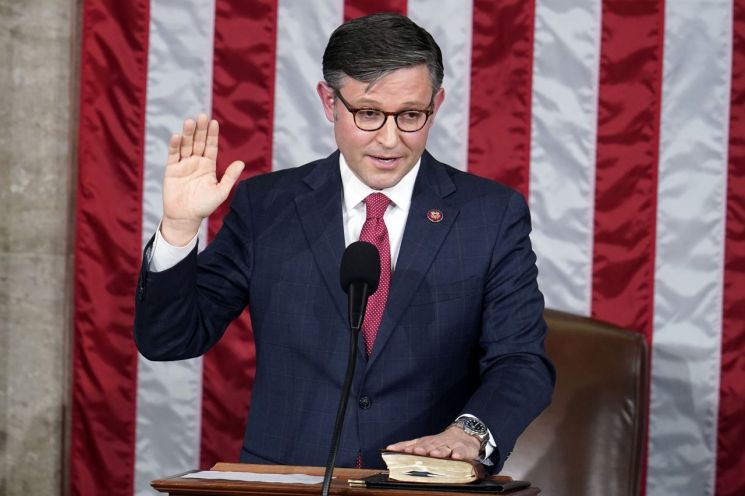 Mike Johnson, Speaker of the U.S. House of Representatives, a member of the Republican Party. Photo by AP Yonhap News
Reelection of Johnson in Speaker Election is Key
The Speaker election on the opening day is expected to be a barometer of Trump’s control over Congress. Mike Johnson, a Republican and the current Speaker, has received public endorsement from Trump but faces uncertainty due to opposition from some hardline Republican lawmakers.
To be elected Speaker, who ranks third in the U.S. power hierarchy after the President and Vice President, 218 votes are required. With Representative Thomas Massie already publicly opposing, even one more defection would make Johnson’s reelection difficult. Hardline Republicans argue that he is too conciliatory toward the Democrats.
Politico analyzed, "If the Republicans fail to elect a Speaker on that day, it could affect the joint session of Congress to certify the presidential election results (January 6) and Trump’s inauguration (January 20)." Since Trump has already publicly expressed support for Johnson to avoid a Speaker vacancy, any defections would be a significant embarrassment for Trump.
The New York Times (NYT) also noted that the U.S. House Speaker election, once a mere formality, has become a battleground for power struggles since the ousting of former Speaker Kevin McCarthy two years ago. It pointed out that if the election is delayed, it could complicate the certification of Trump’s election. While no other Republican candidates have emerged to challenge Johnson at present, the NYT added that if Johnson fails to secure a majority, Congress could face a deadlock similar to that in 2023.
Additionally, Congress is preparing Senate hearings and confirmation votes for President Trump’s second-term cabinet nominees. Besides former Representative Matt Gaetz, who voluntarily withdrew from consideration for Attorney General amid controversy over allegations of soliciting minors, nominees such as Pete Hegseth for Secretary of Defense, Robert Kennedy Jr. for Secretary of Health and Human Services, and Cathy Patel for FBI Director are embroiled in controversies over their qualifications.
© The Asia Business Daily(www.asiae.co.kr). All rights reserved.
![Clutching a Stolen Dior Bag, Saying "I Hate Being Poor but Real"... The Grotesque Con of a "Human Knockoff" [Slate]](https://cwcontent.asiae.co.kr/asiaresize/183/2026021902243444107_1771435474.jpg)


















