American electric vehicle manufacturer Tesla's annual vehicle deliveries have decreased for the first time in over a decade. Although the deliveries in the fourth quarter of last year reached an all-time high, they fell short of market expectations. This has been seen as a reminder of the challenges facing electric vehicle companies amid weakening demand. Tesla's stock price on the New York Stock Exchange is currently down by around 6%.
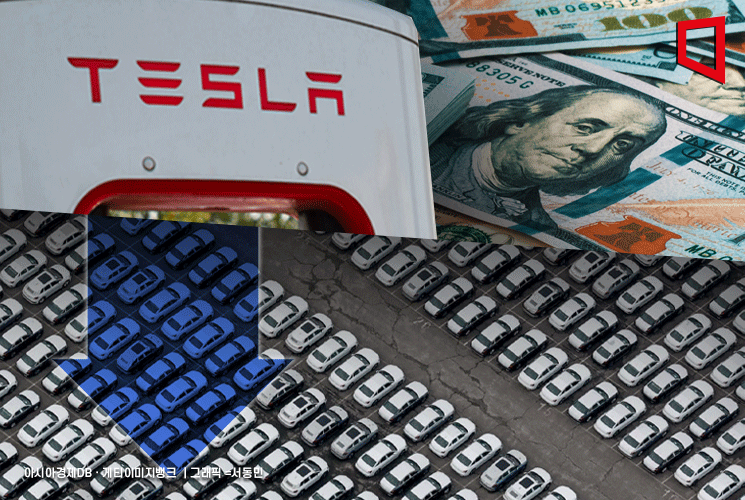
In a report released on the 2nd (local time), Tesla announced that it delivered 1,789,226 vehicles in 2024. This represents a decrease of 19,355 units compared to the 1,808,581 vehicles delivered in 2023. It is the first time since 2011 that annual deliveries have declined compared to the previous year. The figure also fell short of market forecasts.
Vehicle deliveries in the fourth quarter of last year were 495,570 units, an increase of 11,063 units compared to 484,507 units in the same quarter of the previous year. Despite reaching an all-time high due to strengthened promotions including interest-free installment plans, the number fell short of the market expectation of 500,000 units. Bloomberg News pointed out, "These results soberly remind us of the realistic challenges faced by electric vehicle manufacturers," adding, "Tepid consumer demand is putting pressure on electric vehicle sales."
Despite concerns over slowing electric vehicle demand, Tesla's stock, which had surged as a 'Trump beneficiary stock,' is currently experiencing a sharp decline amid a flood of disappointing sales. As of 3:40 p.m. Eastern Time, shortly before market close, Tesla was trading around $377.91, down 6.4% from the previous session on the New York Stock Exchange.
Elon Musk, Tesla's CEO, has emerged as a close ally of President-elect Donald Trump, and Tesla's stock had rallied on expectations of benefits such as deregulation of autonomous driving under the next administration. Musk had also expressed confidence in a previous earnings report, forecasting a 20-30% increase in vehicle sales this year. Bloomberg noted, "This is partly due to the low-cost vehicle and autonomous driving technology expected to be unveiled in the first half of the year," but also pointed out that "there have already been doubts raised about achieving these growth targets."
Moreover, the Trump transition team is currently considering abolishing the electric vehicle tax credit benefits under the Inflation Reduction Act (IRA) implemented by the Biden administration. If the tax credit of up to $7,500 per vehicle is eliminated, consumer price burdens will increase, inevitably impacting electric vehicle sales. However, CEO Musk has argued that the removal of the tax credit would not be a major problem for Tesla and could even work to Tesla's advantage by hitting competitors who rely heavily on these credits.
© The Asia Business Daily(www.asiae.co.kr). All rights reserved.

















