Announcement of the 4th Emissions Trading Scheme Basic Plan
Significant Increase in Paid Allocation Ratio for Power Sector Emission Permits
Addressing Emission Permit Market Issues through Market Stabilization Measures
Emission Permit Revenues to Be Reinvested in Corporate Support
The amount of greenhouse gas emission permits that must be purchased will increase going forward. Until now, many domestic companies have been using emission permits received for free, but this benefit is expected to disappear. In particular, the government has decided to significantly raise the proportion of paid allocation specifically for the power generation sector. The government explained that this measure is to achieve the carbon reduction targets promised to the international community and to respond to global environmental barriers.
On the 31st, the government deliberated and approved the "4th Basic Plan for the Emissions Trading System" containing these details at the Cabinet meeting held at the Government Complex Seoul in Jongno-gu, Seoul.
According to the "Act on Allocation and Trading of Greenhouse Gas Emission Permits," the Ministry of Economy and Finance and the Ministry of Environment must establish mid- to long-term policy goals for the emissions trading system every five years and set basic directions every ten years. The newly passed 4th plan applies from 2026 to 2030, and the 5th plan will apply from 2031 to 2035.
Significant Increase in Paid Allocation Ratio for Power Generation Sector Emission Permits
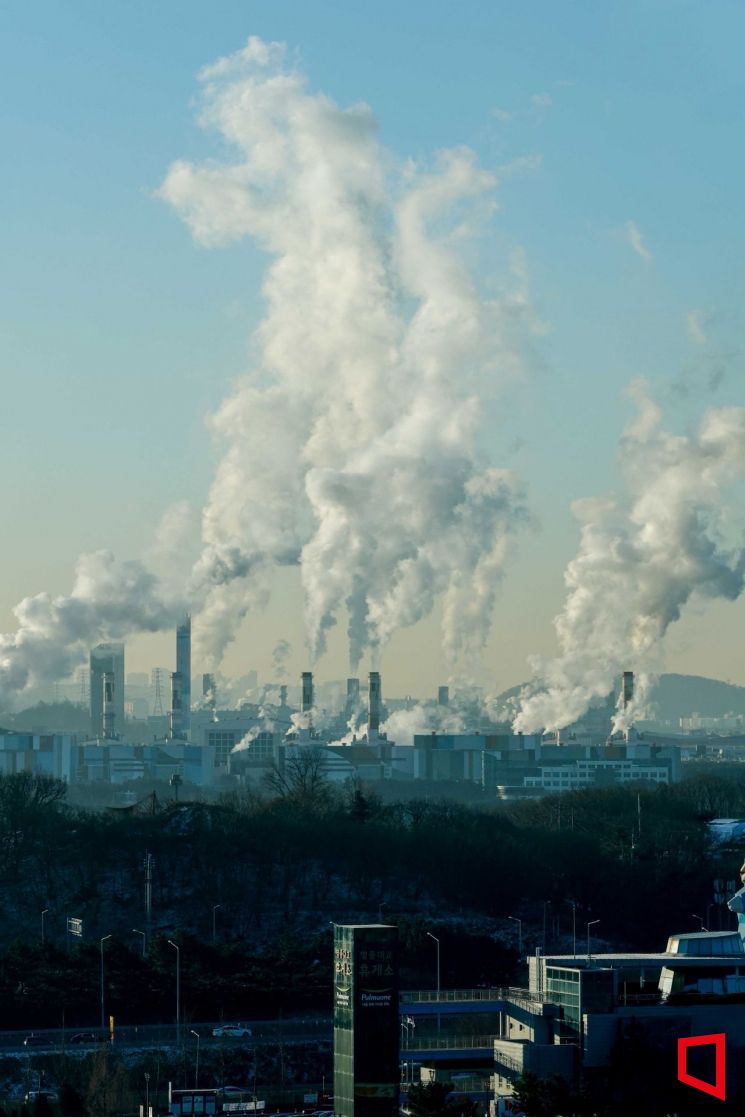
According to the 4th plan, the government decided to separate the total allowable greenhouse gas emissions into "power generation" and "non-power generation" sectors. Previously, emission permits were allocated by dividing into six categories: energy conversion, industry, waste, transportation, buildings, and public/others. However, excessive subdivision of sectors led to many fairness controversies. For example, the reduction rates of buildings belonging to companies in the energy conversion sector and those in the industrial sector varied greatly, even if they were the same office building. From now on, all industries except power generation companies will be subject to the same standards.
The power generation sector, which produces electricity, will see a significant increase in the proportion of "paid allocation." The specific level will be decided considering the economic and industrial burden, energy mix improvement, and support for reduction activities. The non-power generation sectors will also have their paid allocation levels adjusted upward. The allocation ratio will be determined by considering industry competitiveness, commercialization timing of reduction technologies, and carbon leakage status. The deadline for deciding the paid allocation ratio is the end of June next year.
The reserve portion of the total allowable emissions, which was previously recognized as an exception, has also been reduced. Under current law, the total number of emission permits is calculated by adding the reserve portion to the total allowable emissions. Although some of the reserve is used for market stabilization, the 4th basic plan has eliminated this.
By strengthening the total emission and paid allocation policies, some of the previously pointed-out issues are expected to be alleviated. Korea's current paid allocation ratio is about 10%, with high-emission industries such as steel and petrochemicals receiving 100% of their emission permits as free allocation. In contrast, the European Union (EU) has raised paid allocation to 100% for the energy conversion sector and about 70% for the industrial sector. Because Korea's paid allocation permits are too few, appropriate prices are not formed, and there has been much criticism that it fails to promote incentives for carbon reduction.
Oversupplied Emission Permit Market... Expanding Participants and Implementing Market Stabilization System
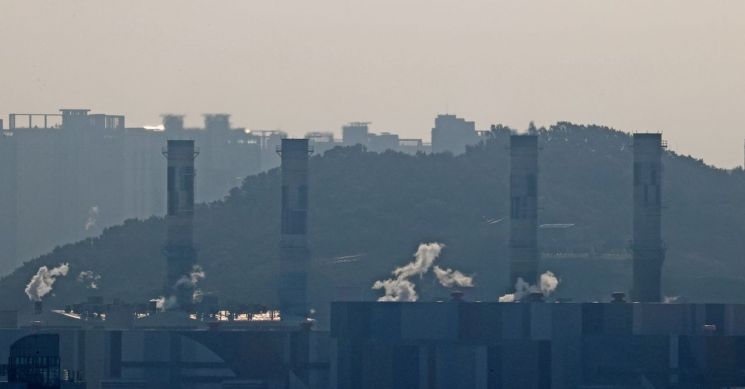
The plan also includes strategies to normalize the emission permit market. The market is experiencing a sharp price drop due to oversupply and insufficient supply-demand adjustment. Because emission permit prices are too low, companies have little incentive to proactively reduce emissions. Especially, to ensure a smooth transition of the system, emission permits were excessively distributed for free to companies, resulting in a significant surplus. When emission permits inevitably remained due to natural disasters or economic downturns, some companies profited by selling them, causing side effects.
To revitalize the emission permit market, the government will relax restrictions on permit carryover to allow flexible use and permit all allocation-targeted companies and market makers such as securities firms to participate in the emission permit auction market. Previously, only companies subject to paid allocation could participate in auctions. The government also plans to establish various trading forms such as entrusting emission permits or using them in futures trading.
Still, to prepare for possible supply-demand imbalances, a "Korean-style Market Stabilization System" will be implemented. The government will first secure a certain amount of reserve within the total emission permits and adjust the volume by supplying or purchasing permits depending on market conditions.
From 2031, Carbon Leakage Industries Also Subject to Paid Allocation
The blueprint of the 5th basic plan includes reviewing ways to strengthen the contribution to greenhouse gas reduction targets when setting reduction goals for the emissions trading system. When allocating emission permits, the allocation method during the plan period will be changed to an annual allocation method to flexibly respond to changing industrial structures. Paid allocation will continue to expand differentially, and carbon leakage industries are expected to be switched to paid allocation. Along with this, domestic industry protection measures, complete abolition of carryover restrictions, and strengthening support for innovative investments will be key discussion topics.
The background for the government's improvement of the emissions trading system is the Nationally Determined Contribution (NDC) for greenhouse gas reduction. Under the Paris Climate Agreement, the government must reduce greenhouse gas emissions to 436.6 million tons by 2030, a 40% reduction from 727.6 million tons in 2018. Given the ambitious target, the government had no choice but to increase paid allocation and activate the use of emission permits to encourage companies' decarbonization efforts.
The accelerating global transition to a decarbonized economy also influenced the basic plan's establishment. Climate clubs of the Group of Seven (G7) and the Organisation for Economic Co-operation and Development (OECD) are discussing carbon pricing, and the European Union's (EU) Carbon Border Adjustment Mechanism (CBAM), considered an environmental trade barrier, has become a reality. The government's vision is that the emissions trading system must contribute to companies' greenhouse gas reduction to help domestic companies secure carbon competitiveness.
Revenue from Paid Allocation to Be Reinvested in Supporting Corporate Reduction Efforts
However, once the level of paid allocation is decided, pressures on corporate costs and energy price increases are inevitable. To mitigate this, the government plans to reinvest revenue from paid allocation into corporate reduction activities and the introduction of breakthrough reduction technologies. The cost burden on the power generation sector will first be alleviated through support for research and development (R&D), facility investment, and efforts to reduce costs for energy companies. Unavoidable price increase pressures will be reflected at an appropriate level in climate environment charges, considering the burden on the public.
The government will also diversify support projects. To quickly introduce innovative reduction technologies, it will promote new forms of support and discovery. It will also support demonstration and industrialization of new climate technologies such as breakthrough technologies for achieving carbon neutrality and direct air capture technologies. Separate support systems tailored to domestic conditions will be reviewed to help high-emission companies quickly adopt reduction technologies.
Kim Wan-seop, Minister of Environment, emphasized, "We will reform the emissions trading system so that companies' reduction efforts become opportunities rather than burdens and contribute to achieving the national greenhouse gas reduction targets," adding, "We will bring about changes to stop climate change that is happening at this very moment."
© The Asia Business Daily(www.asiae.co.kr). All rights reserved.













