Renault Korea announced on the 31st that it will begin construction work on the equipment line in line with the plan to convert the Busan plant to future electric vehicle production scheduled for the second half of next year. They plan to install new electric vehicle-specific equipment within the assembly plant and reorganize the factory facilities.
The Renault Korea Busan plant can produce up to eight models based on four different platforms on a single assembly line using a mixed production method. While adding new models is relatively flexible, electric vehicles equipped with large-capacity batteries are about 25% heavier than internal combustion engine vehicles of the same class, so there are limitations with the existing equipment.
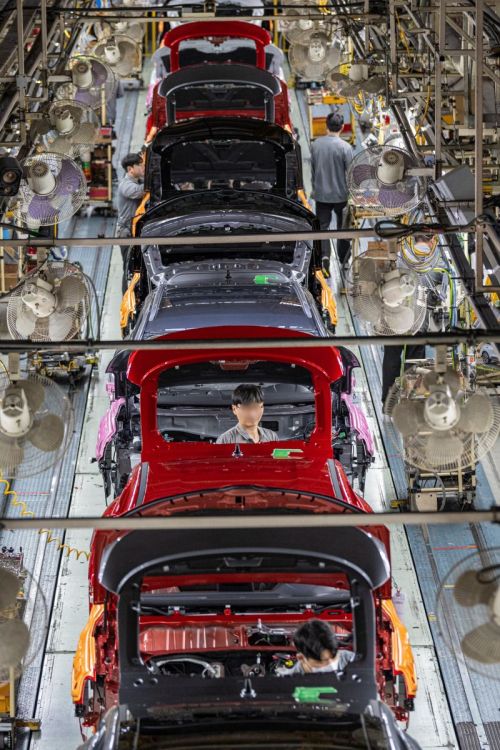
Renault Korea has decided to carry out preparatory work such as reinforcing the load capacity of line equipment necessary to add electric vehicles like the 'Polestar 4' to the existing mixed production line. The facility update for building electric vehicle production equipment is planned to be completed by early 2025.
In particular, for the assembly plant, following the recent investment in new equipment for the body and painting plants, equipment replacement such as vehicle transfer devices and chassis hangers, as well as additional sub-line work for electric vehicle-specific tasks like battery installation, will be carried out throughout January. The Busan plant will temporarily halt operations during the installation period of new equipment in the assembly plant and plans to resume production in early February after trial runs.
The Renault Korea Busan plant is responsible for producing Renault brand high-end mid-size and large-size vehicles, including the Grand Koleos. Starting from the second half of next year, it will begin production of the Polestar 4 for North American export, a premium Swedish electric vehicle brand, marking the full-scale transition to an electric vehicle production base.
© The Asia Business Daily(www.asiae.co.kr). All rights reserved.
![Clutching a Stolen Dior Bag, Saying "I Hate Being Poor but Real"... The Grotesque Con of a "Human Knockoff" [Slate]](https://cwcontent.asiae.co.kr/asiaresize/183/2026021902243444107_1771435474.jpg)
















