Jeju Air Accident Aircraft 'Boeing 737-800'
Boeing's Bestselling Model... Popular Among LCCs
Proven Aircraft, but Controversy Over Defects in Successor Models
The government plans to conduct a full investigation into the Boeing 737-800 aircraft involved in the Jeju Air accident at Muan International Airport, which resulted in 179 fatalities.
The Boeing 737-800 is a bestseller aircraft that helped elevate Boeing, one of the world's two major aircraft manufacturers, to its current position. It has solidified its status as the world's top aircraft by transporting passengers for decades, although some view it as the starting point of the difficulties Boeing is currently facing.
The Boeing 737-800 is an upgraded version of Boeing's bestselling passenger aircraft, the Boeing 737. The Boeing 737 first appeared in 1967 and has been flying for nearly half a century. During this time, Boeing has continuously upgraded, modified, and modernized this passenger aircraft. Among the Boeing 737 'family,' the 737-800, the bestselling model, was first delivered in 1997 and is also known as the Boeing Next-Generation (NG).
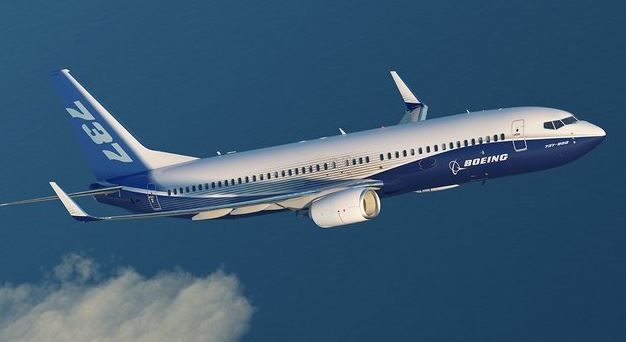 The Boeing 737-800, also known as the 'Boeing 737 NG,' is Boeing's best-selling passenger aircraft with nearly 5,000 units sold. Screenshot from Boeing's website
The Boeing 737-800 is a narrow-body aircraft. The modern passenger aircraft industry classifies aircraft into narrow-body and wide-body based on fuselage size, with narrow-body being more suitable for relatively short-haul flights. To date, 4,989 units of the 737-800 have been delivered, making it one of the best-selling single-model aircraft in the world. More than 100 units of the 737-800 are currently in active service in South Korea.
At one time, Boeing was able to surpass its competitors by a wide margin thanks to the success of the 737-800. However, paradoxically, the Boeing 737-800 also became the starting point of the reliability crisis Boeing is experiencing today.
The Boeing 737 MAX, which is currently embroiled in manufacturing defect controversies, is the successor to the 737-800. The 737 MAX experienced two fatal crashes in 2018 and 2019, respectively, and has since faced numerous issues related to defects and malfunctions. In January, a 737 MAX door detached during flight, further tarnishing the reputation of the 737 series.
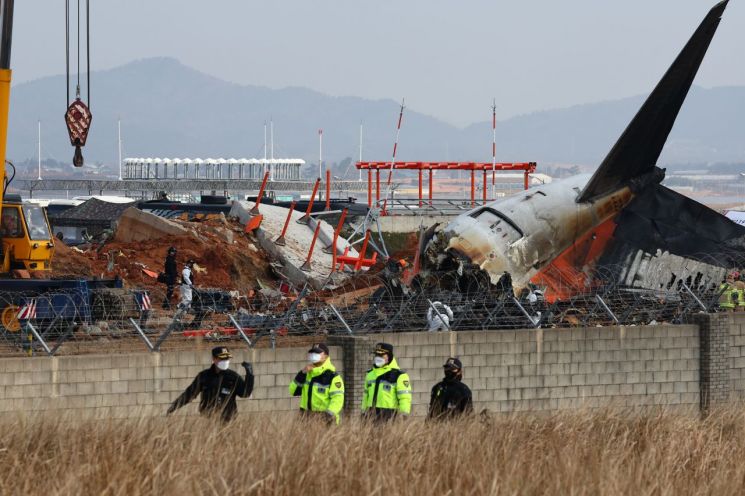 On the 30th, the azimuth facility (localizer) near the runway of Muan International Airport in Muan-gun, Jeollanam-do, was damaged due to a collision with a Jeju Air passenger plane the previous day. Yonhap News
However, unlike the 737 MAX, the 737-800 has proven its reliability over a long period of flight. In an interview with the U.S. media outlet AP on the 29th (local time), aviation industry consultant Allen Price referred to the Jeju Air disaster, emphasizing repeatedly that "unlike the MAX, the 737-800 is a proven aircraft. It is very safe compared to the MAX." Nevertheless, the media pointed out that this accident could once again negatively impact Boeing's reputation.
Meanwhile, the Ministry of Land, Infrastructure and Transport plans to thoroughly inspect the two black boxes?the Flight Data Recorder (FDR) and Cockpit Voice Recorder (CVR)?recovered from the accident aircraft by transporting them to the Gimpo Airport testing and analysis center. The U.S. National Transportation Safety Board (NTSB) is participating in the accident investigation, and Boeing, the aircraft manufacturer, is also reportedly in consultation.
The 737-800 is operated by most domestic low-cost carriers (LCCs). Jeju Air operates the most with 39 aircraft, followed by T'way Air (27), Jin Air (19), Eastar Jet (10), Air Incheon (4), and Korean Air (2).
© The Asia Business Daily(www.asiae.co.kr). All rights reserved.


















