Busan Chamber of Commerce and Industry Announces 2025 Q1 Busan Manufacturing Industry Business Outlook Index Results
Business Outlook '66' Lowest in 4 Years Since COVID-19, Domestic Demand and Exports Expected to Worsen Next Year at 49.4% and 43.6%
The regional manufacturing sector's business outlook index for the first quarter of next year has sharply deteriorated to '66'.
Along with worsening domestic demand and export forecasts and the expansion of uncertainties in the internal and external business environment, the regional manufacturing industry is facing a crisis at the level of the COVID-19 pandemic for the first time in four years, making urgent fiscal expansion and other economic stimulus measures essential.
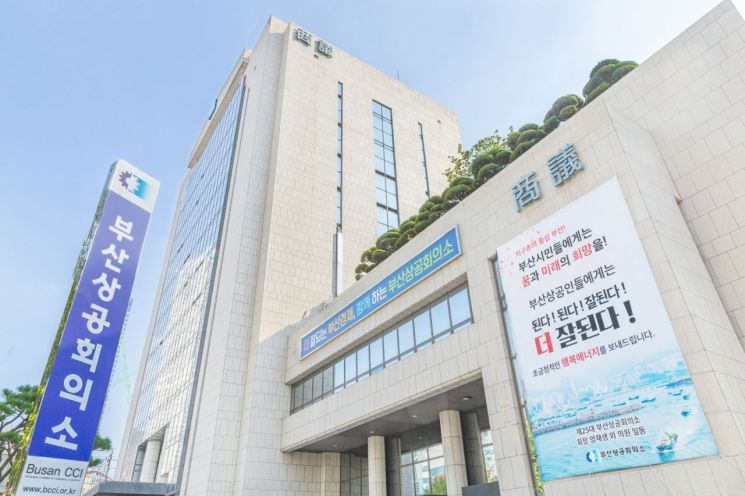
The Busan Chamber of Commerce and Industry (Chairman Yang Jae-saeng) announced this on the 30th through the results of the "2025 First Quarter Busan Regional Manufacturing Business Outlook Index Survey," conducted on 251 local manufacturing companies.
The business outlook index (BSI) for the regional manufacturing sector in the first quarter of next year was '66', the lowest level since the third quarter of 2020 when the regional economy was depressed due to the impact of COVID-19. A business outlook index above the baseline of '100' indicates economic improvement, while below indicates deterioration.
The worsening business environment is attributed to expanded domestic policy uncertainties and prolonged domestic demand stagnation, while externally, export declines and uncertainties caused by the inauguration of the Trump administration's second term have burdened the regional economy. In fact, local manufacturers expect domestic sales and exports to decrease by 49.4% and 43.6%, respectively, next year, expressing concerns over performance deterioration due to internal and external uncertainties.
62.9% of surveyed companies forecast missing their target operating profits this year. This is an increase of 17.1 percentage points compared to the previous year and is analyzed to be influenced by prolonged domestic demand sluggishness (68.4%), rising raw material prices (19.6%), and export downturns (11.4%). Even in the shipbuilding and equipment sector, which had raised expectations for improved performance due to the favorable conditions of large shipbuilders since early this year, difficulties caused by rising raw material prices and labor shortages were reported. Additionally, 47.9% of surveyed companies expect to fall short of investment performance, citing deteriorating operating results (52.5%), concerns about economic slowdown (29.2%), and increased investment costs (16.7%) as major reasons for underperformance in investment.
Local companies identified expanded price volatility (36.7%) and the Trump administration's second-term trade policies (30.1%) as the biggest internal and external risk factors next year. This is analyzed to be due to price increases caused by exchange rate rises and concerns over export declines resulting from the Trump administration's high tariff policies.
The sluggishness in upstream and downstream industries and the increased influx of low-priced Chinese products also appear to be expanding the burden on regional manufacturing. By business sector, sales (75), operating profit (73), facility investment (79), and financial conditions (75) all forecast underperformance below the baseline (100), and by industry, all sectors except electrical and electronics (100) ? including apparel and fur (47), automobiles and parts (52), textiles (60), footwear (60), shipbuilding equipment (83), and chemicals and rubber (88) ? are expected to fall below the baseline.
The economic growth rate forecasts for next year by regional manufacturers and major domestic and international institutions diverged. While major institutions forecast South Korea's economic growth rate to be in the "low 2%" range next year, 60.6% of local companies predicted "negative growth." This is because the business environment perceived by local companies has significantly worsened due to intensified global protectionism and increased exchange rate volatility. Furthermore, 78.9% of local companies expect that South Korea's economic recovery will be difficult next year, anticipating a delay in economic recovery.
A representative of the Busan Chamber of Commerce and Industry's research team stated, "As internal and external uncertainties expand, the management difficulties of local companies are intensifying." He added, "In particular, the deepening domestic demand slump and the recent sharp rise in exchange rates are having a significant adverse effect on the profitability of local companies, so urgent government measures for strong economic stimulus and prompt exchange rate stabilization policies by foreign exchange authorities are urgently needed."
© The Asia Business Daily(www.asiae.co.kr). All rights reserved.
![Clutching a Stolen Dior Bag, Saying "I Hate Being Poor but Real"... The Grotesque Con of a "Human Knockoff" [Slate]](https://cwcontent.asiae.co.kr/asiaresize/183/2026021902243444107_1771435474.jpg)










