2024: The 'Super Election Year' with 46% of the World's Population Voting
High Interest in Election Results from the US, EU, India, Russia, and More
Democracy Shows Resilience Amid Rising Far-Right and Authoritarianism
Democracy Faces Another Test in the Coming Year
"Authoritarians gradually infringe on freedom, putting democracy worldwide at a crossroads." - Associated Press
"Did democracy survive the global election marathon of 2024?" - The Guardian
"Democracy entering 2025 is battered but seems undefeated." - Reuters
This year saw unprecedented interest in the political system of democracy. As a 'super election year' where half of the world's population voted, attention focused on whether democracy could survive. Amid wars erupting in various places and economic hardships such as high inflation, criticism of ruling powers poured in, far-right forces rose as key political players, and ideological conflicts deepened. Although democracy survived this election year, ongoing political turmoil suggests attacks on democracy will continue into next year.
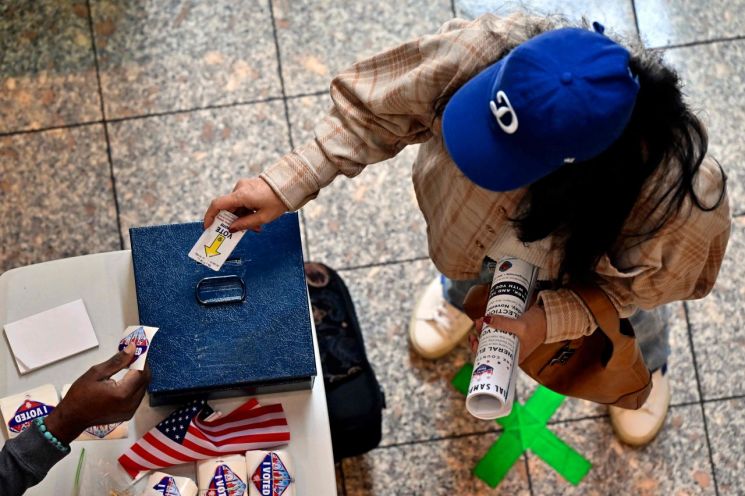
'The Flower of Democracy' - How Was This Year of Numerous Elections?
Elections, the system through which voters choose political power holders, are called the 'flower of democracy.' This year, elections were held in over 60 countries and regions worldwide, with 46% of the global population exercising sovereignty through voting. Ahead of the largest elections in modern history, the influential media outlet Time described this year as "a year that will determine the fate of democracy."
The most notable election was undoubtedly the U.S. presidential election. Held on November 5 (local time), the U.S. election was expected to be fiercely competitive until the final count, but unexpectedly ended quickly with former President Donald Trump reclaiming the White House. AP assessed, "Voters did not focus on warnings that Trump's election posed a threat to democracy but were more concerned with frustrations over high inflation and surging immigration during President Joe Biden's term."
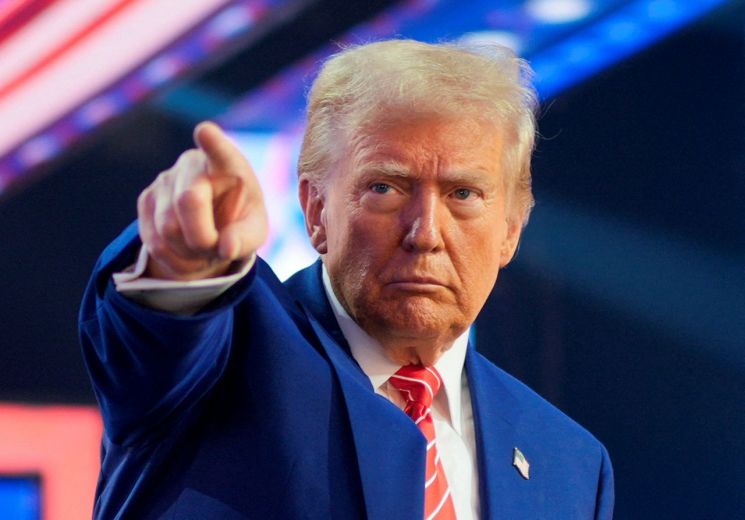
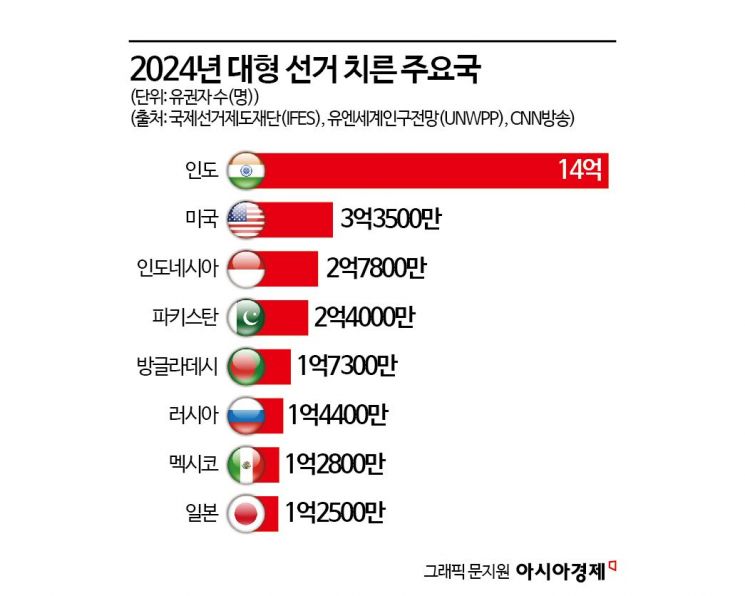
Experts' analyses that incumbents face disadvantages in recent elections seem applicable to the U.S. Professor Steven Levitsky, a political scientist at Harvard University, stated in November, "Since the onset of COVID-19 in 2020, out of 54 elections held in Western democracies, incumbents lost in 40," indicating a trend of incumbents being disadvantaged. Experts believe that the pandemic elevated immediate economic issues over the importance of democracy, influencing election outcomes more significantly.
In India, the world's largest electoral arena, the ruling party suffered setbacks. The Bharatiya Janata Party (BJP) won, securing Prime Minister Narendra Modi a third term, but recorded a much lower vote share than expected, losing its absolute majority of seats. In South Africa, the African National Congress (ANC), which had governed since Nelson Mandela's presidency, failed to secure a majority for the first time in 30 years. Severe wealth inequality and corruption issues are interpreted as causes of these results.
Far-Right and Authoritarian 'Rise' Shakes Political Landscape
Throughout the world, threats to democracy were frequent during elections. In European elections this year, the rise of far-right forces emerged as a threat to democracy. The June European Parliament elections, following the U.S. presidential election, shocked the world as far-right political forces surged. Young voters openly expressed opposition to immigration policies, showing distrust toward established political powers. As far-right parties gained ground, France’s Patriotic Europeans Against the Islamization of the West (PfE), Germany’s Alternative for Germany (AfD), and Italy’s European Conservatives and Reformists (ECR) became key players, currently shaking political scenes across countries.
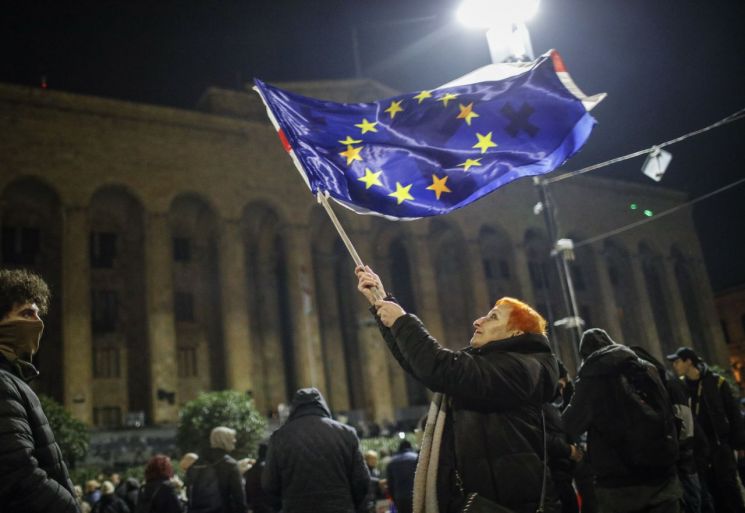
In Russia and other countries, elections as democratic institutions were criticized for being used by authoritarian forces to consolidate power. In March, Russian President Vladimir Putin secured reelection with a record 87% vote share. One month before the election, opposition leader Alexei Navalny died in prison. Critics expressed concern that in Russia, Iran, Venezuela, and similar countries, sham elections are held, worsening authoritarianism rather than democracy losing its foundation.
Freedom House, an international human rights organization evaluating the democratic nature of elections worldwide annually, reported that among 62 elections held globally from January to November this year, violence such as attacks on candidates occurred in 26 cases, and in one out of four elections, voters were not guaranteed genuine choice. Additionally, in at least 16 elections in countries like Algeria and Azerbaijan, dictators took political actions such as disqualifying or arresting rival candidates.
Regime Change Through Bloody Protests... "Showing Institutional Resilience"
On the other hand, assessments indicate democracy was not only attacked and threatened. Analyses of Trump’s election victory in the U.S. describe an ironic situation institutionally. The 2020 election led to the January 6 Capitol riot, severely shaking democracy, yet during this year's campaign, Trump was portrayed as a victim of political violence after surviving two assassination attempts. Unlike 2016, when he won only the electoral college vote, this year he won all results, enhancing democratic legitimacy.
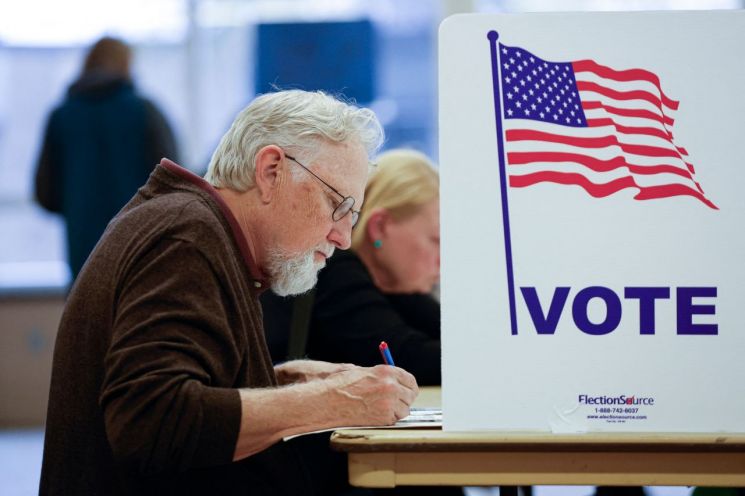
In Mexico, bordering the U.S., an ironic situation unfolded. Ahead of the June presidential and general elections, 37 candidates were assassinated, leading to descriptions of "the bloodiest election in modern history." Yet, Mexico, known as a 'macho country,' elected Claudia Sheinbaum as its first female president, a historic milestone. Foreign media interpreted this as a sign of democracy’s resilience despite being cornered.
Simultaneously, growing anti-authoritarian demands during elections led to large-scale protests and regime changes. In March, Senegal’s presidential election saw the youngest opposition candidate, Basiru Diomaye Faye, elected. The incumbent president abruptly postponed the election three weeks prior, drawing accusations of a 'constitutional coup' and triggering intense protests, culminating in regime change after 12 years. In Bangladesh, after 15 years of dictatorship, Prime Minister Sheikh Hasina won the January general election amid opposition boycotts but fled to India in August following relentless bloody protests, resulting in regime change.
Growing Distrust in Democracy... 6 out of 10 Dissatisfied with How It Works
Distrust toward representative democracy, where representatives are elected through voting, is increasing. A February survey by the Pew Research Center of voters in 24 democracies found 77% viewed representative democracy as a "good" government system, yet 6 out of 10 expressed dissatisfaction with how democracy functions in their country. The percentage rating it as "very good" was half of that in 2017. Pew Research Center pointed out that political parties fail to adequately represent citizens' interests.
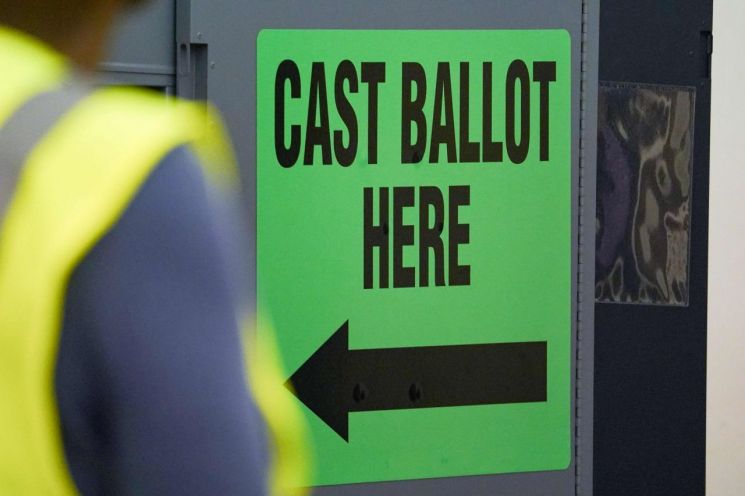
Consequently, voter turnout is declining, and institutional noncompliance is rising. According to the International Institute for Democracy and Electoral Assistance’s '2024 Global State of Democracy' report, average global voter turnout dropped from 65.2% to 55.5% over the past 15 years. Meanwhile, one in five elections worldwide from 2020 to 2024 involved at least one legal challenge, with defeated candidates or parties contesting results. One in ten elections saw opposition boycotts. Freedom House research lead Yana Gorokhovskaya forecasted, "Democracy survived the election year, but the struggle for freedom continues."
Once Again on the Test Bench... Instability to Persist Next Year
Democracy, having experienced various events worldwide this year, is expected to face threats again next year. As the new year approaches, incidents shaking democratic institutions continue to emerge. AP contrasted the South Korean National Assembly blocking a presidential emergency decree with a U.S. candidate who overturned previous election results yet ultimately won, illustrating democracy’s multifaceted tests this year.
Fewer elections are scheduled next year compared to this 'super election year.' However, political upheaval in major European countries at year-end suggests democracy will face another test. In Germany, where far-right forces surged, the federal election originally set for September was moved up to February 23 after Chancellor Olaf Scholz (Social Democratic Party, SPD) lost a vote of no confidence in the Bundestag. In France, a no-confidence motion against Prime Minister Michel Barnier passed the lower house, causing the first cabinet collapse in 62 years and intensifying political turmoil. President Emmanuel Macron refuses to resign and is contemplating political maneuvers.
Vedi Hadiz, director of the Asia Institute at the University of Melbourne, told The Guardian, "It is cautious to say democracy has been abandoned, but expectations of what democracy can achieve have lowered." He noted, "Major Western democracies have experienced democratic backsliding due to the rise of right-wing populism, anti-immigrant sentiment, and welfare state decline," criticizing their failure to present successful democratic models.
© The Asia Business Daily(www.asiae.co.kr). All rights reserved.
![From Bar Hostess to Organ Seller to High Society... The Grotesque Con of a "Human Counterfeit" [Slate]](https://cwcontent.asiae.co.kr/asiaresize/183/2026021902243444107_1771435474.jpg)


















