Shinhan Investment Corp. pointed out on the 26th that there is a concern about policy decoupling amid differentiated economic conditions between the US and non-US countries such as Europe, China, and Korea.
Researcher Ha Geon-hyung explained, "Differentiation in monetary policies among countries is becoming prominent. While the US is focusing on inflation risk amid a favorable economic flow and signaling a slowdown in the pace of future interest rate cuts, Europe, China, and Korea are strengthening dovish stances to curb downside economic risks."
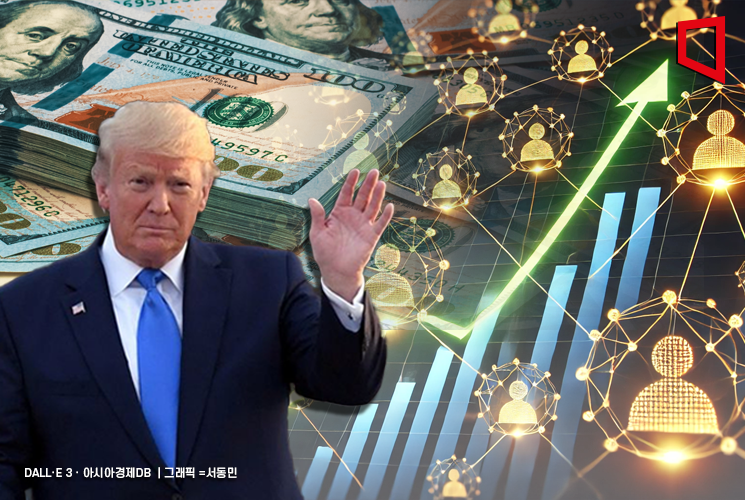
Researcher Ha predicted, "In January, since the Trump administration's policies have opposite effects on the US and non-US countries, the relative economic and capital market superiority of the US over non-US countries is expected to continue until the policies are concretized."
He added, "Concerns about monetary policy decoupling are rising amid differentiated domestic demand environments, making it inevitable for financial market volatility to expand due to strong dollar pressure accompanied by capital inflows and outflows. However, since monetary easing has been strengthened through interest rate cuts in Europe, China, and Korea in the second half of this year, the effects of these policies are expected to start reflecting in indicators by mid-first quarter of next year at the latest."
He also elaborated, "If policies such as high tariffs are not fully implemented at the point when policies are concretized after Trump's inauguration on January 20, it is judged that the relative economic recovery of non-US countries is possible amid inflows of demand for inventory restocking."
Regarding the Korean market, he diagnosed, "It is a phase that requires digestion of scattered uncertainties. As demand shifts from services to goods centered on the US, the external sector is maintaining a moderate growth trend."
He further explained, "However, since household fundamental conditions are weak and consumption sentiment contraction due to increased political uncertainty is inevitable, caution is needed against delayed domestic demand recovery. It is a phase where conservative investment execution prevails."
He continued, "Although psychological contraction due to the impeachment political situation is inevitable, the actual economic shock during past impeachment periods was limited, and consumer prices are expected to remain stable in the 1% range. Although the Monetary Policy Committee took preemptive monetary easing measures in November, the need for domestic demand stimulation remains." In particular, it is expected that the Monetary Policy Committee will manage downside growth risks through consecutive interest rate cuts in the January meeting.
© The Asia Business Daily(www.asiae.co.kr). All rights reserved.
![Clutching a Stolen Dior Bag, Saying "I Hate Being Poor but Real"... The Grotesque Con of a "Human Knockoff" [Slate]](https://cwcontent.asiae.co.kr/asiaresize/183/2026021902243444107_1771435474.jpg)
















