Recruiting Crime Participants Using Hardship and Quick Cash Bait
White Mask Robbery Case Shocks Japanese Society
Sales of Security and Self-Defense Products Rise Amid New Crime Trends
Recently in Japan, a series of robbery incidents targeting homes where elderly people live have occurred, with some cases being extremely malicious, involving victims' deaths or abductions and confinement.
On the 22nd, Tokai TV reported that home invasion robberies using "Yamibaito" have been occurring one after another, emerging as a social issue. "Yamibaito" is a newly coined term combining the Japanese words for darkness, "yami," and part-time job, "baito." It refers to recruiting people in need of money through social networking services (SNS) as if hiring part-time workers, then using them for crimes. Those who respond to the recruitment receive instructions via SNS platforms like Telegram to perform roles such as lookout, home invasion, and transporting stolen goods, after which they receive payment.
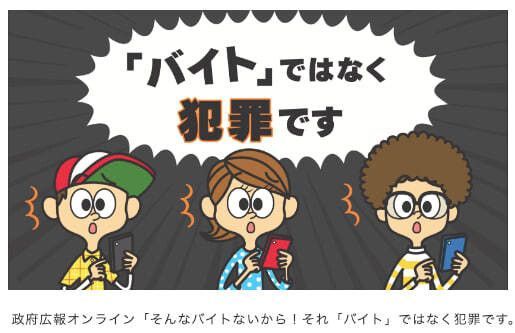 Warning poster from the Tokyo Metropolitan Police Department. It reads, "Yamibaito is a crime." Tokyo Metropolitan Police Department
According to NHK reports, from August to early this month, there have been 20 Yamibaito-related crimes uncovered in Tokyo and the surrounding metropolitan area. On the 2nd of last month, a group of young men in their 20s who took part in Yamibaito broke a window of a house in Tokyo, tied up a resident in their 70s with tape, stole cash, and fled. In October, in Yokohama City, a Yamibaito crime group murdered a 75-year-old man to steal 200,000 yen.
Yamibaito operations typically involve multiple stages, often more than four, including the initial client who oversees the crime ("director"), a "broker" who recruits people via social media, and the "executor" who carries out the crime. Notably, they usually communicate through mobile messengers like Telegram, known for strong security, and often do not know each other's real names or faces, making it difficult for authorities to trace other participants even if one is caught, according to local media.
Among these, the Tokyo Metropolitan Police recently focused on a series of home invasion robberies that occurred consecutively from late August to November 3 in Tokyo, Saitama Prefecture, Chiba Prefecture, Kanagawa Prefecture, and other parts of the metropolitan area. As these robberies targeting homes continued, public anxiety about safety in Japan increased, and the police have heightened their vigilance.
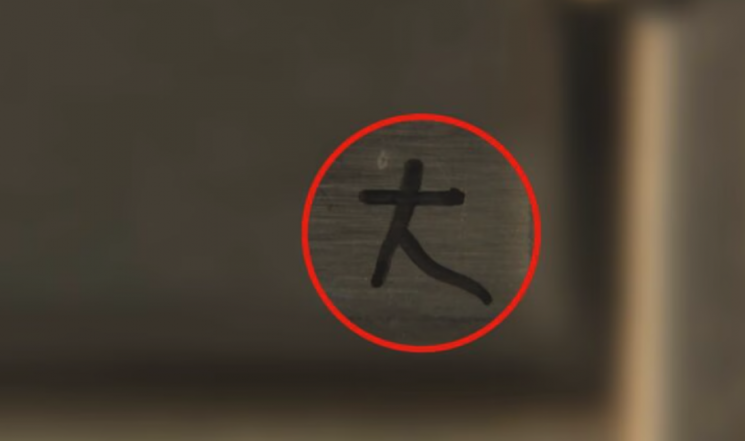 As suspicious characters were often found written on some residential mailboxes, concerns have even arisen that the perpetrator may have conducted a preliminary reconnaissance before the crime. In fact, a kanji character "大" was spotted on a mailbox in a multi-unit housing complex in Tokyo, which Tokai TV analyzed could possibly be used to mean various things such as "large family" or "university student." Tokai TV
Suspicious characters written on some residential mailboxes have been occasionally spotted, raising concerns that these might be reconnaissance marks made before the crimes. For example, a kanji character '大' was seen on a mailbox in a shared housing complex in Tokyo, which Tokai TV analyzed could have various meanings such as "large family" or "university student." Japanese security companies also report that crime-related markings may include 'M' for male, 'W' for female, 'S' indicating a single occupant, and 'SS' meaning closed on Saturdays and Sundays.
In response to the increase in Yamibaito crimes, Japanese police are considering introducing undercover investigations. The police plan to adopt investigative methods involving the creation and presentation of fictitious identification cards to approach criminal organizations using Yamibaito. The ruling Liberal Democratic Party of Japan has also suggested that undercover operations are necessary for robberies involving SNS. Although forging identification is illegal in Japan, the Penal Code stipulates that it is not punishable if done in the course of legitimate duties. The police believe this approach is feasible within the current legal framework.
As public anxiety grows, demand for security products has surged. According to Cainz, a Japanese home center, the FC Kofu Showa branch saw sales of outdoor sensor lights increase more than sevenfold from October 21 to 27 compared to the same period last year. Sales of security films rose 2.8 times, auxiliary locks 2.5 times, and security cameras 2.2 times. At the Ichihara branch, inquiries about security measures increased, leading to the establishment of a dedicated security product display since September. The range of security products has expanded to meet diverse consumer needs. Auxiliary locks, security cameras, and security films that prevent glass breakage, which are easy to use in ordinary homes, have become representative security products. Unique security items such as "method gravel," which amplifies the sound of footsteps approaching gardens or entrances, are also gaining attention. In addition to home security products, personal self-defense items are also popular.
© The Asia Business Daily(www.asiae.co.kr). All rights reserved.


















