KCCI-MOTIE '3rd Industrial Sector Carbon Neutrality Policy Council'
"China monopolizes battery raw materials and supply chains... Foster used battery industry"
"4.2 million electric vehicles by 2030 impossible... Major revision needed"
As the United States and the European Union (EU) strengthen carbon-related trade regulations, industry and academia have suggested fostering the used battery industry and lowering unrealistic electric vehicle (EV) deployment targets to ease the burden on companies.
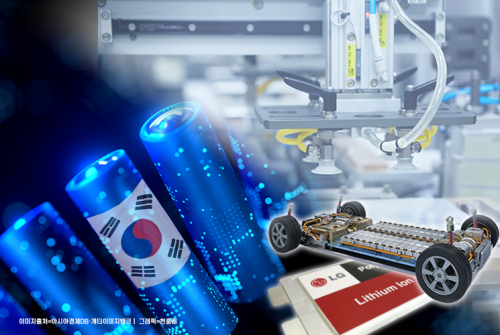
The Korea Chamber of Commerce and Industry (KCCI) announced that it jointly held the "3rd Industrial Sector Carbon Neutrality Policy Council" with the Ministry of Trade, Industry and Energy on the 20th at the KCCI building in Jung-gu, Seoul. Participants included Park Il-jun, Executive Vice Chairman of KCCI; Kang Gam-chan, Director of Industrial Policy at the Ministry of Trade, Industry and Energy; Kim Ju-hong, Executive Director of the Korea Automobile Mobility Industry Association; Kwon Guk-hyun, Circular Economy Team Leader at the Korea Battery Industry Association; representatives from LG Energy Solution, Samsung SDI, SK On, Renault Korea, and KG Mobility; Professor Seon Yang-guk of Hanyang University; Senior Research Fellow Cho Cheol of the Korea Institute for Industrial Economics and Trade; and Kim Dong-su, Director of the Environment, Social, and Governance (ESG) Research Institute at Kim & Chang Law Firm (experts).
According to KCCI, the EU has been enforcing the Battery Act since February. This law strengthens obligations such as the use of recycled raw materials for battery items and the collection of used batteries. Starting in 2027, the Digital Product Passport (DPP) system will be mandated, beginning with battery items. The United States is also preparing legislation such as the Clean Competition Act (CCA) and the Foreign Pollution Fee Act (FPFA), which impose taxes on high carbon-emission products.
At the council, there was a call to actively foster the used battery industry. It was explained that if the system is restructured to reuse and recycle used batteries as raw materials rather than waste, both regulatory compliance and profit generation are possible. Kim Eun-ah, a research fellow at the National Assembly Future Institute, stated, "Around 100,000 used batteries are expected to be discharged around 2030," and suggested, "Activating the used battery industry will help companies respond to the EU Battery Act and achieve carbon neutrality." The Battery Industry Association proposed the enactment of an integrated law on used batteries.
There was also a call for the battery industry to make greater efforts to reduce dependence on Chinese raw materials and components. Professor Seon Yang-guk said, "The battery industry faces the challenge of lowering dependence on Chinese raw materials and components, which China monopolizes," adding, "Through efforts such as using recycled raw materials, recycling used batteries, sustainable raw material mining, and developing innovative processes, we must achieve carbon neutrality goals early and regain market leadership."
Opinions were also expressed that the government should lower its EV deployment targets. Previously, the government announced in June last year that it would deploy 4.2 million electric vehicles and 300,000 hydrogen vehicles by 2030. Senior Research Fellow Cho Cheol stated that as of the end of last month, the number of electric vehicles in Korea was only about 677,000, and hydrogen vehicles about 37,000. He argued, "It is impossible to achieve the government’s target of deploying 4.2 million electric vehicles and 300,000 hydrogen vehicles by 2030," and insisted, "The deployment targets must be significantly revised."
The automotive industry requested the government to increase support policies to overcome the EV chasm (temporary demand slump). Executive Director Kim Ju-hong pointed out, "Support policies for electric vehicles are decreasing, such as reductions in purchase subsidies, termination of special discounts on EV charging fees, and planned reductions in acquisition tax exemption limits and highway toll discounts," and asked for increased support policies over the next three years.
There was also a call to advance the measurement system for the Digital Product Passport (DPP). Director Kim Dong-su said, "Through the DPP, companies can efficiently manage ESG data, and consumers can make rational choices based on comparable product information," adding, "As the EU is expected to strengthen DPP regulations starting with batteries and expanding to various products, public and private sectors must cooperate to build a national-level data platform."
The government stated it will strive to prepare support policies for corporate carbon neutrality. Kang Gam-chan, Director of Industrial Policy, said, "We are well aware of the increased uncertainty due to the inauguration of the second Trump administration and the heavy burden on the industry regarding carbon neutrality amid the EV market slump," adding, "We will faithfully implement the construction of an industrial supply chain (carbon) data platform and do our best to prepare policies to foster the used battery industry."
Vice Chairman Park Il-jun said, "Both large and small-to-medium enterprises are struggling with measuring and collecting carbon data," and added, "We will actively work to solve corporate ESG data issues through the DPP response platform guideline development project, which started this month in cooperation with the Ministry of Trade, Industry and Energy."
© The Asia Business Daily(www.asiae.co.kr). All rights reserved.
!["The Woman Who Threw Herself into the Water Clutching a Stolen Dior Bag"...A Grotesque Success Story That Shakes the Korean Psyche [Slate]](https://cwcontent.asiae.co.kr/asiaresize/183/2026021902243444107_1771435474.jpg)
















