Announcement of 68 Projects in 6 Major Areas for System and Policy Changes in 2025
Designation of Distributed Energy Specialized Areas, Issuance of Ai Culture Pass Card
Expansion of Infertile Couples' Treatment Cost Support, Free City Bus Service for Those Aged 75 and Over
Ulsan City announced 68 new or improved systems and policies across six major sectors starting in 2025.
The six sectors are △Economy & Industry △Culture, Tourism & Sports △Environment & Greenery △Welfare, Health & Safety △Transportation & Urban Development △Administration & Citizen Life, all focused on policies aimed at ‘improving citizens’ quality of life.’
In the Economy & Industry sector, a distributed energy specialized zone will be designated in the Ulsan Mipo and Onsan National Industrial Complexes, where large-scale power supply and demand are concentrated.
Additionally, by expanding the distribution of hydrogen vehicles, the city plans to maximize the development of the hydrogen vehicle industry, a future new growth engine, and actively promote the hydrogen city by expanding hydrogen refueling stations and revitalizing hydrogen production, storage, and transportation technology industries.
For the training of over 530 personnel through eight courses in three countries, educational equipment will be purchased and supported for local shipbuilding companies operating overseas shipbuilding workforce training centers.
In the Culture, Tourism & Sports sector, the Ulsan Ai Culture Pass Card (worth 100,000 KRW), which can be used at affiliated stores related to culture, tourism, and sports, will be issued to children of elementary school age registered as residents of Ulsan.
A Taehwagang Water Sports Center will be opened near the Taehwagang Simnidaebatgyo Bridge, laying the foundation for Ulsan to leap forward as a water sports hub city. Also, the Taehwa Culture Experience Center, a complex cultural and artistic space, will open in Seongan-dong, Jung-gu, providing meditation centers, exhibition halls, and experience spaces to expand cultural enjoyment opportunities for citizens.
Along with this, two cultural factories and two cultural and artistic spaces utilizing vacant houses will be established as cultural city hubs, operating culture and art-related programs for citizens.
Furthermore, the environment will be improved so that vulnerable tourist groups such as people with disabilities, the elderly, and families with infants can visit tourist sites conveniently and safely.
In the Environment & Greenery sector, the ozone warning issuance area will be changed from the existing administrative zones to zones based on ozone concentration distribution to improve warning accuracy.
A forestry worker allowance will be newly established, providing up to 600,000 KRW annually to forestry households eligible for the forestry and forest public benefit direct payment system, aiming to stabilize income and enhance the rights of forestry workers.
Also, a waste disposal business suitability confirmation system will be implemented, targeting seven types of businesses including waste intermediate disposal, final disposal, and collection and transportation, to verify compliance with waste-related laws and qualifications. Strong measures such as revoking disposal business permits will be taken if standards are not met or suitability confirmation is not obtained.
In the Welfare, Health & Safety sector, systems supporting healthy pregnancy, childbirth, and childcare will be further strengthened. To reduce the economic burden on infertile couples and increase birth rates, support for treatment costs will be changed from 25 times per couple to 25 times per childbirth. The health insurance copayment rate for supported households will also be uniformly applied at 30% regardless of age, expanding support.
Additionally, home care services for mothers and newborns will be supported, and the scope of necessary expenses borne by parents at daycare centers will be expanded from children aged 4-5 this year to children aged 3-5 next year.
A grandparent caregiving allowance will be newly introduced, providing up to 300,000 KRW per month to grandparents caring for infants aged two, and the target for the multi-child happy rental car support will be expanded from 150 to 200 families. The child meal support unit price will also be raised from the current 9,000 KRW to 9,500 KRW, making Ulsan a better place to raise children.
With the increase in the median income standard next year, the number of welfare benefit recipients will expand, further strengthening minimum living guarantees for low-income groups. In addition, the names of senior job and social activity support projects will be changed for easier understanding, and the participation target for senior public activity projects will be expanded to include basic pension recipients aged 65 and older and occupational pension recipients (including spouses) such as public officials and military personnel.
In the Transportation & Urban Development sector, when transportation-vulnerable groups such as pregnant women, infants, and the elderly use voucher taxis for hospital visits, up to 4,500 KRW of the fare excluding the user’s copayment will be supported. Also, free bus fares will be implemented for senior citizens aged 75 and older residing in Ulsan who use senior-exclusive transportation cards.
Transfer convenience facilities will be installed, and the transfer system and intersections will be improved to simplify transfer routes and enhance the transportation system at Taehwagang Station. Additionally, a smooth transfer system between transportation modes using Buk-Ulsan Station connected to Autobell Road will be established to provide improved transportation convenience to citizens.
In the Administration & Citizen Life sector, integrated circuit (IC) resident registration cards will be issued to realize a digital identity verification system, improving convenience for citizens by alleviating the inconvenience of carrying identification cards.
The Korean Scholarship Foundation will expand interest support on new loans from university students to graduate students, reducing the burden of student loan interest repayment and creating a stable academic environment. A regional youth support center will open at the Jongha Innovation Center, serving as a hub for youth policy promotion and supporting youth communication, participation, and activities.
Detailed information on the changing systems and policies can be found from the end of this month on the Ulsan City website under ‘City News & Announcements.’
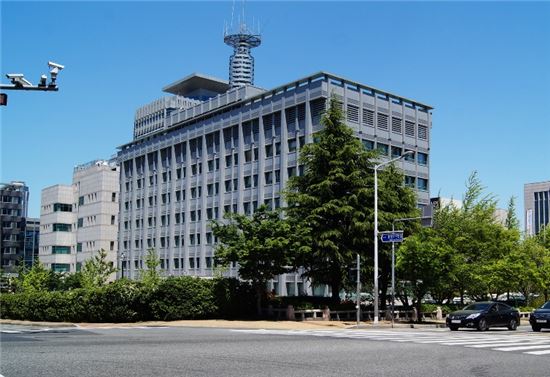 Ulsan City Hall.
© The Asia Business Daily(www.asiae.co.kr). All rights reserved.
















