Ministry of Land, Infrastructure and Transport Announces Relocation Measures
"Leave it to the Market but Resolve Temporary Imbalances"
Supplement by Supplying 7,700 Houses on Idle Land Near 1st Phase New Towns
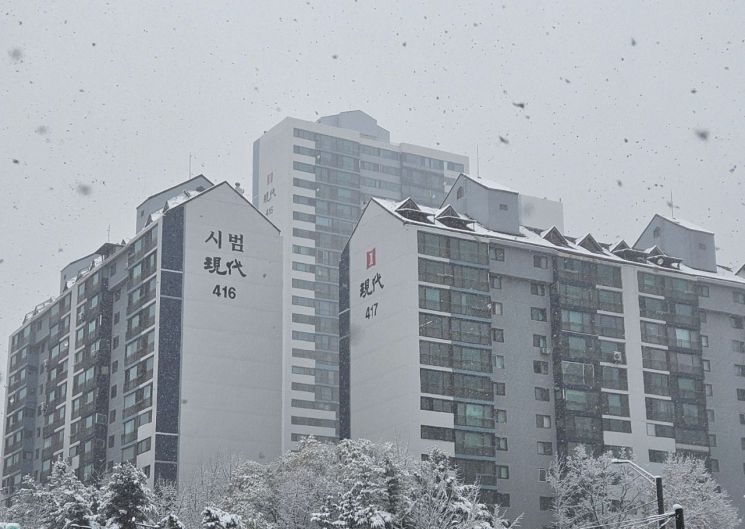
The government has determined that leaving the relocation demand from the reconstruction of the 1st generation new towns to the market is unlikely to cause a 'jeonse crisis' and has proposed a plan to only address temporary imbalances. It decided to supply only 7,700 relocation support housing units in Bundang, Pyeongchon, and Sanbon, including the health center site near Seongnam Library (1,500 units) and the Dangjeong industrial area in Gunpo (2,200 units). The goal to start construction of the reconstruction pilot district in 2027 remains unchanged. On the 19th, the Ministry of Land, Infrastructure and Transport announced the '1st Generation New Town Relocation Support and Metropolitan Transportation Improvement Plan' containing these details.
According to the Special Act on Aged Planned Cities applied to the reconstruction of the 1st generation new towns, local governments must establish relocation measures for homeowners and tenants of houses demolished due to reconstruction. Based on this, relocation project operators such as Korea Land and Housing Corporation (LH) are required to create relocation complexes or provide circulating housing and rental housing to the relocated residents. However, the Ministry of Land, Infrastructure and Transport plans to have the 1st generation new towns absorb the relocation demand independently in the housing market, similar to existing redevelopment and reconstruction projects like Seoul’s Dunchon Jugong (Olympic Park Foret On) or Garak Siyoung Apartments (Helio City).
From 2027, when relocation for the 1st generation new town reconstruction pilot district begins, through 2031, a five-year period, the ministry assessed that there is sufficient supply within 10 km of each 1st generation new town center. The ministry estimates that the average annual move-in volume over five years will be 70,000 households, exceeding the average annual relocation demand of 34,000 households.
In Bundang, move-ins will begin in 2027 for the remodeling of Neutimauel 3 and 4 complexes (1,900 units), Mujigae Village 4 complex (600 units), redevelopment apartments in Seongnam’s old downtown area, Sangdaewon 2 district (5,100 units), and Sanseong district redevelopment apartments (3,500 units). A ministry official stated, "In the case of Gwacheon City’s 2nd generation reconstruction, despite a relocation demand of 5,000 households from 2016 to 2018, 8,000 new units were supplied in Anyang, 9 km away, during a similar period, causing jeonse prices to actually fall," adding, "We will not construct or operate relocation complexes solely to absorb relocation demand."
However, for areas where there is a temporary or localized shortage of move-in volume, the ministry announced a plan to supply 7,700 public and private housing units on idle sites inside and outside the 1st generation new towns. In the cases of Ilsan and Jungdong, the supply volume is sufficient, so the impact from relocation demand is expected to be minimal. In Bundang, a large-scale relocation impact is expected in 2026 due to the redevelopment of Seongnam’s original downtown, and a temporary shortage of move-in volume may occur between 2028 and 2029.
Accordingly, the ministry decided to supply 1,500 public sale housing units built by LH by 2029 on the health center site near Seongnam Central Library. These will be used as relocation support housing and then remodeled for public sale.
Sanbon and Pyeongchon will secure supply capacity in preparation for potential setbacks in planned housing projects. By 2029, 2,200 private apartments will be supplied in the Dangjeong industrial area in Gunpo. This site is vacant land stockpiled by LH. Part of the site will be sold to the private sector to build private sale housing and industrial facilities. Additionally, two other idle sites will each have 2,000 public and private apartments constructed.
Although there are criticisms that the Yoon Seok-yeol administration’s goal of 'starting construction in 2027 and move-ins by 2030' is unrealistic, the ministry expressed its determination to keep the schedule. Jung Woo-jin, Director of Urban Policy at the Ministry of Land, Infrastructure and Transport, said, "Since the National Assembly, the representative institution of the people, enacted the law (Special Act on Aged Planned Cities), it is the government’s role to execute it steadily," adding, "Through the pilot district contest, we felt the strong desire of residents for reconstruction, and the earliest possible start date for construction is 2027."
© The Asia Business Daily(www.asiae.co.kr). All rights reserved.












