Lee Chang-yong, Governor of the Bank of Korea, Inflation Briefing
"Consumer Sentiment Plummeted After Martial Law, This Year's Growth Rate Likely Lower Than Expected"
"Ruling and Opposition Parties Need to Agree for Swift Supplementary Budget 추진"
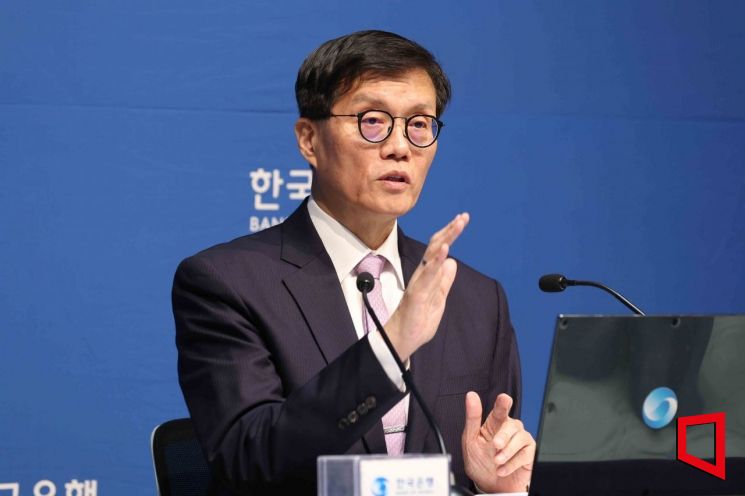
Lee Chang-yong, Governor of the Bank of Korea, mentioned the necessity of a prompt supplementary budget (additional budget) as domestic consumer sentiment cooled and the economic growth forecast declined following the martial law situation.
Economic Growth Forecast for This Year Lowered to 2.1%
Governor Lee said at a 'Price Stability Target Operation Status Review Press Conference' held at the Bank of Korea in Jung-gu, Seoul, on the afternoon of the 18th, "Consumer sentiment has significantly contracted, as seen in the decrease in card usage following the martial law situation," adding, "It is a very important time to stabilize consumer sentiment."
He continued, "We previously expected the economic growth rate for the fourth quarter to be 0.5%, but under the current circumstances, it could slightly fall to 0.4% or lower," and explained, "If that happens, the country's economic growth rate for this year could also drop from the previous forecast of 2.2% to 2.1%."
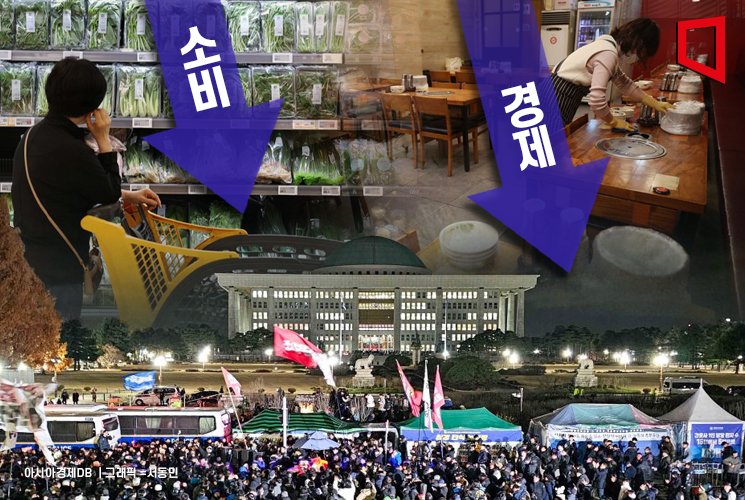
Regarding next year's economic growth rate, he maintained the previous estimate of 1.9% but mentioned the possibility of future changes. Governor Lee emphasized, "The budget bill passed by the National Assembly currently has about a -0.06 percentage point impact on next year's economic growth rate," but added, "Since fiscal policy can change, we will discuss next year's forecast again when new data is gathered."
He also proposed economic stimulus measures to restore sentiment. Governor Lee said, "It is not desirable for fiscal policy to act restrictively on the economy at times like this," adding, "A fiscal policy that slightly stimulates the economy is necessary." He further stated, "In a situation with significant downward pressure on the economy, it would be good for the ruling party, opposition, and government to quickly reach an agreement and announce a new budget, which would also be beneficial for economic sentiment," and added, "It is advisable to temporarily target spending on specific items."
January Base Rate Decision to Be Made After Reviewing New Data
Regarding the January base rate decision, he said it is difficult to comment at this time. He responded, "The January base rate will be decided after reviewing new data coming in January, such as inflation, the economy, exchange rates, and household debt."
Governor Lee indicated that the exchange rate volatility increased after the martial law situation and suggested active intervention if the situation worsens. He evaluated, "Exchange rate volatility increased immediately after the emergency martial law, and smoothing operations were conducted through various interventions. Now, it has stabilized again and seems to be moving along with the overall dollar movement." He added, "Even without targeting a specific exchange rate level, we are prepared to firmly ease volatility if it increases." He also mentioned, "Foreign exchange reserves have not fallen below $410 billion, so there is no need to worry."
Regarding next year's inflation, he forecasted stability around the inflation target of 2%. He said, "The consumer price inflation rate reached the target level of 2% last August, and since then, it has remained in the 1% range, further solidifying the foundation for price stability," and added, "Consumer price inflation is expected to stabilize near the target level of 2% next year."
He also explained, "We have decided to maintain the price stability target system, which currently targets 2%, until the next review," noting, "This decision considered that the price stability target system has been effective in responding to high inflation after the pandemic not only in Korea but also in major countries, and that a price stability trend is expected over the next one to two years."
© The Asia Business Daily(www.asiae.co.kr). All rights reserved.


















