Honda and Nissan, the second and third largest automakers in Japan, have entered merger talks. This is a strategic move to survive in the rapidly changing global market amid fierce competition from electric vehicle companies such as the US-based Tesla and China's BYD. Upon completion of the merger, the combined group will leap to become the world's third-largest automotive group, surpassing Hyundai Motor and Kia.
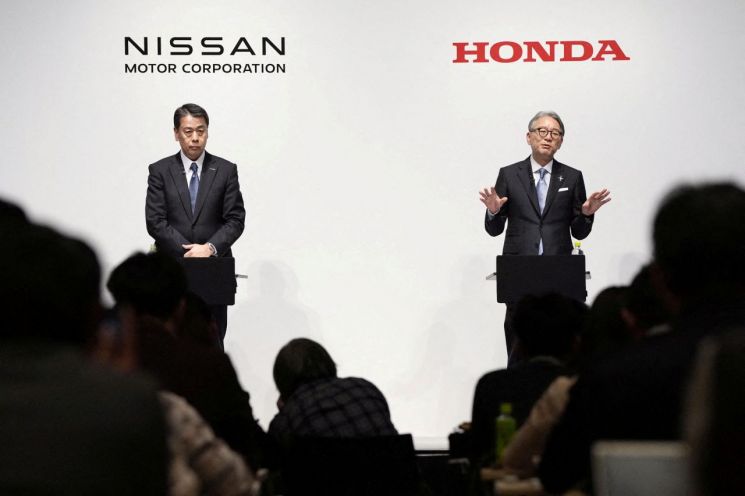
Honda and Nissan on the Verge of Merger: "MOU to be Signed Soon"
The Nihon Keizai Shimbun (Nikkei) reported on the 18th that Honda and Nissan are in discussions for a business integration. The plan involves establishing a holding company under which each brand will operate independently. Honda and Nissan are expected to soon sign a memorandum of understanding (MOU) and finalize shareholding and other details. Mitsubishi Motors, in which Nissan holds a 24% stake and is the largest shareholder, is also expected to be incorporated into the holding company structure in the future.
If the integration of the three companies is completed, an 'automotive giant' with annual sales exceeding 8 million units will be created. This surpasses the sales volume of Hyundai Motor and Kia, which ranked third globally last year with 7.3 million units. Honda and Nissan's global sales last year were 3.98 million and 3.37 million units respectively, while Mitsubishi recorded 780,000 units. Bloomberg News commented, "Within Japan, a unique competitor to Toyota will emerge," and added, "The group will secure a stronger position to better cope with fierce competition in the global market."
‘Scaling Up’ Strategy Amid Fierce Electric Vehicle Transition Competition
This merger negotiation is particularly notable as it takes place amid the rapid global shift from internal combustion engine vehicles to electric vehicles. Japanese automakers, pressured by the aggressive advances of Tesla, the world's largest electric vehicle company, and Chinese electric vehicle manufacturers backed by government support, have decided to grow in scale to secure competitiveness, unable to bear the burden of solo investments.
Honda and Nissan have reportedly been discussing collaboration behind the scenes since March. In August, they announced a strategic partnership related to software and electric vehicle infrastructure. At that time, both sides hinted at the possibility of expanding cooperation, including capital alliances. Nikkei highlighted that this merger marks an 'unprecedented strategic change,' noting that Honda has traditionally adhered to the 'principle of self-sufficiency' since its founder Soichiro Honda. It also assessed this strategic shift as reflecting the pressure Japanese automakers face amid the industry's transition to electric vehicles.
The publication also noted recent alliances in the global automotive market aimed at establishing a 'new framework,' such as General Motors (GM) in the US collaborating with Hyundai Motor on electric vehicles and software. In September, Germany's BMW announced cooperation with Japan's Toyota, and US-based Rivian partnered with Germany's Volkswagen.
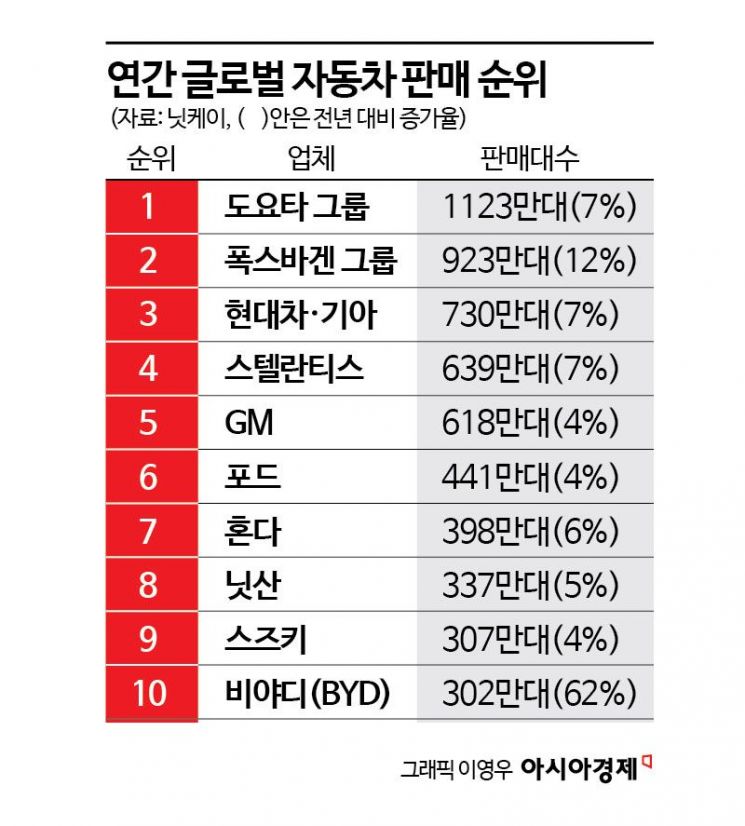
Some view this as a 'defensive merger among weaker players.' Honda and Nissan have seen their sales bases rapidly weaken not only in the Chinese market but also in Southeast Asia over recent years due to the rise of Chinese new brands emphasizing price competitiveness. This year, until mid-last month, Honda and Nissan's sales in China dropped by more than 30% and 10% respectively compared to the previous year. Given Nissan's ongoing large-scale restructuring due to management difficulties, the merger with Honda appears to be an unavoidable step for a resurgence.
"There is a Possibility," Honda President Confirms Discussions
Currently, the Japanese automotive industry is also facing uncertainty due to the inauguration of US President-elect Donald Trump in January next year. Concerns persist that Trump, who has positioned himself as a 'tariff man,' may target automobiles?one of Japan's largest export items?in his pressure on Japan, which has a trade surplus with the US. Earlier, Nissan and Mitsubishi had disclosed forecasts that their operating profits next year would decline by double digits compared to this year.
However, sources added that merger discussions between Honda and Nissan are still at an early stage. Honda President Toshihiro Mibe confirmed the talks in a TV Asahi interview that morning, saying, "Nothing has been decided yet," but also stated, "Considering all aspects, I think there is a possibility (of integration between the two companies)."
© The Asia Business Daily(www.asiae.co.kr). All rights reserved.



















