USTR Investigation Set to Begin... Commerce Department Also Reviewing
BIS "Half of New Legacy Chips Will Be from China in 3-5 Years"
Minimum 6 Months Required... Trump to Decide
U.S. President Joe Biden is tightening the grip on China until the end of his term. Following the imposition of high tariffs on electric vehicles and batteries to counter China’s “overproduction,” the administration plans to launch a trade investigation targeting Chinese legacy (older generation) semiconductors widely used in home appliances, automobiles, and weapons. However, considering that the investigation will take several months, the actual sanctions will likely be in the hands of President-elect Donald Trump, who takes office in January next year.
On the 16th (local time), The New York Times (NYT) reported that the Biden administration intends to start an investigation into Chinese legacy semiconductors under Section 301 of the Trade Act.
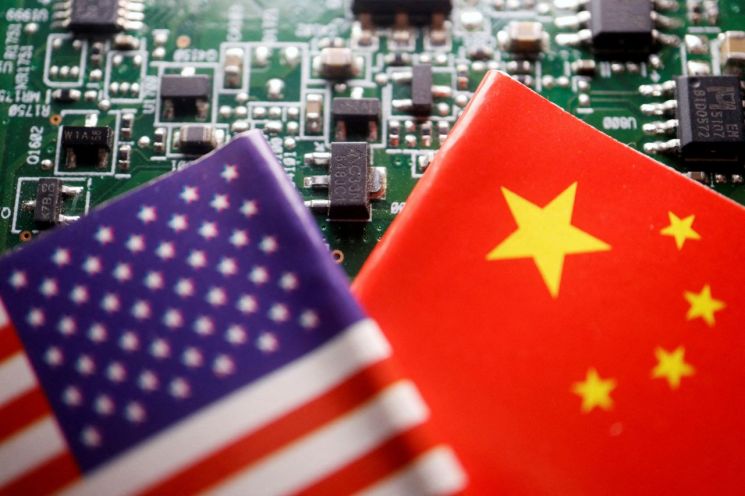
A trade association based in Washington, D.C., recently informed its members that the Biden administration has decided to conduct an investigation into unfair trade practices involving Chinese legacy semiconductors under Section 301 of the Trade Act, and that the U.S. Trade Representative (USTR) may begin preparations to initiate the investigation.
The U.S. government has blocked China’s access to cutting-edge semiconductors citing national security concerns but has left legacy semiconductors untouched. However, as the Chinese government makes massive investments in legacy semiconductors, concerns have arisen within the semiconductor industries of the U.S. and its allies.
The Biden administration has been reviewing whether to conduct trade investigations on Chinese legacy semiconductors under two laws: Section 232 of the Trade Expansion Act, overseen by the Department of Commerce, and Section 301 of the Trade Act, managed by the USTR. Section 301 focuses on unfair or unreasonable trade practices, while Section 232 targets threats to national security.
Earlier this year, the Department of Commerce investigated U.S. companies’ dependence on Chinese general-purpose semiconductors. According to a report released on the 6th by the Bureau of Industry and Security (BIS) under the Department of Commerce, China is expected to account for about half of the world’s new legacy semiconductor production capacity within the next 3 to 5 years. Moreover, Chinese companies offer prices 30 to 50% lower than U.S. companies, sometimes even below production costs. This could lead to price pressures in semiconductors following solar panels, batteries, and electric vehicles, potentially pushing Western companies out. It would also increase the U.S. supply chain’s dependence on China, and if Chinese semiconductors are embedded in U.S. infrastructure or weapons, it could pose cybersecurity threats.
Commerce Secretary Gina Raimondo pointed out on the 7th that China’s semiconductor subsidies and dumping sales have caused a price collapse, calling it “unfair” and stating that it could justify imposing tariffs.
According to a U.S. government document dated November 21, confirmed by the NYT, the Department of Commerce briefed other government agencies on China’s chip production issues and proposed conducting an investigation under Section 232 of the Trade Expansion Act. The State Department suggested investigating imports not only of Chinese semiconductors but also of all products containing Chinese chips. The Department of Commerce indicated it might consider a “component tariff,” a system that imposes tariffs only on the chips embedded in products rather than on the entire product. Experts analyze that since most Chinese semiconductors are not directly imported into the U.S. but come embedded in products such as dishwashers, computers, and toys, directly imposing tariffs on Chinese legacy semiconductors would have limited effectiveness.
Depending on the investigation’s outcome, tariffs could be imposed on specific Chinese semiconductors and products containing them, or import bans or other measures could follow. The Biden administration plans to start the investigation within weeks. However, the NYT noted that it will take at least six months to obtain results, and future decisions will be left to President-elect Trump.
© The Asia Business Daily(www.asiae.co.kr). All rights reserved.
![From Bar Hostess to Organ Seller to High Society... The Grotesque Con of a "Human Counterfeit" [Slate]](https://cwcontent.asiae.co.kr/asiaresize/183/2026021902243444107_1771435474.jpg)
















