Morgan Stanley, JP Morgan Forecast Dollar Weakness
Impact of Real Interest Rate Decline and Revival of Risk Appetite
Variables Including Trumflation and US Monetary Easing Pace Adjustment
Following the election of Donald Trump as the President of the United States, the value of the dollar surged sharply, but forecasts suggest it will peak by mid-next year and then decline. The decline in real interest rates and the potential economic recovery in major countries such as Europe were cited as the reasons behind the weak dollar outlook. However, if the strong U.S. economy continues next year and the Federal Reserve (Fed) slows the pace of interest rate cuts as announced, there is also a significant possibility that the strong dollar trend will persist.
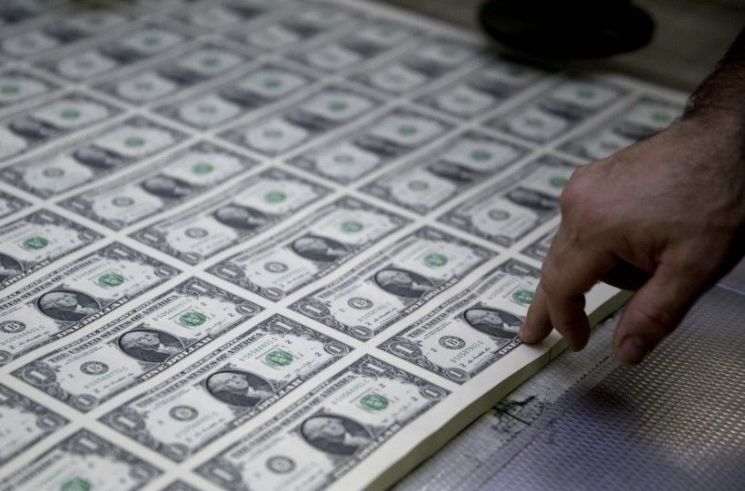
According to Bloomberg News on the 15th (local time), major Wall Street financial firms such as Morgan Stanley, JP Morgan Chase, and Soci?t? G?n?rale are predicting a weaker dollar next year.
Morgan Stanley expects the dollar's value to fall below the current level by December 2025, one year from now. JP Morgan also sees the dollar peaking as early as mid-next year before declining. Soci?t? G?n?rale forecasts the dollar's value to drop by 6% by the end of next year.
These predictions contrast with the recent strong dollar trend. The Bloomberg Dollar Spot Index has risen 6.3% so far this year, with a significant portion of the increase occurring after the U.S. presidential election held on November 5 last month. Analysts believe that President Donald Trump's policies on tariff hikes and illegal immigration bans could push inflation higher and curb the Fed's monetary easing, leading to prolonged high interest rates and a stronger dollar.
Morgan Stanley expects this dollar rally to weaken next year, citing a decline in real interest rates?nominal interest rates minus inflation?and a revival of risk appetite. They forecast U.S. Treasury yields to fall next year, with a larger decline compared to other countries, which would narrow the yield gap with major countries that has driven the strong dollar so far.
Citigroup anticipates that disappointment among dollar bulls may grow as Trump’s trade policies are implemented. Some in the market believe that if Trump uses tariffs as a negotiation lever or if trading partners do not retaliate with counter-tariffs, a trade war may be avoided.
Sophia Drosos, strategist and economist at Point72 Asset Management, assessed that "positive expectations for the dollar have already been largely priced in." She added, "If growth recovers in regions outside the U.S., such as Europe, the dollar could weaken against other currencies," pointing out "there are positive factors that could strengthen the global economy next year."
JP Morgan predicted, "If the Fed implements a considerably accommodative monetary policy and the dollar loses its relative interest rate and growth advantages, the dollar's depreciation could accelerate."
However, there are also views that if the U.S. economy remains strong and the Fed slows the pace of monetary easing as previously announced, the 'King Dollar' (strong dollar) march could continue. Whether 'Trumflation' (inflation caused by Trump’s policies) occurs is also considered a key variable that will influence the dollar’s value fluctuations.
© The Asia Business Daily(www.asiae.co.kr). All rights reserved.
![Clutching a Stolen Dior Bag, Saying "I Hate Being Poor but Real"... The Grotesque Con of a "Human Knockoff" [Slate]](https://cwcontent.asiae.co.kr/asiaresize/183/2026021902243444107_1771435474.jpg)











