Trump's Second Term Response and Livelihood Measures
Power Vacuum and Early Election Considered, Likely to Last Only Half a Year
The government has decided to announce next year's economic policy direction, which it is outlining ahead of the New Year, within this year. Amid heightened political turmoil, including the emergency martial law situation triggered by President Yoon Seok-yeol escalating into an impeachment crisis, the government has decided to expedite preparations for next year's economic policy direction to manage the aftermath of the chaos.
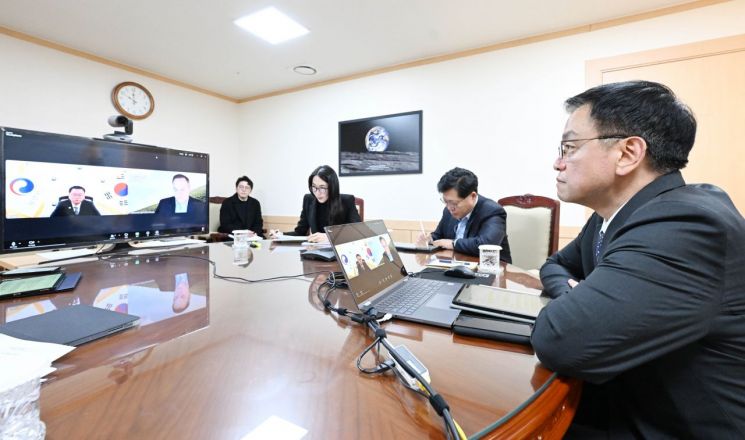
Choi Sang-mok, Deputy Prime Minister for Economy and Minister of Economy and Finance, stated in his opening remarks at the "Emergency Economic Ministers' Meeting" held at the Government Seoul Office Building on the afternoon of the 15th, "We will jointly announce the '2025 Economic Policy Direction' with relevant ministries within this year," adding, "It will include four major policy directions: maintaining external credibility, responding to trade uncertainties, improving industrial structure, and stabilizing people's livelihoods."
Next year's economic policy direction is expected to include a 'managed' policy approach capable of navigating the economic crisis caused by the national leadership vacuum. Concerns have been raised that the golden time to respond to sluggish domestic demand and the launch of Trump's second term might be missed, as the impeachment motion passed by the National Assembly the day before is expected to take several months for the Constitutional Court's decision and the new government to be inaugurated following an early presidential election.
An official from the economic ministries said, "There was a recognition that the power vacuum caused by the president's suspension should not lead to a governance vacuum," and added, "At this point, it is important to establish a policy direction that centers on stabilizing economic policy."
However, considering the power vacuum and the new government inauguration following next year's early presidential election, the limitations of the economic policy direction to be presented by the current economic team are clear. Politically burdensome policies will inevitably be postponed until the second half of next year, making it likely that the economic policy direction will effectively be a 'half-year' plan.
In light of this situation, Deputy Prime Minister Choi said, "We will actively communicate with the National Assembly and jointly seek ways to manage the economy stably." The government had previously expressed its intention to actively participate if a consultative body is formed regarding the 'Emergency Economic Review Meeting of the Ruling and Opposition Parties' proposed by the opposition.
Deputy Prime Minister Choi also stated that, to avoid missing opportunities in industrial support, he would explain the voices of the industrial sector to the National Assembly to ensure that bills determining the future fate of industries, such as the Semiconductor Special Act, the Artificial Intelligence (AI) Basic Act, and the Power Grid Special Act, are processed as much as possible within this year.
© The Asia Business Daily(www.asiae.co.kr). All rights reserved.
![Clutching a Stolen Dior Bag, Saying "I Hate Being Poor but Real"... The Grotesque Con of a "Human Knockoff" [Slate]](https://cwcontent.asiae.co.kr/asiaresize/183/2026021902243444107_1771435474.jpg)
















