ADB Announces Economic Outlook for Asia-Pacific Region
The Asian Development Bank (ADB) has revised South Korea's economic growth rate for next year down by 0.3 percentage points from three months ago to 2.0%. This year's growth rate was also lowered by 0.3 percentage points from the previous forecast to 2.2%. The current forecast only considers risks related to the second term of Donald Trump's administration, and does not reflect the impact of the martial law situation in Korea on the economy. The ADB pointed to a decreased export growth rate as a factor hindering South Korea's economic growth.
In the 'December Asian Economic Outlook' released on the 11th, ADB downgraded South Korea's real Gross Domestic Product (GDP) growth forecasts for this year and next year accordingly.
ADB set South Korea's growth forecast for next year at 2.0%, which is 0.3 percentage points lower than the forecast announced in September (2.3%). The 2.0% growth forecast is lower than that of the Organisation for Economic Co-operation and Development (OECD, 2.1%) and the government (2.2%), but higher than the Bank of Korea's (1.9%). It is the same as the International Monetary Fund's (IMF) forecast.
This year's growth rate is also expected to be 2.2%, 0.3 percentage points lower than in September.
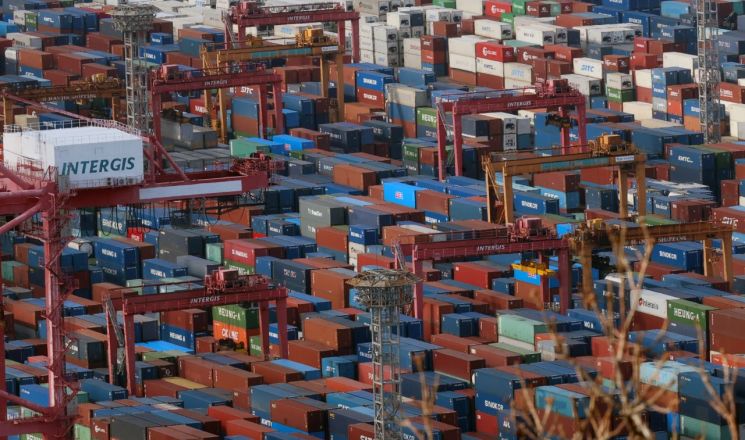
ADB cited the decline in export growth rate as the basis for the downward revision of the growth forecast. ADB stated, "Domestic demand is expected to improve due to interest rate cuts and government policies, but the impact of increased semiconductor exports related to artificial intelligence (AI) will gradually weaken."
Since exports have played a role in cushioning the economic downturn in South Korea's growth this year, the decline in export growth rate is seen as a factor that increases the possibility of further decline in next year's growth rate.
The analysis of the impact of the emergency martial law situation triggered by President Yoon Suk-yeol and the impeachment political crisis on South Korea's economic conditions was not included in this report. Lee Sang-hong, Director of the International Organizations Division at the Ministry of Strategy and Finance, said, "Considering the timing of the report's preparation and approval, it is presumed that the impact after the martial law incident was not reflected in this forecast."
ADB identified concerns over policy changes such as tariff increases following the second term of the Trump administration, escalating geopolitical tensions, and the downturn in China's real estate market as downside risks to growth forecasts for South Korea and the Asia-Pacific region.
ADB forecast the growth rate for the Asia region next year at 4.8%, down 0.1 percentage points from the previous forecast. China is expected to grow by 4.5%, Taiwan by 2.5%, Hong Kong by 2.3%, India by 7.0%, and Singapore by 2.6%.
This year's growth forecast was also lowered by 0.1 percentage points from September to 4.9%, reflecting weaker-than-expected growth in East Asia and South Asia.
ADB projected South Korea's inflation rate next year to remain unchanged at 2.0%. This year's inflation forecast was revised down by 0.2 percentage points to 2.3%. ADB analyzed that price stability is expected to accelerate due to falling international oil prices and a slowdown in food price increases.
© The Asia Business Daily(www.asiae.co.kr). All rights reserved.
![Clutching a Stolen Dior Bag, Saying "I Hate Being Poor but Real"... The Grotesque Con of a "Human Knockoff" [Slate]](https://cwcontent.asiae.co.kr/asiaresize/183/2026021902243444107_1771435474.jpg)
















