The prosecution, which had been embroiled in controversy over the authority to investigate charges of rebellion related to the 12·3 emergency martial law incident, succeeded in detaining the key suspect, former Minister of National Defense Kim Yong-hyun, thereby gaining recognition of the legitimacy of the investigation from the court.
In the detention warrant request for former Minister Kim, the prosecution effectively identified President Yoon Seok-yeol as the ringleader of the rebellion, leading to expectations that the prosecution will soon move to secure President Yoon's custody.
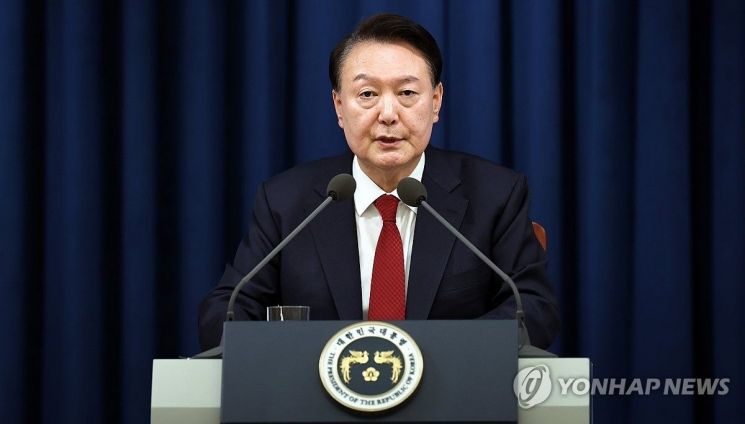 President Yoon Suk-yeol is declaring martial law through an emergency special address to the nation on the night of the 3rd at the Yongsan Presidential Office building in Seoul. Photo by the Presidential Office. Yonhap News
Nam Cheon-gyu, the chief judge in charge of warrants at the Seoul Central District Court, issued the detention warrant for former Minister Kim around midnight on the 10th, citing "concerns over the destruction of evidence," based on charges of engaging in important duties related to rebellion and abuse of authority obstructing the exercise of rights.
Judge Nam, seemingly aware of the controversy over the prosecution's investigative authority concerning the crime of rebellion, unusually issued the warrant stating, "It is judged to fall within the scope of crimes for which a prosecutor may initiate an investigation under Article 4, Paragraph 1, Subparagraph 1, Items (b) and (d) of the Prosecutors' Office Act." He also noted, "Considerations were made regarding the degree of evidence substantiation, the gravity of the crime, and the risk of evidence destruction."
While both the prosecution and the High-ranking Officials' Crime Investigation Division (Gongsa-cheo) of the police are conducting investigations into this case simultaneously, the day before, Cheon Dae-yeop, head of the Court Administration Office, appeared before the National Assembly and stated, "There is much internal debate within the court regarding whether the prosecution has investigative authority over the crime of rebellion under the Prosecutors' Office Act, considering the adjustment of investigative authority between the prosecution and police." However, Cheon also said, "There is no doubt that the police have investigative authority over this case."
On the same day, Kim Min-seok, a Supreme Council member of the Democratic Party of Korea, criticized the prosecution's investigation of this case as "an investigation based on illegal enforcement ordinances created during Minister Han Dong-hoon's tenure," and announced plans to consider 'emergency investigation prohibition orders' and 'impeachment' against those responsible for the prosecution's investigation.
Criticism from Cheon and the Democratic Party regarding the prosecution's investigation of the rebellion charges arises because the current Prosecutors' Office Act does not explicitly list rebellion as a crime that prosecutors may initiate investigations into.
However, Article 4, Paragraph 1, Subparagraph 1, Item (a) of the Prosecutors' Office Act defines 'corruption crimes' as crimes that prosecutors can directly investigate, and Presidential Decree 'Regulations on the Scope of Crimes for Prosecutors to Initiate Investigations,' Article 2, Paragraph 1, Item (b) enumerates abuse of authority under Criminal Act Article 123 as a type of corruption crime. Additionally, Article 4, Paragraph 1, Subparagraph (d) of the Prosecutors' Office Act allows prosecutors to initiate investigations into crimes recognized or directly related to important crimes such as corruption or economic crimes as defined by Presidential Decree. The criticism was directed at the prosecution's investigation of rebellion charges related to the emergency martial law incident as a related crime to abuse of authority, which prosecutors can directly investigate based on this provision.
However, the prosecution appears to have included in this warrant not only the 'related crime of abuse of authority' but also the position that under Article 4 of the Prosecutors' Office Act, the crime of rebellion related to the martial law incident can be investigated as a crime 'directly related to crimes committed by police officers.'
Article 4, Paragraph 1, Item (b) of the Prosecutors' Office Act defines crimes committed by police officers or Gongsa-cheo officials as crimes that prosecutors can initiate investigations into, and Item (d) of the same paragraph clearly defines crimes recognized or directly related to the crimes in Item (b) as crimes subject to direct investigation by prosecutors. Since Police Commissioner Cho Ji-ho and many other police executives have been accused as accomplices in the rebellion charges, the logic is that the prosecution, which can investigate the rebellion crimes committed by the police, can also investigate the rebellion charges against President Yoon and others who are in an accomplice relationship. (Refer to this paper's June 10 report titled Prosecution "Investigation Authority over This Rebellion Case Recognized under Prosecutors' Office Act"... Rebuttal to Democratic Party Criticism)
The court announced separately the previous day that "Regarding the reasons for issuing the warrant, it is based on the interpretation that under Article 4, Paragraph 1, Subparagraph 1, Item (b) rather than Item (a) of the Prosecutors' Office Act, crimes directly related to crimes committed by police officers such as the Police Commissioner fall within the scope of investigation initiation under the Prosecutors' Office Act." This means the court accepted the prosecution's argument as is.
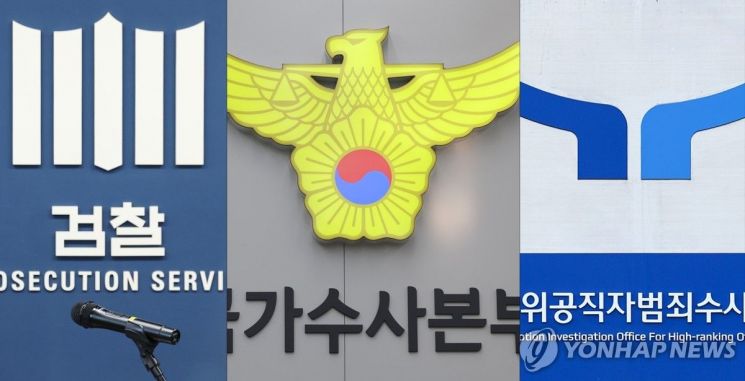
In legal circles, there is speculation that the prosecution, having overcome the controversy over investigative authority, will soon move to secure President Yoon's custody. Through the detention warrant request for former Minister Kim, the prosecution has effectively designated Kim as an 'important duty performer' in the martial law incident, thereby identifying President Yoon as the ringleader of the rebellion who led the incident.
A source familiar with internal prosecution affairs, Mr. A, said, "Once the court issues the detention warrant for former Minister Kim, the prosecution is expected to immediately proceed with securing President Yoon's custody," adding, "They have already secured sufficient physical evidence and witness testimonies related to President Yoon's rebellion charges and have completed legal reviews."
Emergency arrest or detention warrant requests for a sitting president are extremely rare, and there is a possibility of physical clashes with the Presidential Security Service during warrant execution. However, since the charges against President Yoon involve rebellion, which is not protected by presidential immunity, and specifically the ringleader charge punishable only by death, life imprisonment, or life imprisonment with labor, and given the strong calls for a swift and strict investigation, it is expected that the Presidential Office will find it difficult to block the prosecution's forced investigation.
Meanwhile, in the early hours of the day, the police urgently detained Police Commissioner Cho Ji-ho and Seoul Police Commissioner Kim Bong-sik. The investigation appears to be proceeding more urgently than ever. Amid the confusion over investigative authority as the prosecution and police conduct separate investigations into the same case and Gongsa-cheo requests case transfers to both investigative agencies, discussions are underway to form an investigative consultative body involving the prosecution, police, and Gongsa-cheo based on a proposal from the Supreme Prosecutors' Office.
Legal circles are pointing out that the prosecution, military prosecutors, and police should conduct a joint investigation into this case, in which numerous military officials and police leadership have been accused as participants in the rebellion.
© The Asia Business Daily(www.asiae.co.kr). All rights reserved.
![Clutching a Stolen Dior Bag, Saying "I Hate Being Poor but Real"... The Grotesque Con of a "Human Knockoff" [Slate]](https://cwcontent.asiae.co.kr/asiaresize/183/2026021902243444107_1771435474.jpg)

















