Purchase of 'Dongsaenghwahoenobimungi' and 'Jusimbu'
The National Library of Korea announced on the 11th that it has acquired 764 items of 243 types of ancient documents this year through a public notice, including 'Dongsaenghwahoenobinmun-gi (同生和會奴婢文記)' and 'Jusimbu (註心賦)'.
'Dongsaenghwahoenobinmun-gi' is a rare document from the early 15th century that reveals the ownership and inheritance status of slaves. It was created based on an agreement regarding the division and inheritance of slaves inherited from their mother on September 3, 1449, by the eldest son Baeim, younger sister, and two younger brothers.
'Jusimbu' is a Buddhist commentary summarizing the One Mind (一心) philosophy of the Northern Song monk Yeonsu Daesa. It was published as a woodblock print in 1397 by Suseonsa (修禪社), a Buddhist reform faith organization founded by Jinul (1158?1210).
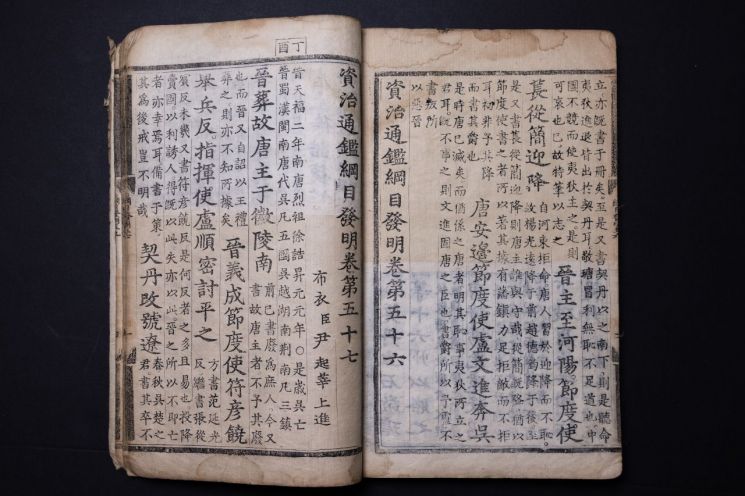
The newly acquired ancient document list also includes 'Jachitonggamgangmokbalmyeong (資治通鑑綱目發明)' and 'Heopungsyeoni Moheomgidaeum'. The former is a historical book compiled by Song dynasty scholar Yun Gisinn. It was printed using the metal movable type called Gyechukja (癸丑字), cast in 1493. A library official evaluated, "Books printed with the thick and large Gyechukja type are rare and valuable editions, and are very important for the study of metal movable type printing technology in early Joseon."
The latter is a novel written by Rudolf Erich Raspe in 1786. It was translated and published by Sinmungwan in 1913.
Bibliographic information of the ancient documents will be disclosed on the National Library of Korea’s website and the Korean Ancient Documents Comprehensive Catalog as registration and organization procedures are completed. The original images are expected to be provided through digitization in the future.
The National Library of Korea is the largest repository of ancient documents in the country. It holds about 300,000 volumes and continues to acquire more every year.
© The Asia Business Daily(www.asiae.co.kr). All rights reserved.

















