Government convenes Cabinet meeting... Authority belongs to the President
Opposition likely to strongly oppose 'Presidential Duty Exclusion'
The Cabinet meeting was convened for the first time since the declaration of martial law. Controversy is expected to arise over the convening authority, as President Yoon Seok-yeol, who announced his intention to step down from state affairs, continues to exercise power.
Prime Minister Han Duck-soo held a Cabinet meeting at around 10 a.m. on the 10th at the Government Seoul Office. The Cabinet is the highest policy deliberation body responsible for policies under executive authority, and the Constitution stipulates that it deliberates and resolves overall matters such as basic plans for state administration, budget, and finance. This Cabinet meeting was the '54th session,' while the meeting on the morning of the 3rd was the '51st session.' This count includes the meetings held just before the declaration of martial law and the one that resolved its lifting.
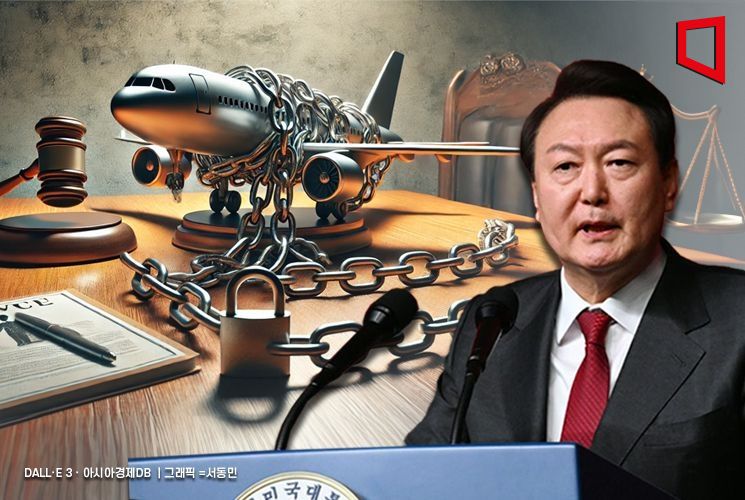
The issue lies in who convenes the meeting. Under the current Government Organization Act, the Cabinet meeting is convened and presided over by the President. Only when the chairperson (President) is unable to perform duties due to 'accident' does the vice-chairperson (Prime Minister) act as proxy. Although it has been customary to interpret the President's overseas trips as 'accidents' allowing the Prime Minister to preside instead, it is widely agreed that President Yoon, who remains in the country and faces no obstacles to attending the meeting, cannot be considered in an 'accident' state.
Article 86 of the Constitution, which the government and ruling party cite as the basis for 'delegation of authority,' is also subject to debate. It stipulates that the Prime Minister oversees administrative departments 'under the President's command.' At minimum, the convening of the Cabinet meeting implies that President Yoon continues to be involved in state affairs or that the Prime Minister is overstepping his authority. According to Article 71 of the Constitution, unless there is a 'vacancy' and the consequent acting authority status, the President's powers cannot be delegated.
Amid intensified impeachment and special investigation offensives from the opposition, this Cabinet meeting is expected to draw criticism that President Yoon's involvement in state affairs continues. Despite the anticipated controversy, the government's decision to hold the Cabinet meeting is interpreted as a determination to prevent a governance vacuum based on the legally exercisable authority of the President.
© The Asia Business Daily(www.asiae.co.kr). All rights reserved.
![Clutching a Stolen Dior Bag, Saying "I Hate Being Poor but Real"... The Grotesque Con of a "Human Knockoff" [Slate]](https://cwcontent.asiae.co.kr/asiaresize/183/2026021902243444107_1771435474.jpg)
















