Possibility of Further Exchange Rate Increase
KOSPI PBR at 0.8 Times... Potential for Additional Decline
Focus on Large Export Stocks and Major Defensive Stocks
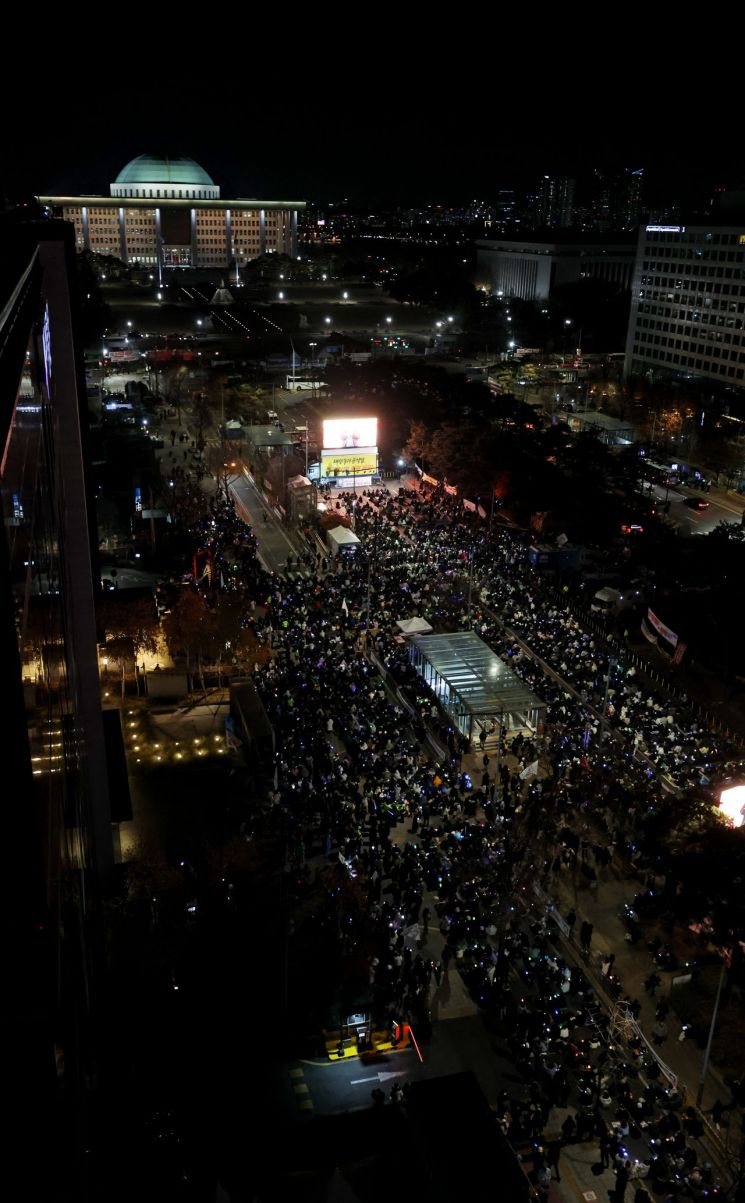
IBK Investment & Securities stated that amid the current economic downturn, domestic political uncertainty is becoming more prominent, and the short-term stabilization of investment sentiment in the domestic stock market depends on the speed of resolving the political chaos.
Researcher Byun Junho of IBK Investment & Securities said, "Since the imposition of martial law, the consensus forecast for South Korea's growth rate has been revised downward." South Korea's growth rate has been downgraded three times since the last four quarters. It is estimated that factors such as Samsung Electronics' third-quarter earnings miss, Trump's election, and martial law have influenced this.
Researcher Byun pointed out, "With the continued slowdown in exports, the possibility of further downward revisions to the growth forecast is high," adding, "If political uncertainty prolongs, the extent of the downward adjustment could expand even more."
The won-dollar exchange rate is also experiencing increased volatility. Unless the economy reflects a severe crisis with growth near 0%, similar to the 2008 global financial crisis, the possibility of the exchange rate reaching the 1,500 won level is considered low. However, considering growth around 1%, the possibility of further increases from the 1,400 won level cannot be ruled out.
Researcher Byun explained, "Due to the increased volatility and upward pressure on the exchange rate, the trend of foreign investors' net selling in the second half is creating an environment where it is even more difficult to shift to buying."
There is also a possibility of further declines in the KOSPI index. Although the KOSPI price-to-book ratio (PBR) has fallen below 0.8 times, the expansion of political uncertainty raises the possibility of short-term undershooting.
Researcher Byun analyzed, "In the current market conditions, due to the rising exchange rate, ultra-large export companies may be relatively safer," adding, "This is a phase where interest in large-cap stocks perceived as relatively safe?such as those with excessive price declines and low risk of further price drops, large defensive stocks less sensitive to the economy, and low-beta large-cap stocks with less earnings volatility?may increase."
© The Asia Business Daily(www.asiae.co.kr). All rights reserved.
![Clutching a Stolen Dior Bag, Saying "I Hate Being Poor but Real"... The Grotesque Con of a "Human Knockoff" [Slate]](https://cwcontent.asiae.co.kr/asiaresize/183/2026021902243444107_1771435474.jpg)











