Japanese Broadcaster Reenacts 'Emergency Martial Law' in Analog
Explains Martial Law Using Parliament Model and Handwriting
Domestic Netizens Say "A Country Truly Dedicated to Analog"
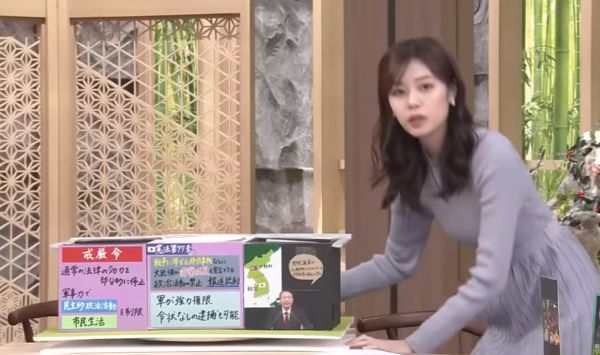 A Japanese broadcaster has attracted attention by analogously reenacting President Yoon Suk-yeol's 'December 3 Emergency Martial Law Incident.' TBS News
A Japanese broadcaster has attracted attention by analogously reenacting President Yoon Suk-yeol's 'December 3 Emergency Martial Law Incident.' The broadcast featured a handmade model of the National Assembly and a photo of President Yoon cut out with scissors, drawing viewers' interest.
Japan is known for adhering to analog methods even in the digital age. In Japan, analog New Year's cards with stamps are still popular and sent through mailboxes. Additionally, most Japanese schools require teachers to manually write students' school records. If even one character is incorrect, they must start over from the beginning.
On the 8th, the Japanese terrestrial broadcaster 'TBS News' aired a program titled "Martial Law in Korea for the First Time in 44 Years: What Is Martial Law and What Is Its Background?" which also highlighted this analog culture.
The announcer began, "Martial law generally suspends the effect of ordinary laws partially during an emergency. It is a measure that restricts democratic political activities and civilian life by military force," showing the content written in handwriting. Then, bringing another model with handwritten text, the announcer explained, "In Korea, the constitution stipulates that the president can declare 'emergency martial law' in cases of 'emergencies equivalent to war.' Measures such as 'prohibition of political activities' and 'control of the press' are taken, and the military, as the martial law command, gains strong authority, including the ability to arrest without a warrant." The term 'emergency martial law' was emphasized in red.
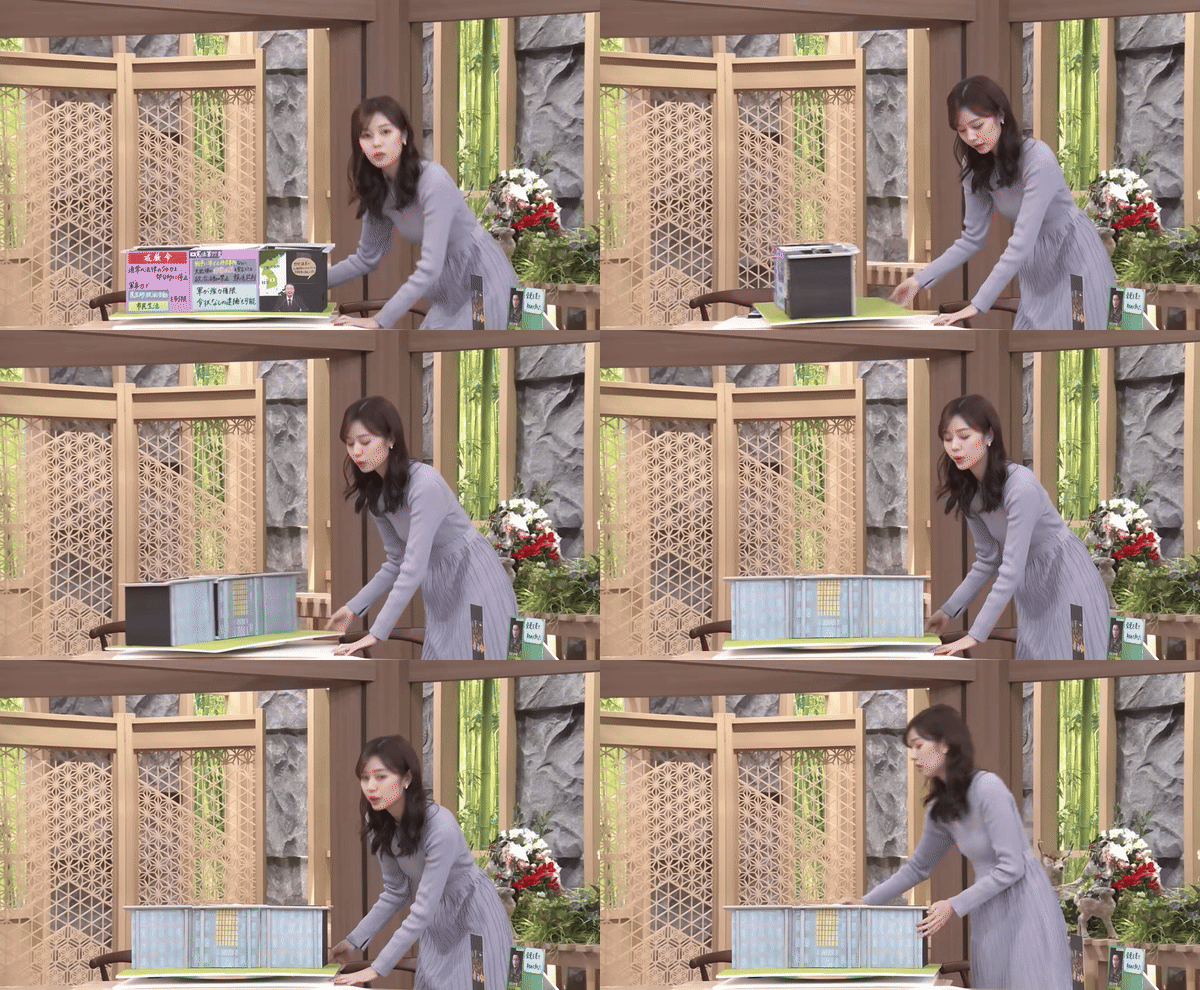 A Japanese broadcaster has attracted attention by analogously reenacting President Yoon Suk-yeol's 'December 3 Emergency Martial Law Incident.' TBS News
When the three model pieces were rotated half a turn, the National Assembly appeared. The announcer said, "The site of the current martial law dispute is the National Assembly building of Korea," and set up the dome roof of the National Assembly like a puppet show. Then, a piece of paper rose above the National Assembly building, attached with photos of the members of the National Assembly attending the plenary session. The announcer explained, "The constitution also stipulates that martial law must be lifted when a majority of the members of the National Assembly request it. This time, martial law was lifted by the resolution of the members gathered in the National Assembly according to this provision."
The analog National Assembly model showed clear cuts here and there, and tape was visibly attached. There were also traces of newly cut and pasted letters, as if correcting typos. The model included photos of Woo Won-sik, the Speaker of the National Assembly; scenes of martial law troops confronting citizens in the National Assembly; Park An-su, the Army Chief of Staff appointed as the martial law commander at the time of the emergency martial law declaration; and First Lady Kim Geon-hee.
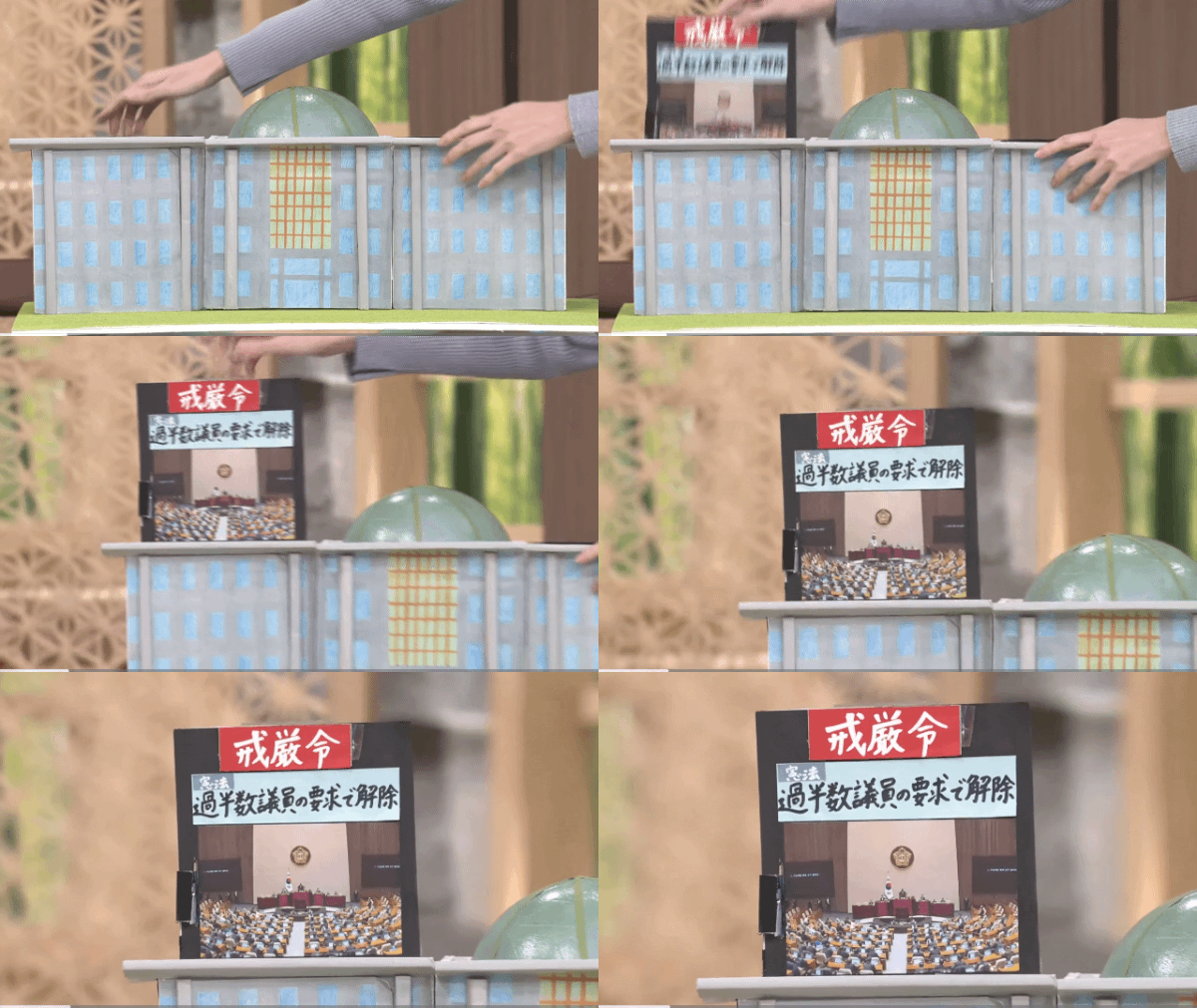 A Japanese broadcaster has attracted attention by analogously reenacting President Yoon Suk-yeol's 'December 3 Emergency Martial Law Incident.' TBS News
Domestic netizens who saw this reacted with comments such as "A country truly devoted to analog," "Is this a daycare center or what," "Am I the only one who finds it less credible because it's from a news media," "Does that country not know how to do CG," "Are the tape marks and sloppy scissor cuts intentional concepts?" "This is exactly middle school vacation homework level," "Why does Japan insist on analog," "Analog to the death," "Truly the best country at diary decorating," and "The announcer must be funny too," showing a variety of responses.
© The Asia Business Daily(www.asiae.co.kr). All rights reserved.



















