KOTRA Survey of Experts, Companies, and Overseas Trade Offices
Intensified Price and Technology Competition with China
Active Expansion of BYD into ASEAN and South America
Need for Infrastructure Cooperation Using ODA"
Not only major countries such as the United States, China, and the European Union (EU), but also 'Global South' countries are turning toward domestic protectionism, highlighting the need for countermeasures for our companies entering overseas markets.
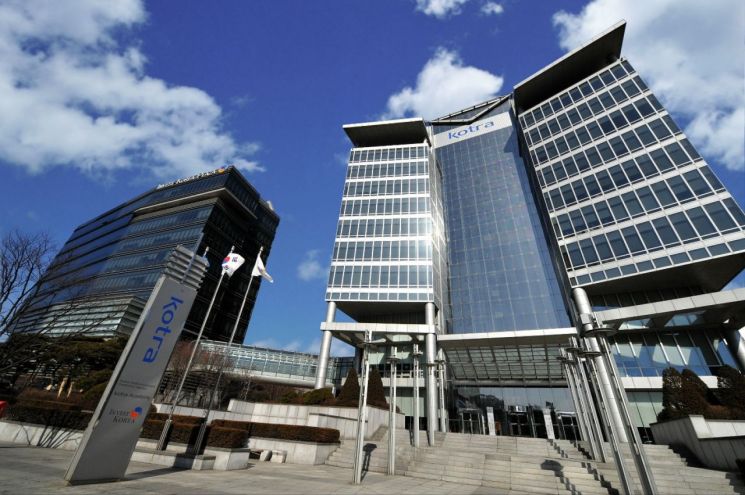
The Korea Trade-Investment Promotion Agency (KOTRA) announced on the 8th that this conclusion was drawn after analyzing a survey conducted among numerous experts from academia and industry, 80 related companies, and 65 overseas trade offices located in Southeast Asia, South Asia, Latin America, the Commonwealth of Independent States (CIS), the Middle East, and Africa to select Global South countries and cooperation sectors.
The Global South refers to Third World developing countries located in the Earth's southern hemisphere or the low latitudes of the northern hemisphere. Countries such as India, Indonesia, Mexico, Brazil, Bangladesh, the United Arab Emirates (UAE), Saudi Arabia, Egypt, and Nigeria are included.
According to KOTRA, among 80 related companies engaged in overseas business in sectors such as automobiles, electronics, energy, construction, and consumer goods, 35.1% have expanded into Southeast Asia, 23.4% into Latin America, 18% into the Middle East, and 11.7% into Africa, all part of the Global South. Our manufacturing companies have mainly entered major countries such as Indonesia, India, and Mexico, considering the stable growth potential of industries and domestic markets, while consumer goods companies have expanded into countries favorable to the Korean Wave, such as India and Indonesia.
Global South countries are gaining attention as new export destinations as major countries like the United States and China reorganize supply chains centered on their own countries. They are also evaluated as having great market potential due to high population growth rates, economic growth rates, and abundant key resources.
However, recently, Global South countries have also shifted toward domestic protectionism, creating policy uncertainties. Representative examples include Thailand, which is promoting a policy to become an electric vehicle production hub in ASEAN, and India’s 'Make in India' and Pakistan’s 'Make in Pakistan' initiatives aiming to become manufacturing hubs in South Asia.
Due to the US-China conflict, China is actively entering the Global South, making it difficult for our companies to create a favorable policy environment in the region.
Chinese companies such as BYD are leading not only in price but also in technological competitiveness, especially in electric vehicles, changing the automotive market landscape in the Global South itself. Companies entering the Global South are requesting the government to promote intergovernmental cooperation projects using Official Development Assistance (ODA) and to establish a foundation for our companies’ expansion. The intention is to strengthen diplomatic relations with Global South countries at the government level and expand ODA projects to create a favorable policy and market environment from a long-term perspective.
In particular, there is a call to expand infrastructure cooperation targeting countries where central and local governments, such as those in India and Africa, are reluctant to invest in public infrastructure.
© The Asia Business Daily(www.asiae.co.kr). All rights reserved.

















