President Yoon's suspension from duty until impeachment trial
Constitutional Court must decide acceptance within 180 days
Prosecutor investigation ongoing, special prosecutor introduction possible
The impeachment motion against President Yoon Suk-yeol was passed on the 14th. Following the late former President Roh Moo-hyun in 2004 and former President Park Geun-hye in 2016, the Constitutional Court will hold the third impeachment trial for a sitting president and decide whether to dismiss him.
According to the Constitution and the National Assembly Act, President Yoon's exercise of authority will be suspended from the time he receives the copy of the impeachment resolution until the Constitutional Court's impeachment trial is held. As with former President Park, investigations by investigative agencies into President Yoon's charges of rebellion will proceed separately from the Constitutional Court's impeachment trial, and there is also the possibility that a special prosecutor will be appointed to conduct the investigation.
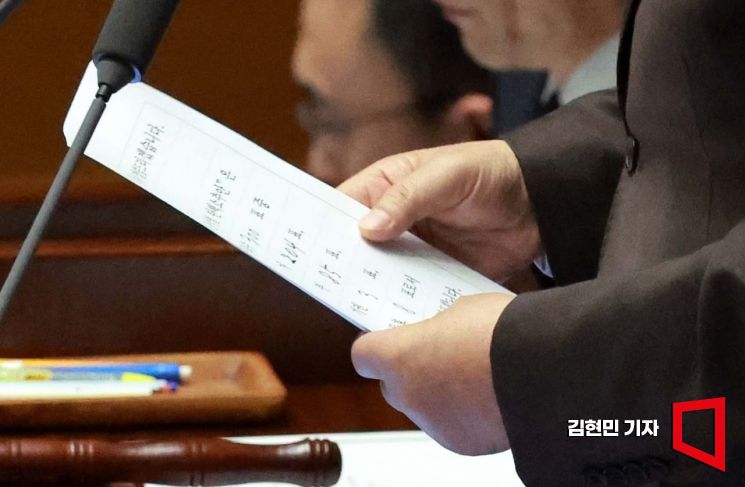 On the 14th, the impeachment motion against the President (Yoon Seok-yeol) was passed at the 4th plenary session of the 419th National Assembly (extraordinary session) held at the National Assembly.
President Yoon's Authority Suspended... Prime Minister Han Duck-soo Acts as Acting President
Regarding the suspension of duties of the impeached individual, Article 65, Paragraph 3 of the Constitution states, "A person against whom an impeachment motion has been passed shall have their exercise of authority suspended until the impeachment trial is held."
Article 50 of the Constitutional Court Act (Suspension of Exercise of Authority) stipulates, "A person against whom an impeachment motion has been passed shall have their exercise of authority suspended until the Constitutional Court's trial."
However, Article 134, Paragraph 1 of the National Assembly Act (Delivery and Effect of the Impeachment Resolution), which regulates the specific procedures after the impeachment motion is passed, states, "When an impeachment motion is passed, the Speaker shall promptly deliver the original impeachment resolution to the chairman of the Legislation and Judiciary Committee, who is the impeachment prosecutor, and deliver copies to the Constitutional Court, the impeached person, and the head of the institution to which the impeached person belongs."
Paragraph 2 of the same article states, "When the impeachment resolution is delivered, the exercise of authority of the impeached person shall be suspended, and the appointing authority shall not accept the resignation of the impeached person or dismiss the impeached person." Scholars interpret that the suspension of authority occurs not when the National Assembly passes the impeachment motion but when the impeachment resolution is delivered to the impeached person.
Once President Yoon's exercise of authority is suspended, Prime Minister Han Duck-soo will act as the president's authority holder according to the Constitution and the Government Organization Act.
Article 71 of the Constitution states, "When the president is unable to perform duties due to vacancy or accident, the prime minister, followed by ministers in the order prescribed by law, shall act on behalf of the president."
Thus, Prime Minister Han is the first in line constitutionally to act as the acting president. However, there are criticisms mainly from opposition parties that Prime Minister Han cannot be considered free of responsibility regarding the recent ‘12·3 Emergency Martial Law’ incident, and there is a possibility that he may become the subject of investigations by the prosecution or police, raising concerns about his role as acting president.
If the prime minister is also unable to perform duties, the acting authority will be determined according to the order of ministers prescribed by the Government Organization Act, including Choi Sang-mok, Deputy Prime Minister for Economic Affairs and Minister of Economy and Finance, and Lee Ju-ho, Deputy Prime Minister for Social Affairs and Minister of Education.
Article 12, Paragraph 1 of the Government Organization Act (State Council) states, "The president shall convene and preside over the State Council as its chairperson." Paragraph 2 of the same article states, "If the chairperson is unable to perform duties due to accident, the vice-chairperson, the prime minister, shall act on behalf of the chairperson. If both the chairperson and vice-chairperson are unable to perform duties due to accident, the ministers shall act in the order prescribed in Paragraph 1 of Article 26, including the Deputy Prime Minister concurrently serving as Minister of Economy and Finance and the Deputy Prime Minister concurrently serving as Minister of Education," thus establishing the order of ministers who will act on behalf of the president.
The order of ministers prescribed in Article 26, Paragraph 1 of the Government Organization Act is as follows: Ministry of Economy and Finance, Ministry of Education, Ministry of Science and ICT, Ministry of Foreign Affairs, Ministry of Unification, Ministry of Justice, Ministry of National Defense, Ministry of the Interior and Safety, Ministry of Patriots and Veterans Affairs, Ministry of Culture, Sports and Tourism, and so on.
Rebellion Exception to Presidential Immunity... Investigation Continues Separately from Constitutional Court Impeachment Trial
Meanwhile, Article 84 of the Constitution stipulates, "The president shall not be subject to criminal prosecution during their term of office except in cases of rebellion or treason," establishing the president's immunity from prosecution.
This privilege is granted to maintain the dignity of the head of state and to facilitate the smooth execution of duties. However, the presidential immunity under the Constitution does not apply if the president commits rebellion or treason.
In President Yoon's case, he is currently under investigation for rebellion charges related to his declaration of emergency martial law on the 3rd without meeting constitutional or legal requirements, prohibiting political activities of the National Assembly in violation of the Constitution and Martial Law Act, and attempting to arrest prominent politicians. Therefore, investigations by investigative agencies will continue separately from the Constitutional Court's impeachment trial. He could be detained during the investigation process or indicted and face criminal trial before the conclusion of the impeachment trial.
This differs from the case of former President Park Geun-hye in 2016. Park was investigated for abuse of power and other charges, not rebellion. Special Prosecutor Park Young-soo prosecuted her after the Constitutional Court accepted the impeachment and she was dismissed. This was because the charges applied to Park could not be prosecuted during her presidency.
Meanwhile, Article 51 of the Constitutional Court Act (Suspension of Trial Procedure) states, "If a criminal trial is underway for the same reasons as the impeachment trial request against the respondent, the court may suspend the trial procedure."
This means that if President Yoon is indicted and faces criminal trial for rebellion, the Constitutional Court may temporarily suspend the impeachment trial, observe the court's judgment, and refer to it when deliberating impeachment.
However, the Constitutional Court's impeachment trial is not a procedure to determine the criminal liability of the respondent but to judge whether the public official violated the Constitution or laws and whether such violations are serious enough to warrant dismissal. Therefore, it is likely to proceed separately from the criminal procedure.
Professor Kim Seon-taek of Korea University Law School said, "The Constitutional Court will not specifically determine whether the rebellion charge is established but will use it as reference material. It will evaluate President Yoon's declaration of emergency martial law, the riot at the National Assembly on the 3rd, the raid on the National Election Commission, and related incidents to prove that it was not a constitutional martial law and conclude whether it is appropriate for the president to continue holding office."
Currently, investigations into President Yoon and others are being conducted competitively by the Emergency Martial Law Special Investigation Headquarters (Special Investigation Headquarters) formed by the prosecution with personnel dispatched from the military prosecution, the National Police Agency's National Investigation Headquarters, the Corruption Investigation Office for High-ranking Officials, and the Ministry of National Defense Investigation Headquarters, collectively called the Joint Investigation Headquarters (abbreviated as Joint Investigation Headquarters).
As multiple investigative agencies conduct investigations simultaneously, confusion has arisen, such as different agencies obtaining separate search warrants and arrest warrants for the same suspect. The Corruption Investigation Office for High-ranking Officials announced that it requested the prosecution and police again the previous day to transfer cases related to the 'Emergency Martial Law Declaration.'
However, since opposition parties are pushing for the appointment of a standing special prosecutor or individual special prosecutors regarding this incident, if a special prosecutor is appointed in the future, the focus of the investigation is expected to shift to the special prosecutor.
Previously, during former President Park Geun-hye's state affairs manipulation case, a special investigation headquarters of the prosecution was conducting investigations when Special Prosecutor Park Young-soo was appointed. At that time, Choi Seo-won (formerly Choi Soon-sil) was prosecuted by the prosecution, but after the special prosecutor's office was launched, all cases under investigation by the prosecution were transferred to the special prosecutor, who took charge of prosecution and maintaining the indictment.
"Constitution and Martial Law Act Requirements Not Met, Restriction of National Assembly Political Activities Unconstitutional and Illegal"
Regarding emergency martial law, which is declared when administrative and judicial functions become significantly difficult due to a national emergency, Article 77, Paragraph 3 of the Constitution states, "When emergency martial law is declared, special measures may be taken concerning the warrant system, freedom of speech, press, assembly, association, and the authority of the government or courts as prescribed by law."
Also, Article 9, Paragraph 1 of the Martial Law Act (Special Measures Authority of Martial Law Commander) states, "In an emergency martial law area, the martial law commander may take special measures such as arrest, detention, seizure, search, residence, relocation, press, publication, assembly, association, or collective action when militarily necessary. In such cases, the martial law commander must announce the details of the measures in advance."
In other words, even if emergency martial law is declared under the Constitution or Martial Law Act, the authority of the National Assembly cannot be restricted. Therefore, the restriction on the National Assembly's political activities in Proclamation No. 1, issued after the emergency martial law declaration on the 3rd, which bans all political activities including activities of the National Assembly, local councils, political parties, political associations, assemblies, and demonstrations, is widely regarded as a clear violation of the current Constitution and Martial Law Act.
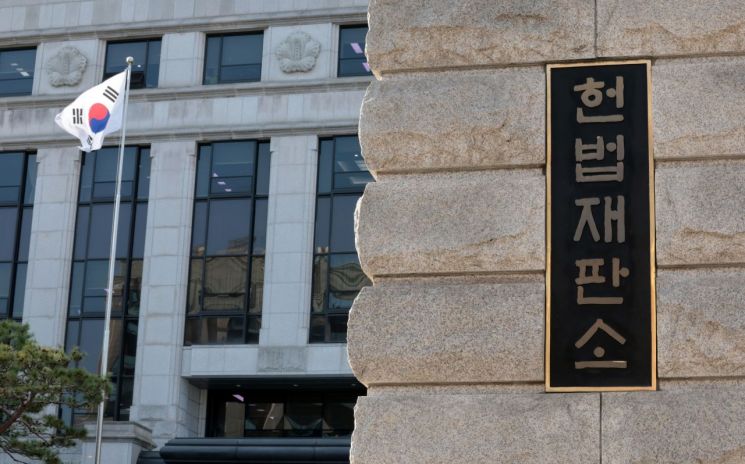
Conclusion Within 180 Days... Effect of Impeachment Acceptance is Dismissal from Public Office
The Constitutional Court Act stipulates that the Constitutional Court must reach a conclusion within 180 days from the date the case is received.
Article 38 of the Constitutional Court Act (Trial Period) states, "The Constitutional Court shall deliver a final decision within 180 days from the date the trial case is received. However, if it is impossible to have seven judges present due to vacancies, the period of vacancy shall not be counted toward the trial period."
Previously, the impeachment trial for former President Roh took 63 days, and for former President Park, 92 days until the verdict was delivered.
To accept the impeachment, at least six of the judges must agree. Since three judges' seats are currently vacant, all six present judges must agree for the impeachment to be accepted.
Article 65 of the Constitution defines impeachment grounds as "when a public official violates the Constitution or laws in the execution of their duties," but the Constitutional Court holds the position that for the president, a "serious violation of law" must be recognized to decide impeachment.
In the 2004 impeachment trial of former President Roh, the Constitutional Court acknowledged his violation of statutory law (Public Official Election Act) but dismissed the case, stating it was not a "serious violation" warranting dismissal from the presidency.
At that time, the Constitutional Court stated, "If the Constitutional Court Act is interpreted literally, it could be understood that dismissal must be decided in all cases where impeachment grounds are recognized, but this violates the principle of proportional constitutional punishment, i.e., weighing of legal interests. The phrase 'when the impeachment request is justified' in Article 53, Paragraph 1 of the Constitutional Court Act refers not to all legal violations but only to 'serious' violations justifying dismissal of a public official."
If the Constitutional Court recognizes the impeachment request against President Yoon as justified and accepts the impeachment, it will deliver a decision stating, "Respondent Yoon Suk-yeol is dismissed from the presidency."
According to Article 54 of the Constitutional Court Act (Effect of Decision), even if impeachment is decided, President Yoon's civil and criminal liabilities are not exempted, and his right to hold public office will be restricted for five years from the date of dismissal.
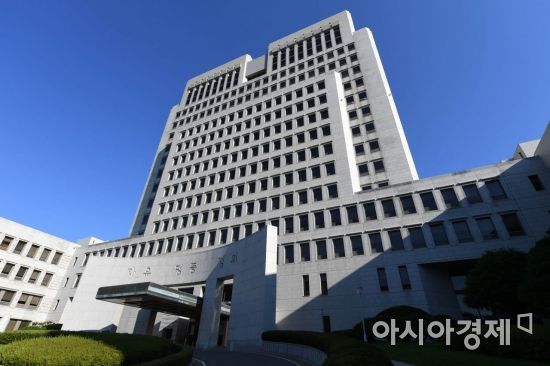
Supreme Court and Constitutional Court, Contrary to President Yoon's Claim, State "'Political Acts' Are Subject to Judicial Review"
Meanwhile, on the 12th, President Yoon claimed in a national address that the emergency martial law declaration is a "political act not subject to judicial review." He argued that the exercise of the president's national emergency powers, including emergency martial law, is a "highly political national governance act involving political discretion," i.e., a political act, and therefore courts cannot judge the establishment of rebellion charges or the Constitutional Court cannot conduct impeachment trials based on the emergency martial law declaration.
However, both the Supreme Court and the Constitutional Court recognize the concept of political acts but hold the position that judicial review is exceptionally possible when the emergency martial law declaration is made for the purpose of undermining the constitutional order or is directly related to infringement of citizens' fundamental rights.
Regarding emergency martial law, the Supreme Court ruled in 1979, "If the president declares emergency martial law based on a reasonable judgment considering all objective circumstances, such an act is a highly political and military act, and only the National Assembly, which has the constitutional right to demand the lifting of martial law, has the authority to judge the validity of the declaration. Except in cases where the declaration is clearly invalid, it is inappropriate for judicial authorities to review the requirements or validity of the declaration, as it exceeds the inherent limits of judicial power."
However, in the 1997 rebellion case involving former President Chun Doo-hwan and others, the Supreme Court stated, "The president's declaration or expansion of emergency martial law is a highly political and military act, so unless there are special circumstances where it is clearly recognized as violating the Constitution or laws, the judiciary does not have the authority to judge the requirements or validity of the declaration. However, if the declaration or expansion of emergency martial law was made to achieve the purpose of undermining the constitutional order, the court may review whether it constitutes a criminal act."
Also, in the 2003 case involving former President Kim Dae-jung's inter-Korean summit and remittance to North Korea, the Supreme Court stated, "Even if the concept of political acts is recognized, excessive restraint on judicial review should not neglect or abandon the court's duty to guarantee fundamental rights and realize the rule of law. Such recognition must be extremely cautious, and the judgment must be made solely by the judiciary," affirming judicial review.
The Constitutional Court also recognized the concept of political acts in the 1996 financial real-name system case involving former President Kim Young-sam's emergency financial order but held that if it is directly related to infringement of citizens' fundamental rights, constitutional review is possible.
Furthermore, in the 2004 administrative capital relocation case, the Constitutional Court stated, "There are state actions under our Constitution, such as the exercise of national emergency powers and dispatch of troops overseas, which require high-level political decisions by the president or National Assembly and should be respected as much as possible, thus requiring judicial restraint. However, under the principle of the rule of law, a fundamental principle of our Constitution, the president, National Assembly, and other public authorities must be subject to the rule of law, and all state actions must observe limits arising from the purpose of realizing citizens' fundamental rights. The Constitutional Court, as a state organ tasked with protecting the Constitution and citizens' fundamental rights, may review such state actions, even if they are highly political decisions, when they are directly related to infringement of citizens' fundamental rights," clarifying its position.
© The Asia Business Daily(www.asiae.co.kr). All rights reserved.



















