Collection and Disposal of Abandoned Agricultural Waste with Saemaeul Association Starting from the 15th
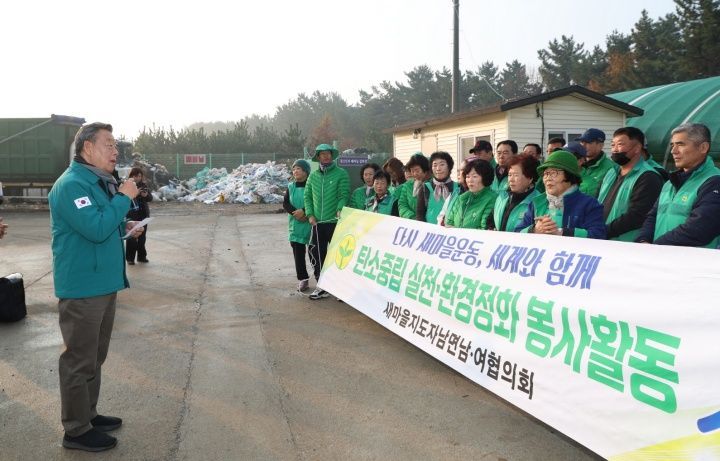 The scene of the "Hidden Resource Search" conducted last month on the 21st with the Nam-myeon Saemaul Association. /Taean County
Taean County in South Chungcheong Province has launched an intensive collection of small-scale agricultural waste left unattended in rural areas for the winter season.
The county announced on the 6th that, starting from the 15th until February next year, it will carry out a "Winter Rural Waste Intensive Collection" campaign in eight towns and townships, together with about 400 local residents, including the heads of the Saemaeul Association and Women's Association in each area.
This project aims to eliminate blind spots for waste in rural areas, promote resource circulation awareness, and create a cleaner rural environment. The county recognized difficulties in collecting agricultural waste during winter due to the aging farming population, and at the end of last year, County Governor Gasero ordered a comprehensive collection, leading to the development of proactive waste collection measures.
During this process, the county was selected for the "Chungnam Rural Waste Collection System Improvement Pilot Project" by South Chungcheong Province in the first half of this year, securing a total project budget of 500 million won (50% provincial funds, 50% county funds), which enabled more detailed project implementation.
Based on cooperation with the Saemaeul organizations that host the "Hidden Resources Search" event, the county plans to focus on collecting waste in areas where collection and transportation are difficult, such as households with elderly residents, places where large garbage trucks cannot enter, and areas near rural mountain drainage channels where illegal dumping occurs.
In particular, the collected waste will be classified into three categories: general household waste, recyclable resources, and non-recyclable agricultural waste. The county will designate separate collection points and collection cycles for each category, aiming to ensure the sustainability of the project through a more systematic collection system.
The county expects that this project will prevent agricultural waste from being left in the mountains or illegally incinerated, thereby preventing environmental pollution and creating a pleasant living environment.
A county official stated, "Through this intensive collection, we will prevent illegal incineration and dumping in rural areas and introduce collection systems tailored to each village's circumstances. We will work together with the local community to encourage voluntary participation by residents and create a 'changing, clean rural environment.'"
© The Asia Business Daily(www.asiae.co.kr). All rights reserved.

![Clutching a Stolen Dior Bag, Saying "I Hate Being Poor but Real"... The Grotesque Con of a "Human Knockoff" [Slate]](https://cwcontent.asiae.co.kr/asiaresize/183/2026021902243444107_1771435474.jpg)















