As lending in the financial industry contracted, the growth rate of industrial loans by deposit-taking institutions slowed in the third quarter. In manufacturing, the increase in loans expanded mainly in chemical products, which are experiencing sluggish business conditions.
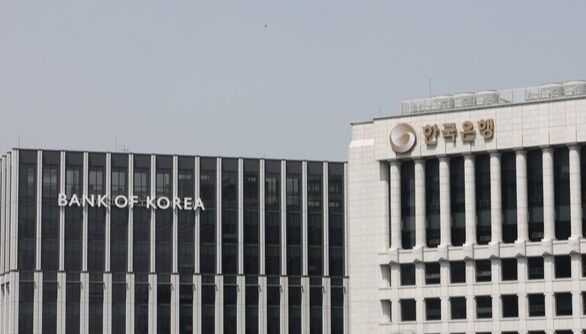
According to the "Industrial Loans by Deposit-Taking Institutions in the Third Quarter" released by the Bank of Korea on the 6th, the outstanding balance of industrial loans by deposit-taking institutions at the end of the third quarter reached 1,958.9 trillion won, an increase of 17.4 trillion won compared to the end of the previous quarter.
The quarterly increase in industrial loans, which recorded 27 trillion won in the first quarter, decreased for two consecutive quarters through the second quarter (25 trillion won) and the third quarter.
By industry, manufacturing (6.8 trillion won → 8.8 trillion won) saw an expanded increase, while services (13.5 trillion won → 7.5 trillion won) experienced a reduced increase.
In manufacturing (6.8 trillion won → 8.8 trillion won), the increase expanded mainly due to working capital demand for chemical and medical products amid poor business performance. In particular, operating profits of chemical sector companies listed on the KOSPI in the third quarter dropped sharply by 71.7% year-on-year to 1.6 trillion won, leading to an increase in working capital loans.
In services (13.5 trillion won → 7.5 trillion won), the increase narrowed as the finance and insurance sector turned to a decrease. Among services, finance and insurance (2.7 trillion won → -2.9 trillion won) shifted to a decline, influenced by reduced loan demand from credit finance companies as issuance of asset-backed securities became smoother.
Real estate (4.4 trillion won → 4.9 trillion won) showed an increase at the previous quarter’s level as the increase in deposit banks slowed, but the reduction in the scale of bad debt write-offs by non-bank deposit-taking institutions lessened the decrease.
By loan purpose, working capital (7.9 trillion won → 3.1 trillion won) saw a reduced increase as manufacturing expanded but construction and services decreased.
Facility funds (17.0 trillion won → 14.3 trillion won) showed a reduced increase as manufacturing’s electrical equipment sector expanded, but chemical and medical products declined, and services also saw a reduced increase.
By financial sector, loans by deposit banks (25.4 trillion won → 19.6 trillion won) showed a reduced increase, while non-bank deposit-taking institutions (-0.4 trillion won → -2.3 trillion won) continued to decline.
© The Asia Business Daily(www.asiae.co.kr). All rights reserved.
!["The Woman Who Threw Herself into the Water Clutching a Stolen Dior Bag"...A Grotesque Success Story That Shakes the Korean Psyche [Slate]](https://cwcontent.asiae.co.kr/asiaresize/183/2026021902243444107_1771435474.jpg)
















