It was revealed that the report claiming the Japanese government representative at the Sado Mine memorial ceremony visited Yasukuni Shrine was false, and on the 5th, Japan's Kyodo News, which issued the correction, announced disciplinary actions against six people including the reporter and editors involved in the false report.
According to Kyodo News, Naoto Takahashi, the current editor-in-chief who was the news center chief at the time, received a pay cut, and Shiro Yamane, the current news center chief who was the political department chief, was suspended from work for three days. These personnel changes are considered dismissals, and the editor-in-chief will be replaced in January next year.
Additionally, two deputy chiefs of the political department who reviewed the article received reprimands, and two reporters who participated in writing the article were given warnings (strict caution). The president of Kyodo News and the executive director in charge of editing also voluntarily decided to return 10% of their salaries.
Earlier, on the 24th of last month, Kyodo News issued a correction on the 25th stating that the article reporting that Akiko Ikuina, a member of the House of Councillors and political official of the Ministry of Foreign Affairs representing the Japanese government at the Sado Mine memorial ceremony, visited Yasukuni Shrine on August 15, 2022, was judged to be a false report.
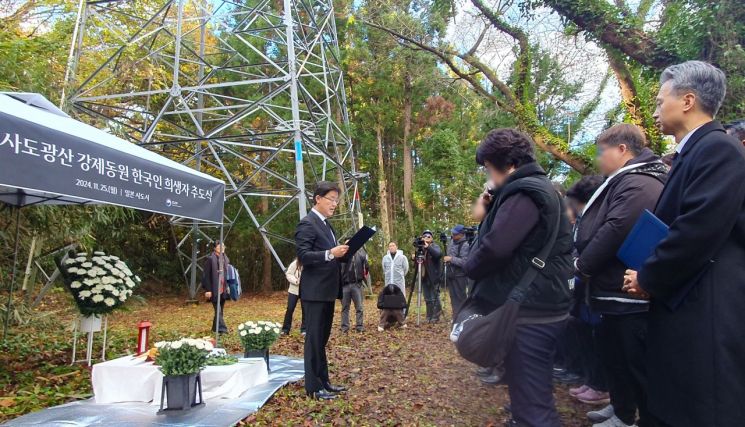
The memorial ceremony was originally scheduled to be held with Korean bereaved families and officials from both the Korean and Japanese governments attending together. However, due to issues such as the Japanese representative's history of visiting Yasukuni Shrine, the Korean government made a sudden decision not to participate a day before the event, and it was eventually held as a 'half-hearted' ceremony. Kyodo News appears to have taken action to correct the situation, judging that its own article may have been a cause.
Regarding this, the Korean Ministry of Foreign Affairs explained, "The content of the memorial speech and other matters related to the memorial ceremony did not meet the level of agreement at the time of the Sado Mine registration," emphasizing that Japan's absence from the memorial ceremony was not simply limited to the controversy over Ikuina's visit to Yasukuni Shrine.
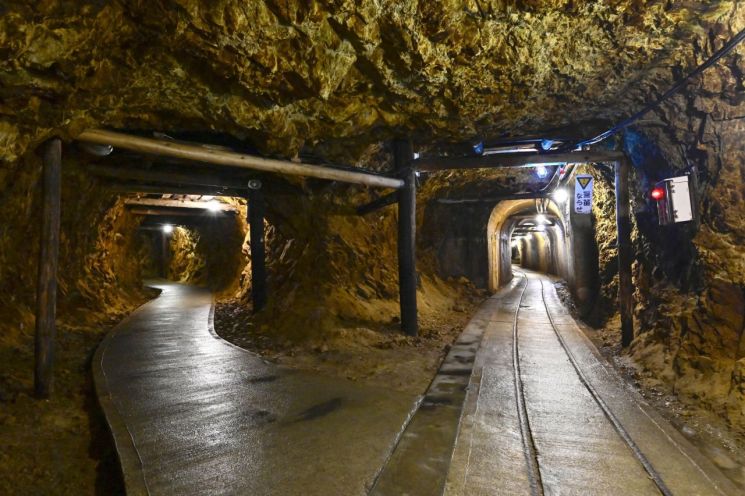
The Sado Mine was famous as a gold mine during the Edo period (1603?1867), and after the Pacific War intensified, it was mainly used as a mine to secure war materials such as copper. During this time, colonial Koreans were forcibly mobilized and suffered harsh conditions and discrimination while working. According to historian Yasuto Takeuchi, the number of Koreans mobilized to the Sado Mine is estimated to exceed 1,500.
© The Asia Business Daily(www.asiae.co.kr). All rights reserved.


















