Major Chinese media outlets are providing real-time coverage of President Yoon Suk-yeol's declaration and lifting of martial law, and the film 'Seoul Spring' has ranked high in real-time search terms on major Chinese social media platforms. This indicates that the martial law situation is attracting significant attention in China as well.
State-run media such as China Central Television (CCTV), the English-language Global Times, Xinhua News Agency, and the Global Times, as well as various Chinese-language media in Hong Kong and other regions, urgently reported the martial law declaration in South Korea as soon as it was announced and subsequently broadcast live scenes from the site in front of the National Assembly in Yeouido, Seoul. The news videos streamed in real-time through Baidu (百度), China's largest search portal, recorded hundreds of thousands of views per outlet, reflecting the high interest of the Chinese public.
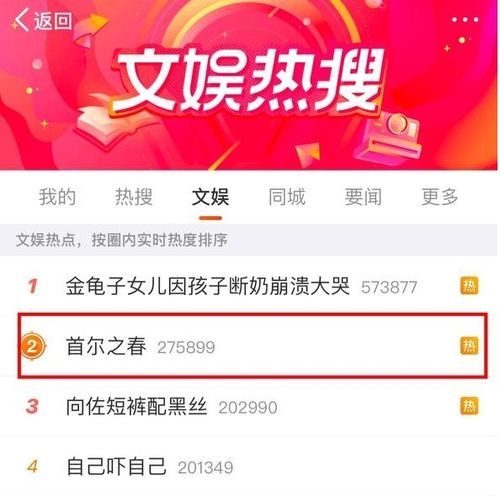
On the 4th, Xinhua News Agency published an article titled "Winter in Seoul: Yoon Suk-yeol's 6-hour Martial Law Farce," stating, "The current events are similar to the plot of the film 'Seoul Spring,'" and noting, "It has been about 40 years since South Korea last declared martial law, and the notorious 12·12 military coup anniversary is approaching in a few days." The film 'Seoul Spring,' released last year, is based on the events surrounding the December 12, 1979 coup.
On social media platforms such as Weibo (微博, the Chinese version of X) and WeChat (微信, the Chinese version of KakaoTalk), topics related to the martial law situation, including 'Seoul Spring,' appeared in real-time trending search rankings.
The Global Times cited scenes from the popular drama 'Descendants of the Sun,' which features South Korean special forces, to introduce the special forces troops deployed to the National Assembly during the martial law enforcement.
Hu Xijin (胡錫進), former editor-in-chief of the Global Times and a pro-government commentator, expressed on social media that "a state of emergency martial law, which comprehensively controls the National Assembly, local council party activities, political gatherings, protests, the press, and publishing, is unacceptable in the current atmosphere of South Korean society," adding that "President Yoon's gamble has already led to irreversible consequences."
He also criticized President Yoon, saying, "He is known for his strong pro-American stance, shows a subordinate posture in diplomatic strategy with the United States, is trying to forcibly improve relations with Japan, and has rapidly worsened relations with China."
The Hong Kong daily South China Morning Post (SCMP) gave significant coverage to South Korea's political situation in an article titled "Martial Law Mistake Puts South Korean President at Risk of Impeachment: Political Suicide." The SCMP reported that political circles and the public in South Korea are demanding President Yoon's impeachment, citing Seoul National University political science professor Kang Won-taek's remark that "few South Koreans can understand such sudden and outdated actions." The article also included the opinion of Jenny Town, senior researcher at the U.S. think tank Stimson Center, who expressed disappointment that the U.S. government has not condemned the situation as a threat to South Korean democracy.
The Chinese Embassy in South Korea also issued a notice urging Chinese nationals residing in Korea to exercise caution. Upon the declaration of martial law, the embassy advised, "Maintain calm, closely monitor changes in South Korea's situation, strengthen safety awareness, refrain from unnecessary outings, be cautious in expressing political views, and comply with official announcements." After the martial law was lifted, the embassy urged, "You can now return to normal life, but please do not lower your vigilance."
Bloomberg News reported that meme stocks related to South Korea surged on the Chinese stock market amid the martial law situation. On that day, shares of Beijing Hanjian Heshan Pipe on the Shanghai Stock Exchange soared up to the 10% price limit. Bloomberg explained that the surge was due to the company's name 'Hanjian Heshan' (韓建河山), which literally means "building Korea's rivers and mountains." Additionally, fertilizer manufacturer Kingenta (金正大) and grinding equipment maker Dongguan Golden Sun Grinding (東莞金太陽硏磨) saw their shares rise about 6% during the session simply because their company names include the Korean surname Kim (金).
Bloomberg noted that Chinese meme stocks usually rely on homophones, citing the example of software maker WiseSoft (川大智勝), whose stock hit the daily limit on the Shenzhen Stock Exchange after the failed assassination attempt on then U.S. President-elect Donald Trump in July. The Chinese name 'Chuanda Zhisheng' sounds similar to "Trump (川普) wins with great wisdom (大智)."
© The Asia Business Daily(www.asiae.co.kr). All rights reserved.
![Clutching a Stolen Dior Bag, Saying "I Hate Being Poor but Real"... The Grotesque Con of a "Human Knockoff" [Slate]](https://cwcontent.asiae.co.kr/asiaresize/183/2026021902243444107_1771435474.jpg)
















