Seoul City, Normal Operation of Lines 1-8 During Rush Hour
Additional Buses and Subway Cars Deployed in Case of Simultaneous Strike
With the railway union and the Seoul Metro union each announcing general strikes on the 5th and 6th, respectively, the Seoul Metropolitan Government has prepared emergency transportation measures, including extending the concentrated bus dispatch hours, to minimize inconvenience to citizens, especially during commuting hours.
On the 4th, the city announced that it has proactively formed an Emergency Transportation Countermeasures Headquarters and completed the establishment of situation-specific plans to enable swift operation. The measures will be implemented in phases: Stage 1 from the day of the strike up to seven days later, followed by Stage 2 thereafter. During this period, Seoul City, Seoul Metro, Korail, autonomous districts, and the bus association will maintain a 24-hour communication system.
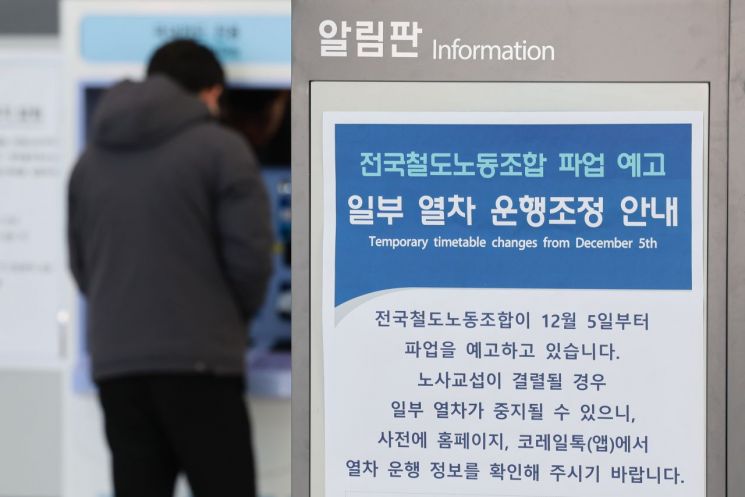
First, to minimize inconvenience to citizens during commuting, all possible alternative transportation means will be deployed. From the morning commute on the 5th, the day the railway union strike is scheduled to begin, city buses on 343 general routes will extend their concentrated dispatch hours by one hour compared to usual. The usual morning peak dispatch from 7 to 9 a.m. will be extended to 6 to 9 a.m. during the strike, and the evening peak from 5 to 7 p.m. will be extended until 8 p.m. This is expected to result in approximately 6,448 additional bus trips.
The operating hours of the Daramswi Bus and Donghaeng Bus will also be extended from the existing 2 hours to 3 hours, increasing by 40 and 28 trips respectively. Village buses and taxis are also being encouraged to operate intensively during commuting hours.
In particular, subway lines 1 through 8 will operate at 100% capacity during morning commute hours even during the strike. During evening commute hours, lines 2 and 5 through 8 will also operate at 100%, maintaining an overall operation rate of about 86%. Line 9 will secure the minimum required personnel for normal operation and will run as usual.
If the railway corporation and subway union strikes occur simultaneously on the 6th, the subway operation rate during morning commute hours is estimated to be 96.1%, and 83.9% during evening commute hours. Deploying five emergency standby trains on subway lines 2, 3, and 4 will further increase the evening operation rate. Additionally, during simultaneous strikes, all 174 routes of reserve and shortened city buses not in operation will be deployed, adding 1,615 additional trips.
The city will also ensure thorough management of subway congestion and safety personnel deployment. Approximately 13,000 staff, about 80% of the usual workforce, will maintain subway transportation functions, with 124 employees assigned as station support personnel.
A Seoul city official stated, "Even if the strike continues for more than eight days, we plan to maintain a 100% operation rate during morning commute hours and 86% during evening commute hours."
Yoon Jong-jang, Director of Transportation at Seoul City, said, "We hope that labor and management will reach an agreement quickly, prioritizing citizens, and we will do our best to normalize operations."
© The Asia Business Daily(www.asiae.co.kr). All rights reserved.

















