Traditional House Symbolizing Museom Village... Floor Plan in 'ㅁ' Shape
Developed as Cultural Tourism Resource by National Heritage Cheong and Yeongju City
Manjukjae Gotaek and Haeudang Gotaek, symbolizing Museom Village in Yeongju, have been designated as National Folk Cultural Heritage.
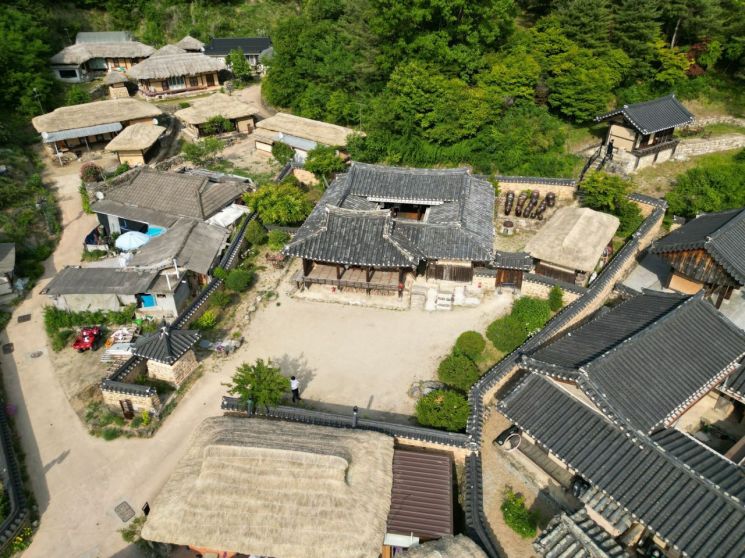
The Cultural Heritage Administration announced on the 3rd that the two old houses, along with various daily artifacts, will be preserved and managed under the names "Yeongju Manjukjae Gotaek and Artifacts Collection" and "Yeongju Haeudang Gotaek and Artifacts Collection," respectively. They plan to develop these as historical and cultural tourism resources in cooperation with Yeongju City and others.
Museom Village in Yeongju is a clan village of Bannam Park and Seonseong Kim families. Manjukjae Gotaek was built in the 7th year of King Hyeonjong's reign (1666) by Park Su (1641?1729) of the Bannam Park clan when he settled in Museom Village. The original form has been well preserved for 360 years, spanning from the founding ancestor (the first settler of the village) to the 13th generation.
The floor plan is shaped like a "ㅁ" (square). The main quarters, sarangchae (men's quarters), and auxiliary buildings are connected as one. This is an expression of Confucian patriarchal order representing upper-class houses of the mid to late Joseon Dynasty, commonly found in courtyard houses of the northern Gyeongbuk region. Behind the old house is Seomgye Chodang, used as a place for education and poetry gatherings. Built on a high place, it offers a panoramic view of Naeseongcheon Stream and the entire Museom Village.
The old house contains rare folk cultural heritage such as the Manjukjae nameplate and original calligraphy, munbangsau (paper, brush, ink, inkstone), a feed container, and log stairs. Representative items include historical marriage documents, anti-Japanese protest writings, gyubanggasa (women’s poetic songs), household registers, and seungyeongdo (a traditional board game). Marriage documents are traditional wedding papers sent from the groom’s family to the bride’s family. Household registers are documents submitted by the head of the household describing the status of their home to the authorities, and seungyeongdo is a game where a board with official ranks is drawn, and players roll dice to see who reaches the top first.
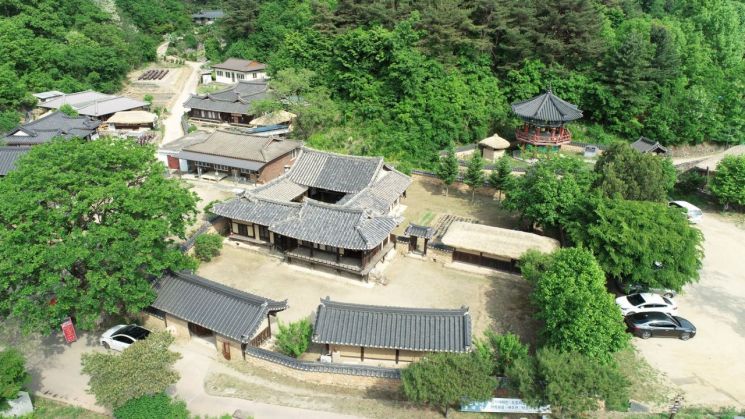
Haeudang Gotaek was built in the early 1800s by Kim Yeonggak (1809?1876), the grandson of Kim Dae (1732?1809), the founding ancestor of the Seonseong Kim clan. After being renovated by his son, Haeudang Kim Nakpung (1825?1900), it has been well preserved without dismantling or repairs. Kim Nakpung was famous as a friend of Heungseon Daewongun and served as Uigeumbu Dosan (a royal inspector) during King Gojong’s reign.
This old house also has a "ㅁ" (square) shape. Its academic value is highly regarded because one can infer the life cycle and lifestyle by moving from the main room where one is born to the woodworking room, small sarangchae, large sarangchae, and the mourning room. It also stands out for wisely solving the environmental drawbacks of frequent flooding in Museom Village. A separate jang-gobang (storage room for earthenware jars) was provided, and the seongjudanji (a shrine for the household guardian deity Seongju) was placed in a high attic rather than in the kitchen or main hall. Many high attics were built and used as storage spaces.
The old house contains a large number of old books, paintings, rubbings, and calligraphy that reveal the scholarly depth of its residents and their interactions with surrounding figures. A Cultural Heritage Administration official explained, "The nameplates and calligraphy of Haeudang and Daeunjeong, the examination answer sheets written by Kim Nakpung, the seongjudanji, and gat-ham (traditional hat boxes) are included in the National Folk Cultural Heritage."
© The Asia Business Daily(www.asiae.co.kr). All rights reserved.


















