Passage of Four Key Bills Including Grain Management Act at National Assembly Plenary Session
"Amendment to Grain Management Act Will Worsen Rice Price Decline"
The government decided on the 28th to recommend a reconsideration request for the 'Partial Amendment to the Grain Management Act' that passed the National Assembly plenary session.
Song Mi-ryeong, Minister of Agriculture, Food and Rural Affairs, stated at the Government Complex Sejong on the 28th, "As the minister in charge of enforcing four laws including the Grain Management Act, I will recommend a reconsideration request for the four legislative amendments in accordance with Article 53, Paragraph 2 of the Constitution of the Republic of Korea."
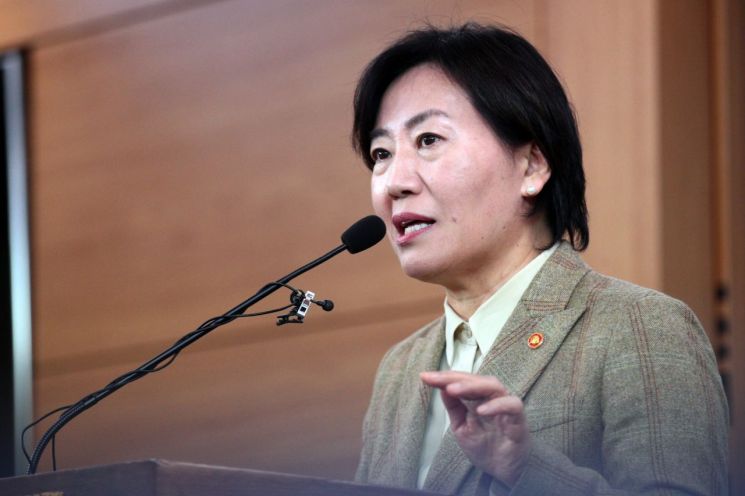
On the same day, the National Assembly passed four bills including the Grain Management Act, the Partial Amendment to the Act on Distribution and Price Stabilization of Agricultural and Fishery Products, the Partial Amendment to the Agricultural and Fishery Disaster Countermeasures Act, and the Partial Amendment to the Agricultural and Fishery Disaster Insurance Act. Minister Song said, "The government has clearly expressed opposition while explaining the problems and alternatives in detail regarding all four legislative amendments. However, I deeply regret and feel sorry that they were passed without any modifications in today’s plenary session."
The government has pointed out that these bills are institutionally difficult to implement and, even if implemented, would conflict with other laws and existing systems, violate international trade norms, exacerbate supply and demand instability, and impose enormous fiscal burdens, making them merely temporary stopgap measures that do not contribute to the development of agriculture and rural areas. Minister Song expressed concern, saying, "The amendment to the Grain Management Act, identical to the one processed in the 21st National Assembly, not only mandates the government to compulsorily purchase surplus rice but also adds the ‘Grain Price Stabilization System,’ under which the government pays the difference if the market price of grain falls below the average price. Such amendments will rather entrench rice overproduction and deepen the decline in rice prices."
The government anticipates massive fiscal expenditures if the system is operated and believes it will accelerate production concentration on rice, threatening the transition to other crops. It also fears that the amendment will nullify the government's various measures to solve the structural oversupply of rice, such as the reduction system for rice cultivation areas, making it difficult to recover and maintain rice prices.
To stabilize rice supply and demand, the government has preemptively reduced rice cultivation areas through appropriate production measures such as the Strategic Crop Direct Payment System and prepared supply and demand stabilization measures for the harvest season on September 10, the earliest date since 2005. Furthermore, since resolving repeated oversupply can enhance the competitiveness and sustainability of the rice industry, the government plans to announce a 'Fundamental Rice Industry Plan' by the end of the year, which will include imposing mandatory reductions on rice cultivation areas for farmers.
The amendment to the Agricultural Price Stabilization Act stipulates compensation for the difference when the market price of major agricultural products falls below the reference price. Minister Song pointed out, "This will cause production to concentrate on items with high farming convenience and guaranteed levels, destabilizing supply and demand and intensifying price volatility. Such excessive and artificial market intervention greatly undermines autonomous market functions, risks violating international trade principles, and will cause side effects such as government fiscal burdens."
Finally, Minister Song said, "The government will focus on more fundamental and structural improvements rather than short-term and temporary measures. We will do our best to create and implement necessary policies for farmers and the future of agriculture and rural areas, including income and management stability for farmers, agricultural product supply and demand management, and improvements to agricultural disaster support and insurance systems, to actively respond to crisis situations such as frequent agricultural disasters caused by abnormal weather and supply and demand instability."
© The Asia Business Daily(www.asiae.co.kr). All rights reserved.

















