UK Government Decides on Burdensome Environmental Regulations
The multinational automaker group Stellantis has decided to close its internal combustion engine vehicle manufacturing plant in the UK. Unlike Volkswagen Group, this decision appears to be driven more by the UK government's eco-friendly regulations than by poor performance.
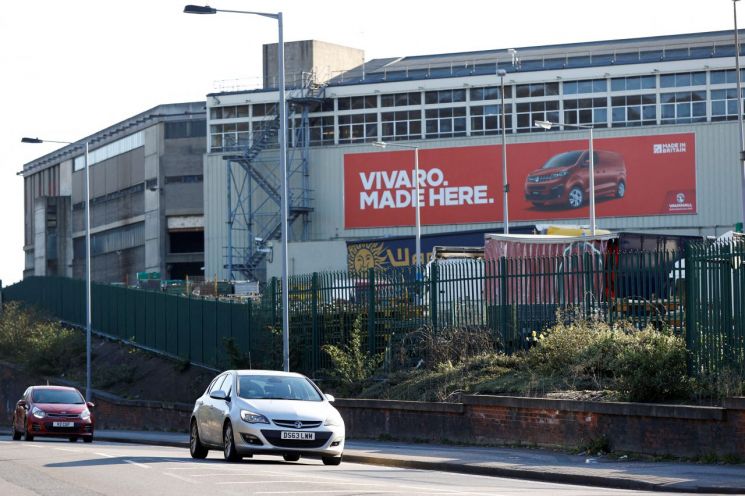
According to major foreign media such as CNBC in the US and BBC in the UK on the 26th (local time), Stellantis has decided to shut down the Vauxhall van plant in Luton, UK. This plant was currently producing gasoline and diesel vans. From 2025, it was scheduled to produce mid-sized electric Vivaro vans. However, with this closure decision, the production of these electric vans will be handled at the plant in Ellesmere Port, Cheshire, UK. Existing van production will be moved to France.
The company explained that the UK’s accelerated electric vehicle (EV) transition policy is one of the reasons behind the plant closure. According to current regulations, automakers must ensure that 22% of passenger car sales and 10% of van sales are electric vehicles this year. Failure to meet these quotas results in a fine of ?15,000 (approximately 26.37 million KRW) per vehicle. However, automakers have been requesting regulatory relaxation from government authorities, citing insufficient demand to increase the proportion of electric vehicles.
The Society of Motor Manufacturers and Traders (SMMT) in the UK forecasted that due to weak EV demand and EV sales quotas, automakers will incur costs of ?6 billion this year alone. They also pointed out that the EV demand projected when designing the 'zero-emission mandate' over two years ago has not materialized due to high interest rates, raw material prices, and energy costs.
Following the announcement of the Luton plant closure, Jonathan Reynolds, UK Secretary of State for Business and Trade, reiterated the existing stance that "the Labour government is striving to achieve the goal of ending sales of new gasoline and diesel cars by 2030."
Meanwhile, the closure decision of the Luton plant puts approximately 1,100 plant workers at risk of losing their jobs. The Luton Vauxhall plant opened in 1905 and began van assembly in 1932. At one time, employment reached 37,000, but the workforce has steadily declined since the 1960s.
© The Asia Business Daily(www.asiae.co.kr). All rights reserved.
![From Bar Hostess to Organ Seller to High Society... The Grotesque Con of a "Human Counterfeit" [Slate]](https://cwcontent.asiae.co.kr/asiaresize/183/2026021902243444107_1771435474.jpg)
















