Emergency Economic and Security Meeting Led by Director Sung Tae-yoon
Negative Impact on Korean Companies Expanding into Mexico and Canada
"Comprehensive Preemptive Scenario-Based Response Measures Reviewed"
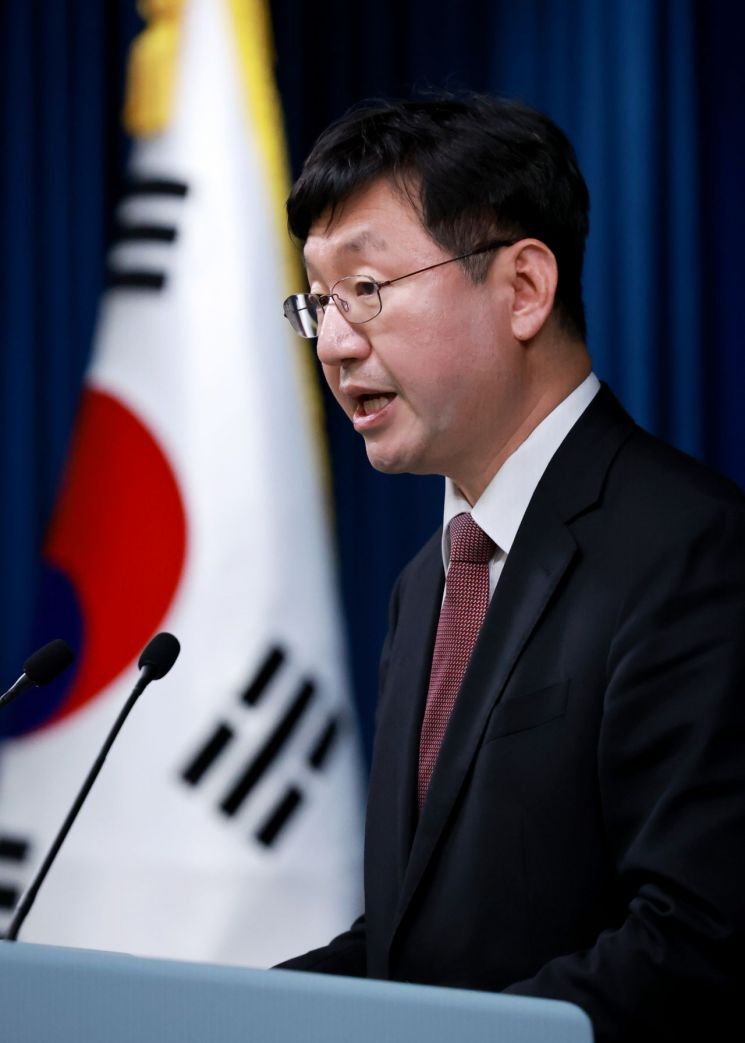 Sung Tae-yoon, Chief of Policy Office at the Presidential Office, is briefing on the results of the economic and security inspection meeting chaired by President Yoon Suk-yeol on the 10th at the Presidential Office building in Yongsan, Seoul. Photo by Yonhap News.
The Presidential Office stated that if the new Trump administration in the United States imposes a 25% tariff on Mexico and Canada, Korean companies operating locally are also expected to be negatively affected in their exports to the U.S., and has instructed relevant ministries to prepare preemptive countermeasures.
On the afternoon of the 27th, the Presidential Office held an "Emergency Economic and Security Review Meeting on U.S. New Administration's Trade and Tariff Policies," chaired by Policy Chief Sung Tae-yoon, to discuss the recently disclosed direction of U.S. trade and tariff policies and the anticipated impacts.
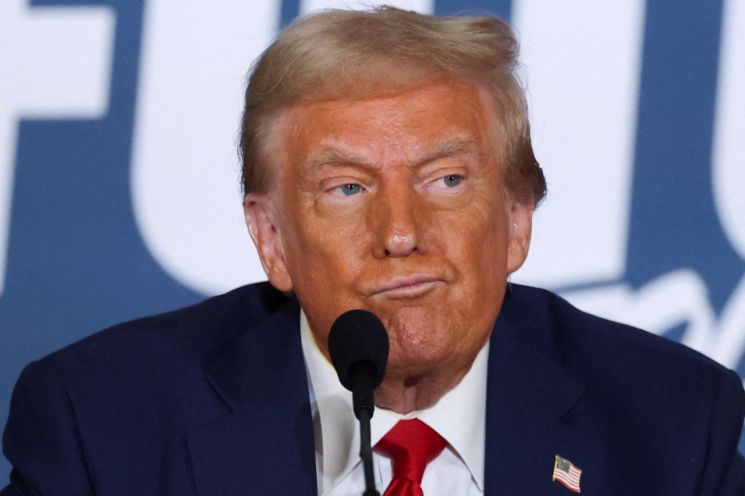
The meeting was convened to discuss countermeasures against the "tariff bomb" announced immediately after Donald Trump, the President-elect of the United States, completed his cabinet appointments.
Earlier, on the 25th (local time), President Trump announced, "One of the first executive orders on January 20th (the inauguration day) will be to sign all necessary documents to impose a 25% tariff on all products entering the U.S. from Mexico and Canada."
He also stated, "In addition to other additional tariffs on all Chinese products, I will impose an extra 10% tariff."
Regarding this, the Presidential Office explained, "Currently, many of our companies have a significant presence in Mexico and Canada," and added, "If the 25% tariff on all products from Mexico and Canada becomes a reality, it is inevitable that exports to the U.S. from our companies producing in Mexico and Canada will be affected."
They further stated, "We also reviewed and discussed countermeasures by industry and sector, considering the impact on our companies that procure parts from Mexico and Canada locally for production, as well as those exporting intermediate goods to Mexico and Canada."
In the case of China, most Korean companies operating there are producing mainly for the domestic market in sectors such as semiconductors, steel, and automobiles, and exports to the U.S. are not significant, so the direct impact of tariffs is expected to be limited.
However, the Presidential Office noted, "If China's exports to the U.S. decrease, there may be an impact on exports of intermediate goods to China, and there is also a possibility of increased competition from third countries, which we have also reviewed."
Chief Sung stated that rather than responding reactively each time the Trump administration announces such sudden policies, they will check and strengthen comprehensive preemptive response plans for various scenarios.
To this end, the Presidential Office conveyed special response items that each ministry should be aware of and urged raising and strengthening the response system to a higher level.
First, the Ministry of Trade, Industry and Energy was instructed to maintain close communication with local companies by continuing meetings not only with companies operating in Mexico and Vietnam but also with those in Canada and China.
They were also asked to review scenario-based response plans in advance and conduct additional in-depth analysis of the specific impacts on major Korean companies.
The Ministry of Economy and Finance was ordered to establish an action plan including the impact and response measures to U.S. policies, industry communication plans, domestic publicity strategies, and domestic system improvement plans, and to utilize this as an opportunity to fundamentally strengthen the competitiveness of Korean industries.
The Ministry of Foreign Affairs was instructed to share the status of negotiations with major U.S. trade surplus countries and to coordinate joint responses with countries benefiting from the Inflation Reduction Act (IRA) such as Japan and Canada, as well as countries receiving semiconductor subsidies. Additionally, they were directed to continue expanding and strengthening tailored outreach to personnel in the new U.S. administration.
The Presidential Office emphasized, "Going forward, the government will maintain close communication with industries regarding the overall policy direction of the new U.S. administration and support our companies to invest and trade stably in overseas markets and supply chains, including the U.S.," and added, "We will also closely consult with the U.S. side."
Chief Sung urged the ministries, "Do not be optimistic about the situation and prepare thoroughly with the mindset that unpredictable events may occur."
Attendees at the meeting included Wang Yoon-jong, 3rd Deputy Director of the National Security Office; Park Sung-taek, 1st Vice Minister of the Ministry of Trade, Industry and Energy; Jung In-kyo, Director-General of Trade Negotiations; Cho Goo-rae, Director of the Foreign Ministry's Foreign Strategy and Information Bureau; and Choi Ji-young, International Economic Management Officer of the Ministry of Economy and Finance.
© The Asia Business Daily(www.asiae.co.kr). All rights reserved.


















