Hankyung Association Compares and Analyzes Korea-China Advanced Industry Trade Specialization Index
Jan-Aug This Year: Korea 25.6 vs China 27.8... China Leads in Electrical and Mechanical Sectors
"Policy Support Including Extension of Tax Credit Sunset for National Strategic Technologies"
A survey revealed that South Korea has been overtaken by China in export competitiveness in advanced industries such as electrical and mechanical sectors for the past three years, and that South Korea's advanced companies' research and development (R&D) expenditures are only about one-quarter of China's. There are calls for urgent policy support, including extending the deadline for the national strategic technology tax credit under the Restriction of Special Taxation Act, which is set to expire at the end of the year.
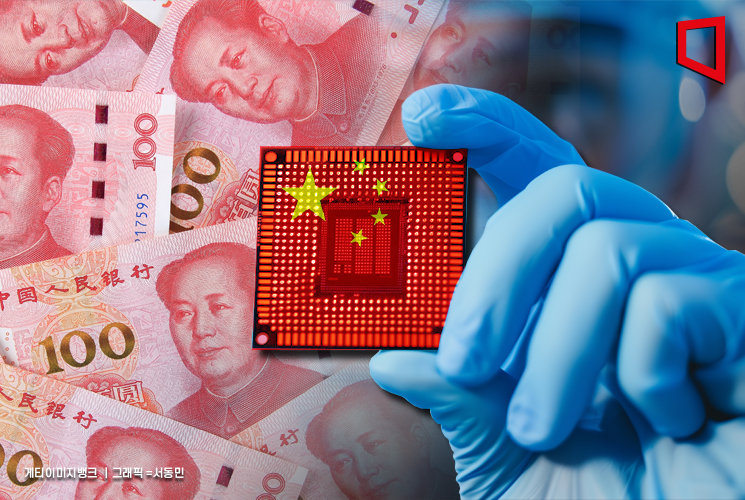
According to the analysis of advanced industry import-export data and advanced company financial data between South Korea and China released by the Korea Economic Association on the 28th, the Trade Specialization Index (TSI) for advanced industries from January to August this year was 25.6 for South Korea and 27.8 for China. The Trade Specialization Index indicates comparative advantage in specific products; a positive value (+) means a net exporting country, while a negative value (-) means a net importing country. The higher the index, the stronger the competitiveness. Since 2022, South Korea's index has been lower than China's for three consecutive years.
The gap widened significantly in electrical and mechanical sectors. The electrical sector gap expanded from 17.1 points in 2014 (South Korea 24.7, China 41.8) to 63.2 points this year (South Korea 5.3, China 68.5). In machinery, the gap increased from 17.1 points (South Korea 11.3, China 28.4) to 39.7 points (South Korea 12.3, China 52.0) over the same period. The mobility sector gap narrowed from 75.6 points (South Korea 67, China -8.6) to 6.3 points (South Korea 61.7, China 55.4). The chemical sector gap also decreased from 43.9 points (South Korea 23.4, China -20.5) to 23.5 points (South Korea 32.3, China 8.8). China's mobility sector turned positive (net export) in the Trade Specialization Index since 2018, and the chemical sector since 2022, marking the beginning of serious competition with South Korea.
The R&D investment gap is widening. Using S&P Global data, the Korea Economic Association analyzed 32,888 companies (headquarters) from both countries and found that last year South Korean advanced companies spent $51.04 billion (approximately 71 trillion KRW) on R&D, while China spent $205.08 billion (approximately 286 trillion KRW). The ratio of R&D expenditure to sales was 3.5% for South Korea and 4.1% for China. Regarding the growth rate of R&D expenditure, South Korea recorded an average annual increase of 5.7% compared to 2013, while China recorded an average annual increase of 18.2% during the same period.
The Korea Economic Association stated that to secure South Korea's competitive edge in advanced industries, the scale of investment must be significantly increased. To encourage corporate investment, the R&D research environment must be improved through policy support. First, the period for the tax credit benefits on R&D and commercialization facility investments under the national strategic technology provision of the Restriction of Special Taxation Act, which expires at the end of this year, should be promptly extended. It also suggested proactively considering including artificial intelligence (AI), defense industry, and nuclear power in the national strategic technologies. The method of designating national strategic technologies should be changed from the current positive system (everything not allowed is prohibited) to a negative system (everything not prohibited is allowed).
To induce long-term investment, it is necessary to introduce a direct refund system during the tax credit process. The direct refund system reimburses the difference or the entire credit amount in cash when a company cannot fully utilize the tax credit due to a deficit in the current year. The United States is implementing this system through the Inflation Reduction Act (IRA). If introducing the direct refund system is difficult, the carryforward period should be extended beyond the current 10 years. Currently, tax credits can be carried forward and used within 10 years if profits are made, but the request is to extend this period.
Additionally, it was requested to include tangible assets such as land and buildings, as well as R&D facilities and equipment, in the scope of facility investment tax credits. Under current law, only tangible assets like machinery and commercialization facilities are eligible for tax credits. This does not reflect the reality that land and building-related costs account for about 30-50% of advanced industry facility investments.
Lee Sang-ho, head of the Economic and Industrial Division at the Korea Economic Association, said, "To prevent domestic advanced industry competitiveness from falling behind China, various policy supports such as tax credits, investment subsidies, and infrastructure development for electricity and water supply must be backed."
© The Asia Business Daily(www.asiae.co.kr). All rights reserved.

















