Han Jong-hee and Dual CEO System
Positive Evaluation of 6 Months in Office
Strong Commitment to HBM4 Development
Han Jin-man's Promotion and Strategy for the US Market
Samsung Electronics has made a somewhat broad reshuffle of the executives leading its semiconductor business, as industry experts expected. This move is interpreted as a demonstration of the company's determination to overcome the crisis by appointing the right people to face and tackle the challenging reality.
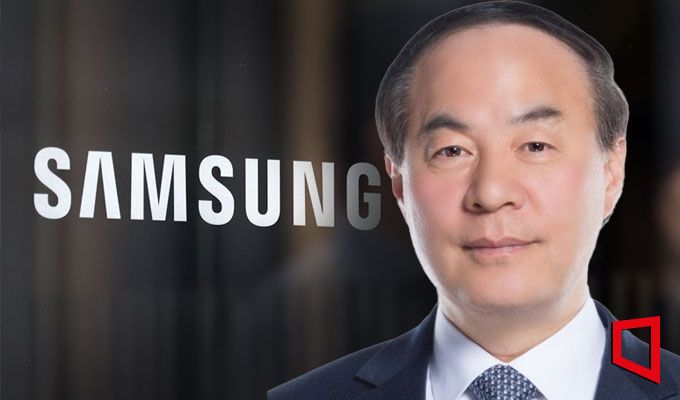
The core of the executive reshuffle announced on the 27th is the recovery of semiconductor competitiveness. To this end, Vice Chairman Jeon Young-hyun, head of the Device Solutions (DS) division, will directly take charge of the Memory Business Division and replace the head of the Foundry Business Division.
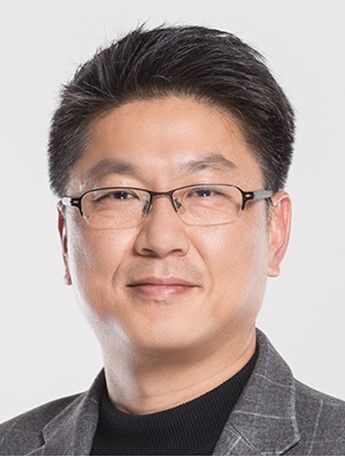
In particular, this reshuffle is seen as empowering Vice Chairman Jeon. He was appointed as CEO, a position vacated by President Kyung Kye-hyun, head of the Future Business Planning Group, in May. With this, Samsung Electronics has returned to a two-CEO system with Vice Chairmen Jeon Young-hyun and Han Jong-hee after six months. Vice Chairman Jeon will also concurrently serve as the head of the Memory Business Division and the SAIT (formerly Samsung Advanced Institute of Technology). The Foundry Business Division, which has fallen into a multi-trillion won deficit, has been entrusted to Han Jin-man, Vice President and head of DS division's North America operations. Han was also promoted to president. This is tantamount to handing him the "key" to operate the "giant" foundry that is on the brink of sinking. To support him, a new Chief Technology Officer (CTO) position was created in the Foundry Business Division, and Nam Seok-woo, President of DS division’s Global Manufacturing & Infrastructure and Manufacturing & Technology, was assigned, which also draws attention.
Six Months of Performance, Strengthened Jeon Young-hyun Regime
The company’s empowerment of Vice Chairman Jeon appears to be due to the positive evaluation of his actions since taking office in May. At this critical juncture, where ongoing semiconductor-related businesses must be successfully led and a turning point established, the company judged that it was better to continue entrusting Vice Chairman Jeon with major responsibilities rather than replacing him with a new figure, thereby reinforcing his authority.
The appointment as CEO is expected to further elevate Vice Chairman Jeon’s standing. This means that both internally within the company and externally to shareholders and others, Vice Chairman Jeon is now in a position to send a strong message about the company’s semiconductor business operations. His concurrent role as head of the Memory Business Division also carries special significance. Memory is the point where the company’s semiconductor business crisis was triggered. Samsung has faced much criticism for failing to secure a leading position in the High Bandwidth Memory (HBM) market, showing a technological gap compared to competitors. Amid this, Samsung Electronics recently decided to fully commit to developing the 6th generation HBM, HBM4, making the head of the Memory Business Division position extremely important. Vice Chairman Jeon’s concurrent role seems to signify the company’s intention for him to focus on HBM technology development and related business promotion. Upon taking charge of the DS division, Vice Chairman Jeon established a dedicated department for HBM development and has been working to restore “super-gap” technological prowess. Thanks to his efforts, recent positive responses from clients suggest the possibility of tangible results in the market. The most prominent issue, Nvidia’s HBM3E quality test problem, recently took a new turn after Nvidia CEO Jensen Huang publicly stated through foreign media that they are “working quickly to approve Samsung Electronics’ HBM.”
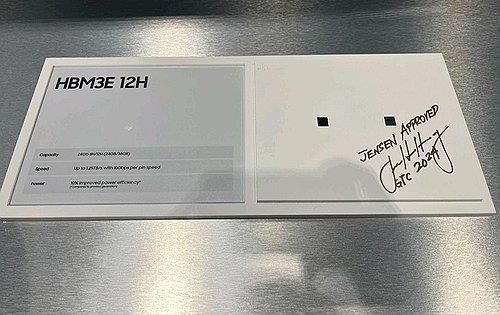 Jensen Huang, CEO of NVIDIA, signed on Samsung HBM3E. Photo by Hanjinman, captured from Samsung Electronics President's SNS, Yonhap News.
The Foundry Breakthrough Lies in the U.S... Han Jin-man’s Key Role
The foundry business, which Chairman Lee Jae-yong has clearly expressed a strong will to push forward, must now be revived by President Han Jin-man, who has been active in the United States. At the annual developer conference ‘GTC 2024’ held in San Jose, California, in March, Nvidia CEO Jensen Huang famously posted on his social media account a photo of his autograph on a physical sample of Samsung Electronics’ HBM3E 12-stack product, widely publicizing it. Since 2022, Han has been responsible for overseeing the North America business division and is the person most familiar with the various situations the company has faced locally in the U.S. Han graduated from Seoul National University with a degree in Electrical Engineering and joined Samsung in 1989. He has experience in all stages of semiconductor production and sales, from DRAM design to development and marketing. Between 1997 and 2008, he also worked at a U.S. semiconductor company, giving him a deep understanding of the U.S. market dynamics.
Entrusting the foundry business to him is analyzed as a decision based on the judgment that seeking solutions in the U.S. is the right direction and that Han is the best candidate for the role. The immediate challenges to be addressed are the very low levels of foundry orders and yield rates. Han is expected to hold the key to the foundry plant currently under construction in Taylor, Texas, and the foundry business operations that will unfold locally thereafter. The business in the U.S. is expected to face many variables and concerns, especially with the recent election of Donald Trump as the new president. The fate of the approximately 9 trillion won semiconductor subsidies Samsung Electronics is to receive from the U.S. government is also currently uncertain. These are the hurdles Han must overcome going forward. In June, Han spoke at the U.S. ‘Six Five Summit 2024,’ stating, “Our main goal is to solidify Samsung’s position not only in chip production but also in advanced packaging and research & development (R&D) in the U.S.,” and emphasized that semiconductor subsidies “must be used wisely as they come from taxes paid by the American people.”
© The Asia Business Daily(www.asiae.co.kr). All rights reserved.



















