"Historical Issues Must Be Properly Addressed Before Korea-Japan Relations"
Professor from Seokyeong University and Sungshin Women's University has criticized the tone of the Japanese conservative media outlet 'Sankei Shimbun.' This is in response to Sankei's criticism of the South Korean government's absence from the Sado Mine memorial ceremony, stating that "Korea's anti-Japan (反日) disease is tiresome."
On the 27th, Professor Seo wrote on Facebook, "Japan's historical distortion disease is tiresome," adding, "At the center of this is Sankei. Before discussing Korea-Japan relations, they must first learn the proper attitude toward history."
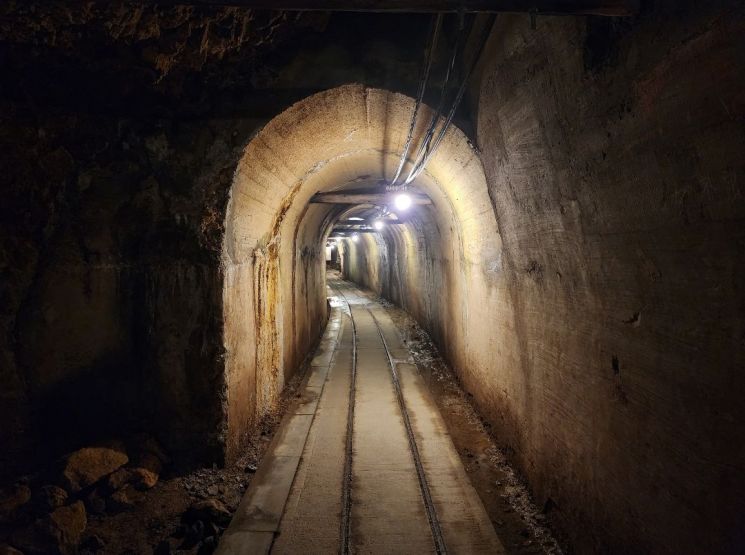 Inside the 'Doyugaeng' of Sado Mine, where forced labor of Koreans took place. Photo by Seokyungdeok, Facebook capture
Previously, Sankei published an editorial titled "Korea's anti-Japan disease is absurd." The media explained, "The Korean side's absence was due to strong domestic backlash after reports that Akiko Ikuina, Political Vice-Minister of Foreign Affairs representing the Japanese government, had visited Yasukuni Shrine."
They further stated, "It is natural for Japanese politicians to visit Yasukuni Shrine, which honors war dead," and "There is no reason to be criticized by foreign countries. It is common for members of the National Diet who have visited Yasukuni Shrine to be appointed to key government positions."
In response, Professor Seo criticized, "Yasukuni Shrine enshrines Class A war criminals from the Pacific War," and "Visiting such a place is tantamount to denying the aggressive wars Japan committed in the past."
Meanwhile, in July, Japan registered the Sado Mine, a site of forced labor of Koreans during the Japanese colonial period, as a UNESCO World Cultural Heritage site and promised to hold a memorial ceremony with South Korea. The ceremony was held on Sado Island on the 24th as promised, but domestic backlash arose after it was revealed that Akiko Ikuina, who has a history of visiting Yasukuni Shrine, was appointed as Japan's representative.
Additionally, it was understood that the memorial address did not include any mention of the forced mobilization of Korean laborers. Considering this, the South Korean Ministry of Foreign Affairs, judging Japan's sincerity lacking, decided not to attend, stating on the 23rd, a day before the ceremony, "There was insufficient time to reconcile differences between the diplomatic authorities of the two countries, making it difficult to reach an agreement."
© The Asia Business Daily(www.asiae.co.kr). All rights reserved.

















