Declaration of Negotiation Agreement in Seoul on the 27th
26th Free Trade Agreement Signed by Korea
Rice, Natural Honey, and Other Sensitive Korean Items Excluded from Opening Targets
Economic Partnership Agreement (EPA) negotiations with Georgia, an emerging logistics hub connecting Europe and Asia, have been concluded. Upon its enforcement, tariffs on Korea's main exports to Georgia, such as passenger cars and K-food, will be immediately eliminated, enhancing price competitiveness.
The Ministry of Trade, Industry and Energy announced that Jung In-kyo, Director-General for Trade Negotiations, and Genadi Arveladze, Deputy Minister of Economy and Sustainable Development of Georgia, declared the conclusion of the Korea-Georgia EPA negotiations in Seoul on the 27th. The newly concluded Korea-Georgia EPA is the first agreement finalized among the EPA target countries reported to the National Assembly and marks Korea's 26th free trade agreement (based on negotiation conclusion). An EPA refers to a trade agreement similar to a Free Trade Agreement (FTA) that includes market opening measures such as tariff elimination but emphasizes cooperative elements aimed at mutual prosperity with the partner country.
Since agreeing to initiate Korea-Georgia EPA negotiations in November last year, both sides have reduced contentious issues through two rounds of formal negotiations and two rounds of intersessional talks. The conclusion was declared during Deputy Minister Arveladze’s visit to Korea.
Georgia is one of the most open market-oriented economies among the former Soviet states, holding a wide hinterland market by signing FTAs with 46 countries through an open foreign policy. Located in the Caucasus region, a key trade hub connecting Asia and Europe, Georgia serves as a transportation and logistics center with significant potential for cooperation in supply chains, energy, and other sectors.
According to the World Bank’s 2024 Business Readiness Report, Georgia ranks highly among 50 surveyed countries in areas such as regulation (3rd) and operational efficiency (2nd), indicating a favorable environment for business operations. The government expects that the conclusion of the Korea-Georgia EPA will further facilitate Korean companies’ local market entry and business development.
Director-General Jung stated, "This EPA features a high level of concessions and broad cooperation in supply chains, transportation, logistics, and energy sectors, which will contribute not only to expanding bilateral trade but also to establishing a stable global supply chain." He added, "Given the recent geopolitical factors such as the Russia-Ukraine war, Georgia is emerging as a new logistics hub, and this EPA is expected to serve as a foothold for advancing into the Balkans and Caucasus regions."
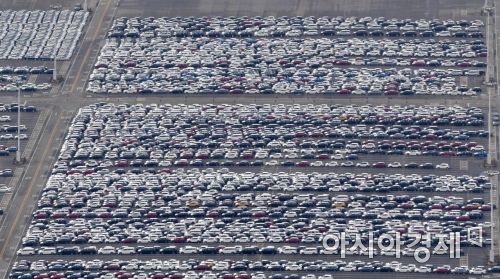
Under the Korea-Georgia EPA, tariffs on 93.3% of Korea’s export items and 91.6% of Georgia’s export items will be eliminated within 10 years. Notably, tariffs on passenger cars, Korea’s main export item, including new, used, and eco-friendly vehicles, will be immediately abolished in Georgia. This is expected to strengthen price competitiveness compared to competitors like Japan. Korean products are also expected to benefit in the used car sector, which has a high import share in Georgia. Furthermore, tariffs on K-food items such as ramen, kimchi, beer, and soju, as well as K-beauty products, which are experiencing growing global demand fueled by the K-content wave, will be immediately removed, expanding trade in Korean food and cosmetics to the Caucasus region. Tariffs on promising Korean export items such as pharmaceuticals, home appliances, and machinery will also be eliminated by Georgia.
Additionally, Korea will immediately abolish import tariffs on Georgia’s major products, including wine, distilled spirits (chacha), and natural carbonated water. For manufactured goods, import tariffs on metals and non-metals usable as raw materials domestically, such as copper scrap and slag, will be removed, which is expected to stabilize raw material supply and production in related industries. However, sensitive Korean items such as rice and natural honey are excluded from liberalization.
Moreover, the EPA will broadly open Georgia’s shipping, road freight transport, warehousing, and freight forwarding sectors, which are key to transportation and logistics. Since many of Korea’s competitive major exports, including automobiles, steel, and machinery, are often manufactured using materials or parts from outside the region, relaxed rules of origin will be applied to allow the use of such external materials. To secure competitiveness in K-content, provisions have been established to permanently prohibit tariffs on electronically transmitted goods and to treat Korean digital products on par with domestic digital products.
The government plans to promptly complete procedures for formal signing, including legal review and Korean translation of the agreement text, following the declaration of negotiation conclusion. Subsequently, through economic impact assessments and parliamentary ratification procedures in each country, the government aims to have the agreement take effect as early as possible.
© The Asia Business Daily(www.asiae.co.kr). All rights reserved.
![Clutching a Stolen Dior Bag, Saying "I Hate Being Poor but Real"... The Grotesque Con of a "Human Knockoff" [Slate]](https://cwcontent.asiae.co.kr/asiaresize/183/2026021902243444107_1771435474.jpg)
















