Government Announces 'Measures to Strengthen Support for the Semiconductor Ecosystem'
Industry Responds Cautiously: "Key Is Whether Companies Will Respond"
Concerns Raised Over "Unclear Effectiveness" and Indirect Support Instead of Subsidies
The industry has responded cautiously to the "Measures to Strengthen Support for the Semiconductor Ecosystem" announced by the government on the 27th through the Ministerial Meeting on Strengthening Industrial Competitiveness, saying, "We need to wait and see whether it will be effective." A representative from a semiconductor company said, "The key is not the scale or content of the support, but how much companies need it and respond to it." It has been pointed out that sufficient promotional efforts are also necessary for companies to properly receive low-interest loans from banks and tax support. Previously, the government had announced various policies to support the semiconductor business, but it has been criticized that most companies did not receive the information properly, resulting in limited effectiveness.
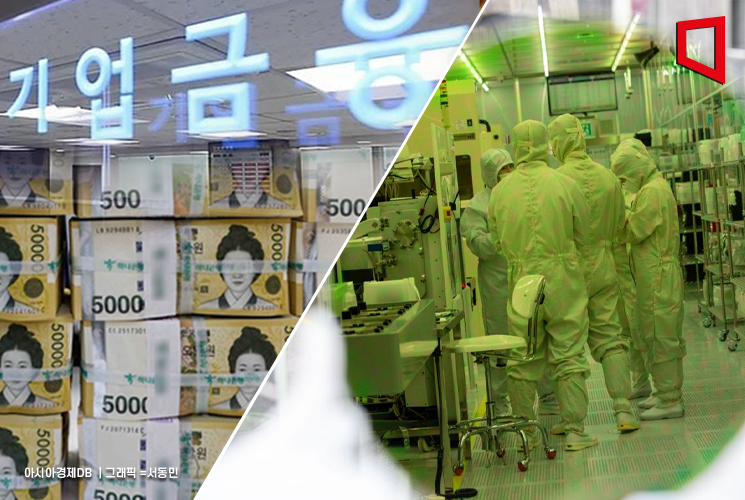
There are also many cynical views that "the effectiveness of the support is unclear." What the semiconductor industry hopes for is direct financial support such as subsidies, but this time the government proposed support methods through indirect means, such as reducing tax burdens rather than direct financial aid. At the 'Advanced Industry Essential Infrastructure Seminar' hosted by the Korea Chamber of Commerce and Industry and the Future Land Infrastructure Innovation Forum at the National Assembly Members' Office Building on the 26th, experts emphasized the need to build advanced industry infrastructure to enhance the competitiveness of advanced industries such as semiconductors and stressed the necessity of subsidy benefits.
Professor Cho Hong-jong of Dankook University pointed out, "The water subsidies received by our advanced companies are about 2-3% of the total investment, and the number of times infrastructure subsidies are provided is basically once, so companies have to bear a significant portion of the infrastructure construction costs." He added, "In contrast, major competing countries actively support infrastructure construction by the state, and domestic support systems are relatively insufficient." He emphasized, "There is a need to quickly implement policies such as establishing a control tower for infrastructure support, mandating government responsibility for infrastructure construction, and introducing a comprehensive infrastructure management system for support."
Meanwhile, the announced support measures include the government bearing a significant portion of the undergrounding costs of power transmission lines for the 1.8 trillion won-scale semiconductor cluster in Yongin and Pyeongtaek, activation of programs to attract outstanding overseas talent in advanced technology fields, expansion of incentives for excellent educators, and expansion of tax support for corporate R&D facility investments. In addition, plans to raise the investment tax credit rate for national strategic technologies for semiconductor companies, execution of semiconductor fund investments, and provision of 4.25 trillion won to the Korea Development Bank's low-interest loan program for semiconductors were also included.
© The Asia Business Daily(www.asiae.co.kr). All rights reserved.
![Clutching a Stolen Dior Bag, Saying "I Hate Being Poor but Real"... The Grotesque Con of a "Human Knockoff" [Slate]](https://cwcontent.asiae.co.kr/asiaresize/183/2026021902243444107_1771435474.jpg)
















