Research results providing clues for the development of new drugs for metabolic-associated fatty liver disease have been announced in Korea.
On the 27th, the Korea Research Institute of Bioscience and Biotechnology announced that Dr. Mirang Kim's research team at the Aging Convergence Research Division succeeded in revealing epigenetic changes that occur as fatty liver worsens into steatohepatitis by utilizing big data of metabolic-associated fatty liver disease.
This research achievement is expected to present new therapeutic targets for metabolic-associated fatty liver disease and be utilized in developing new treatments.
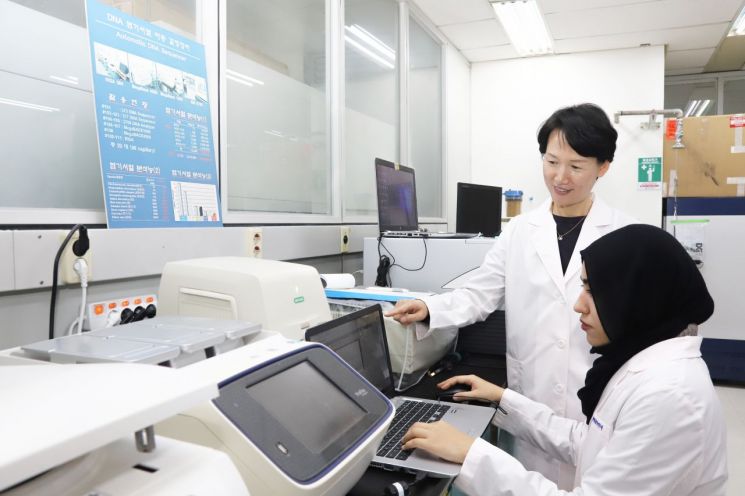 (From left) Principal Investigator Dr. Kim Mirang, First Author Student Researcher Amal Magdi. Provided by Korea Research Institute of Bioscience and Biotechnology
Fatty liver is a disease caused by excessive fat accumulation in the liver. Contrary to the common belief that people who do not drink much alcohol have a lower risk of fatty liver, fatty liver frequently occurs even in people who do not drink alcohol at all. The Korean Diabetes Association's Fatty Liver Research Group reported statistics showing that 4 out of 10 adults over 20 years old in Korea suffer from fatty liver.
Fatty liver occurring in people who do not drink alcohol can be considered metabolic-associated fatty liver disease. This disease is closely related to environmental factors such as smoking, diet, and lack of exercise. It is also known to significantly increase chronic diseases such as obesity, diabetes, cardiovascular disease, and kidney disease. On the other hand, except for Rezdefipra, which was approved last March, no effective treatments have been developed yet. This underscores the urgency of new drug development research.
The research team first focused on epigenetics. Epigenetics allows organisms to adapt to environmental stimuli through functional changes such as gene expression without altering the primary DNA sequence.
The core of epigenetics is DNA methylation, which finely regulates gene expression to establish cell identity, promote proper developmental differentiation, and plays an important role in cell growth and development. Analyzing methylation patterns in specific parts of DNA has attracted attention not only for assessing health and disease states but also for estimating biological age and life expectancy.
Based on this, the research team extracted DNA from liver tissues of metabolic-associated fatty liver disease patients in collaboration with Seoul Boramae Medical Center and analyzed changes in DNA methylation. As a result, they identified that liver fibrosis is associated with hypermethylation or hypomethylation of complement system genes.
The complement system is a collection of proteins present in the blood, and it is an important component of innate immunity that directly attacks and destroys pathogens invading from outside.
Recent studies have reported that the complement system is involved in physiological processes beyond immune responses, including inflammation resolution, apoptosis, angiogenesis, wound healing, stem cell activation, and tissue repair.
For example, when the research team analyzed biopsy samples from 106 patients, a pronounced inverse relationship between DNA methylation and complement gene expression was observed in steatohepatitis samples. Among 277 DMPs (Differentially Methylated Positions), 35 showed proportional correlation, but 143 showed an inverse correlation with complement gene expression.
Dr. Mirang Kim said, "This study is significant as it is the first to reveal epigenetic changes in complement system genes during the progression of metabolic-associated fatty liver disease," adding, "This suggests the possibility of understanding the core mechanisms of disease progression and developing targeted therapeutic technologies."
Meanwhile, this research was conducted with support from the Ministry of Science and ICT's Basic Individual Research Project, Bio and Medical Technology Development Project, NST Convergence Research Division Project, and major projects of the Korea Research Institute of Bioscience and Biotechnology.
© The Asia Business Daily(www.asiae.co.kr). All rights reserved.
![Clutching a Stolen Dior Bag, Saying "I Hate Being Poor but Real"... The Grotesque Con of a "Human Knockoff" [Slate]](https://cwcontent.asiae.co.kr/asiaresize/183/2026021902243444107_1771435474.jpg)
















