KCC Construction Gwangju Sangmu District, Additional Construction Loan
Daegu Dongin-dong Mixed-Use Development, Loan Maturity Extension
Delaying Responsible Completion and Replacing Financial Lenders
Costs Increase Including Construction and Interest, Project Viability Declines
Daegu and Gwangju, known as graveyards of unsold housing, are drawing attention as project financing (PF) maturity extensions and additional loans are being made one after another. As the project prolongs, increasing interest and construction cost burdens have led to an increase in loan amounts, and due to low sales rates causing loan repayments to be delayed, cases of extending the maturity of existing PF loans are also increasing.
According to the investment banking (IB) industry on the 27th, Cokrep Sangmu raised PF worth 148 billion KRW with Hanwha Investment & Securities as the lead manager. The loan was made by dividing it into senior loans of 100 billion KRW and subordinated loans of 48 billion KRW based on repayment and collateral priority, using land and other assets owned by Cokrep Sangmu as collateral.
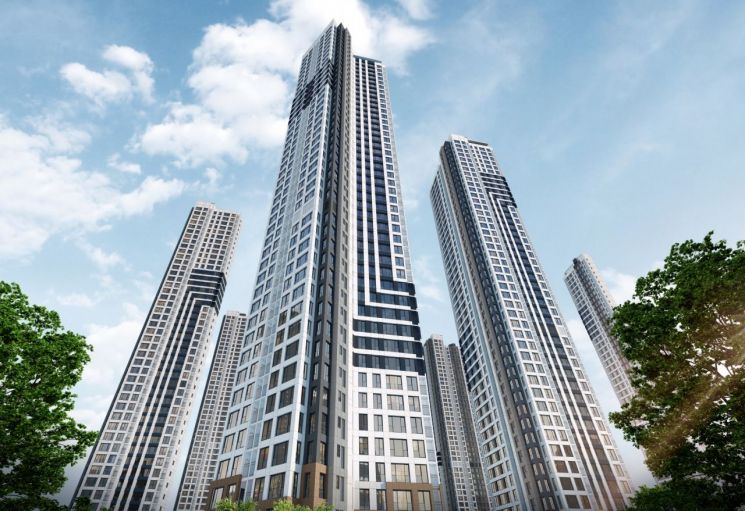
Cokrep Sangmu is a corporation established to develop the apartment complex ‘Urban Peak Sangmu’ in the area of 1208-5, Chipyeong-dong, Seo-gu, Gwangju Metropolitan City. The shares are held by the Korea Local Government Officials Mutual Aid Association (49%), Koramco Asset Trust (19.5%), GS Retail (19.5%), IBK Investment & Securities (5%), and KCC Construction (5%).
The construction company KCC Construction started construction in August 2021 and aims to complete it by February next year. KCC Construction provided a completion guarantee agreement while raising PF funds. If the construction is not completed within the deadline and the local government does not grant usage approval (completion permit), the construction company will bear the burden of repaying the PF loan.
At the same time, KCC Construction agreed to take responsibility for PF loan repayment if its long-term credit rating falls below BBB- (corporate, corporate bonds) or its short-term credit rating falls below A3- (commercial paper, short-term bonds). Currently, KCC’s credit ratings are A- (negative) for long-term and A2- for short-term, respectively.
‘Dongin-dong DM,’ which is developing a residential-commercial complex in Dongin-dong, Jung-gu, Daegu, extended the maturity of its PF loan and restructured the loan. Of the 338 billion KRW loan received in 2010, the outstanding balance of 222 billion KRW was extended to February 2026.
At the same time, the previous loan structure of senior loans of 164 billion KRW and subordinated loans of 58 billion KRW was changed to senior loans of 120 billion KRW, mezzanine loans of 70 billion KRW, and subordinated loans of 30 billion KRW, and the financial consortium was reassembled. In this process, the existing PF lenders, led by Saemaeul Geumgo who had lent money to this project, were replaced by Korea Investment & Securities and others.
This project involves constructing a residential-commercial complex with 5 buildings ranging from 4 basement floors to a maximum of 49 floors above ground, comprising 1,009 households. It consists of 941 apartment units and 68 residential officetel units. Commercial facilities with a total floor area of approximately 11,556 square meters will also be built.
During the loan extension process, Hyundai Engineering, the construction company, provided a completion guarantee agreement. If the construction is not completed and usage approval is not obtained by the deadline of August next year, Hyundai Engineering must take responsibility for repaying the PF loan on behalf of the developer. The original completion guarantee deadline for the existing PF loan was August this year, but it was extended by an additional year.
An IB industry official said, "In the case of local development projects, as the sales rate remains low, the timing of PF loan recovery is delayed, leading to many cases of extending or restructuring existing loans," adding, "Financial companies that previously participated as lenders often withdraw during the loan extension process as they engage in PF loan restructuring."
The official also diagnosed, "Although PF loans were taken early, cases of receiving additional PF loans due to increased project costs are also increasing," and "Overall, the financial burden of development projects is increasing, and due to the deterioration of the profitability of sales projects, stable loan recovery is becoming increasingly difficult, resulting in these outcomes."
© The Asia Business Daily(www.asiae.co.kr). All rights reserved.
![Clutching a Stolen Dior Bag, Saying "I Hate Being Poor but Real"... The Grotesque Con of a "Human Knockoff" [Slate]](https://cwcontent.asiae.co.kr/asiaresize/183/2026021902243444107_1771435474.jpg)
















