'Proposal for Setting the 2035 National Greenhouse Gas Reduction Target'
The budget allocated to support carbon neutrality policies in South Korea is only about one-seventh of that of major countries, highlighting the need for measures to improve this situation.
On the 27th, the Korea Economic Association emphasized through a research report titled 'Recommendations for Setting the 2035 National Greenhouse Gas Reduction Target (NDC),' commissioned to Professors Yoo Seung-hoon and Lee Sang-jun of Seoul National University of Science and Technology (hereinafter referred to as the research team), that comprehensive policy improvements are necessary?from reviewing costs by industry to securing finances?to achieve the NDC.
The report projected that low-carbon technologies in high-emission industries such as steel, chemicals, cement, and semiconductors will be difficult to commercialize by 2035, and due to the 'technology lock-in effect' where existing technological systems persist, rapid technological transitions are unlikely. The industry has already deployed major means to reduce emissions, leaving limited options. The remaining task is to prepare countermeasures considering the reality that reduction costs will inevitably increase.
Greenhouse gas emissions from the industrial sector decreased for two consecutive years starting in 2022. The report analyzed this as a result of efforts to improve the industrial structure, such as the closure of aging blast furnaces (steel), fuel switching in boilers (refining), and improvements in semiconductor fluorine processing. However, it pointed out that since many reduction methods have already been utilized, additional reduction options are limited, and significant cost burdens are expected across the industry in the future.
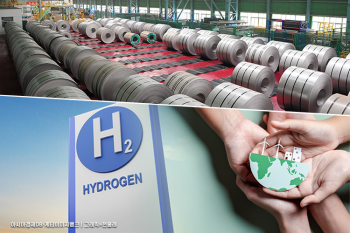
In this regard, the report proposed four policy tasks.
First, since greenhouse gas emission characteristics differ by industry, it is necessary to comprehensively review reduction costs and macroeconomic impacts. The research team emphasized, "A preliminary task must be to evaluate realistic reduction strategies and cost-effectiveness by detailed industry sectors."
In particular, the government's approach of 'making laws first and budgeting later' was criticized. Unlike the United States, which secures funding before pursuing legislation, South Korea has only legislated carbon neutrality goals while omitting detailed budget discussions. The report suggested introducing the 'pay-as-you-go principle' (execution after securing funds) in fiscal expenditure policies.
There was also a call for a flexible approach considering international political changes and the feasibility of achieving carbon neutrality. The report mentioned the possibility of shifts in international climate change response policies, such as the re-election of Trump, warning that premature goal adjustments could undermine the industry's investment capacity.
Furthermore, the report emphasized, "Major countries are boldly supporting carbon neutrality innovation in the industrial sector to the extent that it can be called an investment competition, strengthening regional manufacturing bases," and stressed the need for South Korea to develop Korean-style policies. It pointed out that the budget is up to 7.3 times less than that of the European Union and urgently requires increased national-level financial support.
The research team stated, "Advanced countries' carbon neutrality support policies consist of tailored support throughout the entire process from technology research and development (R&D) to commercialization," and argued, "It is necessary to consider that policies are devised through a holistic approach, including financial support, investment environment, workforce, and regulatory relaxation."
© The Asia Business Daily(www.asiae.co.kr). All rights reserved.
![From Hostess to Organ Seller to High Society... The Grotesque Scam of a "Human Counterfeit" Shaking the Korean Psyche [Slate]](https://cwcontent.asiae.co.kr/asiaresize/183/2026021902243444107_1771435474.jpg)
















